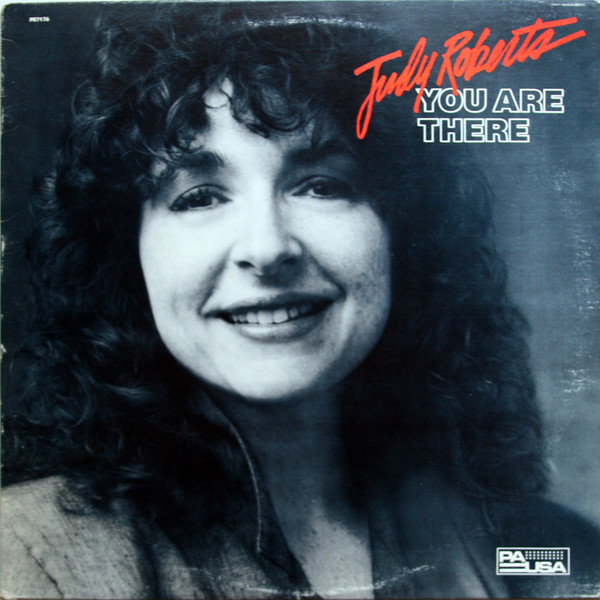
“Theme from Star Trek” (1985) – Judy Roberts

“Theme from Star Trek” (1985) – Judy Roberts * Written by Alexander Courage and Gene Roddenberry * Produced and Arranged by Judy Roberts * Label: Pausa Records

The composer Alexander Courage did plenty of work for movies and TV, but his humdinger was the Star Trek theme, that helix of sound that lodged itself into hearers’ brainwaves upon first hearing, but whose sophistication defied them from banging it out right away on their instrument of choice.

Gene Roddenberry wrote lyrics that appeared on the sheet music but were never intended to be sung anywhere in the series. This qualified him for 50% of its earnings, which reportedly annoyed Courage, and might annoy you, but think again how the entire project was Roddenberry’s.

I do wonder about the tensions between music and lyrics in famous partnerships. In his autobiography, Burt Bacharach recalled once wanting more of a percentage, due to the arduous arranging and rehearsing he’d do, rather than splitting it fifty-fifty with lyricist Hal David. David couldn’t abide, and you can sense that Bacharach knew that his own argument didn’t play well. (Also, the project in question was Lost Horizon, the taxing film he sensed might bomb, and did.) 

Back to Star Trek: In 1985 the Chicago jazz vocalist and keyboardist Judy Roberts, who still performs live, did what may as well be the last word, so to speak, in renditions of the theme with lyrics. Nichelle Nichols (“Lt. Uhura”) camped up a version in 1986 and various tongue-in-cheekers have arisen since then, but this one manages a perfect balance of sincerity, musicality, and yes, smoothness. Roberts’ vocals are appropriately airy, and her playing is tasteful and clever. And what a band, which includes Akio Sasajima on guitar, Jim Cox on bass, and David Derge on percussion.
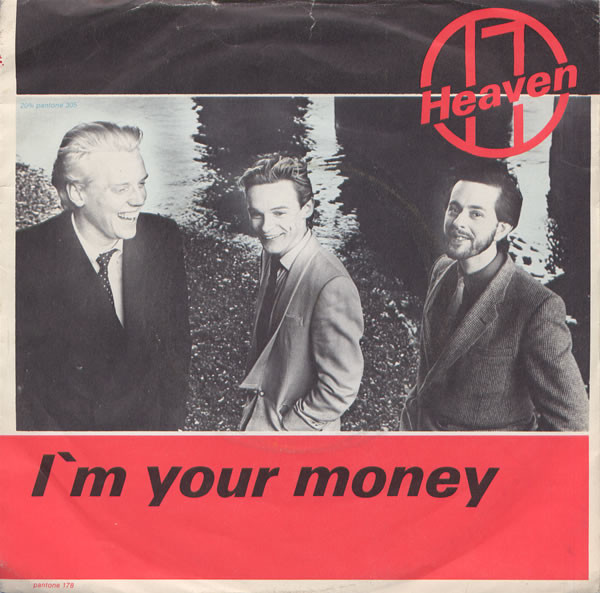
“I’m Your Money” (1981) – Heaven 17

“I’m Your Money” (1981) – Heaven 17 * Written by Ian Craig Marsh, Martyn Ware, and Glenn Gregory * Produced by British Electric Foundation * 45: “I’m Your Money” / “Are Everything” * LP: Heaven 17 (US) * Label: Virgin; Arista (US)

Sheffield’s Heaven 17 took the name of a fictional band mentioned in A Clockwork Orange and created a plausible, synth-oriented realization. I wish they’d have taken it a step further and recorded a song called “Inside,” which the book identifies as one of the imaginary group’s hit singles.

The trio has the distinction of satirizing—while at the same time signifying—the big C’s of early ’80s culture: capitalism, consumerism, and commodification. (Let’s throw in corporatization and commercialism while we’re at it.) Formed by Ian Craig Marsh and Martyn Ware after parting ways with the Human League, they recruited blonde Glenn Gregory and carried forth under the auspices of their British Electric Foundation (B.E.F.) production company.

Their first single, “(We Don’t Need This) Fascist Groove Thang” took a swipe at the era’s right wing politics, doing that thang that the British do, where they pronounce things differently, even the name of America’s new president, making it somehow ring with a panache of correctness. The BBC banned it for their calling “Ree-gan” a “fascist god in motion.” As for the music, it sounded like a fascinating new kind of funk that gets mechanized in a minting facility.

Their next single, “I’m Your Money,” went further by de-grooving the cadence and approximating the sounds of coins dropping on chrome for percussive effect. Words like commodity, industry, credit and treasury are heard and they appear on the sleeve as three well-dressed beneficiaries of their times. Listeners can easily mishear the title refrain as “I’m your body,” and if that was actually the title, the satirical bite wouldn’t suffer a bit, resounding like a cry of protest over a coldly transactional existence

“I’m Your Money,” released in May 1981, did not appear on the group’s Penthouse and Pavement album (which featured the most “music business” themed cover art ever), although it would have fit fine. It did make the sequence, though, for the U.S.-only Heaven 17, a compilation that is, for my money (and body), a perfect album. The flipside for “I’m Your Money” was “Are Everything,” a brisk and blippy non-album cover version of a Buzzcocks B-side.

“Voice of the Bayou” (1962) – Anita Carter

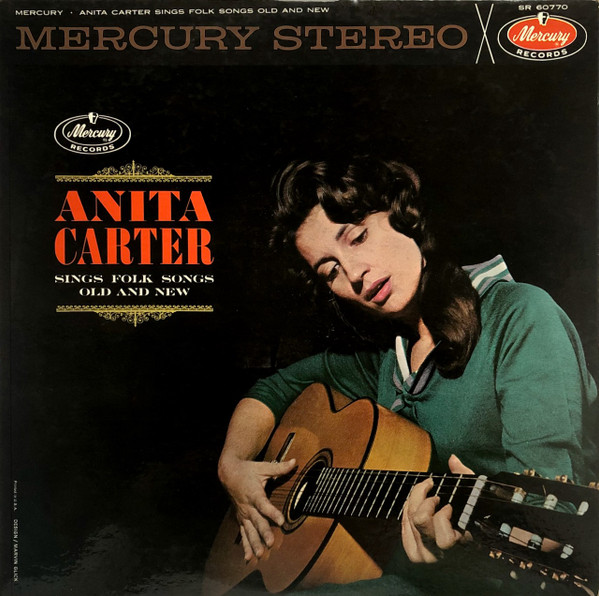
“Voice of the Bayou” (1963) – Anita Carter * Written by Robert L. (Bob) Johnson *  Produced by Shelby Singleton * LP: Anita Carter Sings Folk Songs Old and New * Label: Mercury

Anita Carter, who sang with the Carter Sisters and Mother Maybelle, released this folk album, which is haunted by both heaven and hell, in December 1962. In the grooves, her voice is heard lilting on wintery winds, while on the cover, she looks like Loretta Lynn’s sister in the middle of her guitar lesson. The record’s especially notable for containing the first recorded version of her actual sister June’s “Ring of Fire,” listed on the album as “Love’s Ring of Fire.” (More on this in a future post.)

Among the album’s most haunting tracks (which is saying something, seeing that it closes with Danny Dill’s “Satan’s Child”) is a voodoo number called “Voice of the Bayou.” Written by Bob “Bobby Region” Johnson, a banjo player for the Lonesome Drifters, Bill Monroe and Norman Blake (that nickname of his is a trad folk accolade), the song tells of a “voodoo queen” who’s “waitin’ all alone… on her throne” to claim Anita’s man. Anita, though, will be making her own doll to stick “full of pins,” and “when the moon is dark as blood,” the voodoo queen’s “troubles will begin.”

Among the song’s enchantments is, in fact, a chant that Carter sings throughout. Lyric references spell it out as “um-a-pa palesu-va.” Bob Johnson is no longer with us, but I’m guessing that if he were asked about it, he would say he was merely trying to approximate a regional sounding incantation. I found an assertion elsewhere on the Internet that Anita is singing ancient Hebrew words (“uma-pavel-azamah,” or “glory of the humble flame God has helped”).

Even in a Bible Belt context, this feels like a stretch for a story about a voodoo fight. A more feasible translation, considering that Anita is singing recognizable French words and pronunciation in a Creole setting, is “où ne m’a pas parlé, je vas,” which means “where no one has spoken to me, I go.” But I’m still betting that Johnson just concocted something.

Producer Shelby Singleton, incidentally, must have given this track some local juju of his own, having grown up in Shreveport.

“Ya Tera Tiri” (2006) – Sabah Fakhri

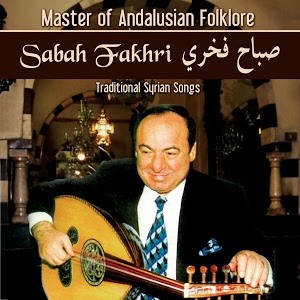
“Ya Tera Tiri” (2006) – Sabah Fakhri * Written by Abu Khalil al-Qabbani * Produced by Sabah Fakhri * LP: Master of Andalusian Folklore * Label: Hollywood Music Center

The charismatic Syrian vocalist Sabah Fakhri appears on this 2006 album cover with an oud, but on stage he had always stood behind a microphone, waving his arms to punctuate musical flourishes. Fakhri was a key figure in reviving the secular Arabic muwaššaḥ genre for the twentieth century and beyond, and this live recording presents it boiled down to its essentials with his lead vocal accompanied by an oud, a spike fiddle, a kanun (zither), a darbukkah drum, and a tambourine, with all players also singing backup. (Other recordings find him fronting larger ensembles.) The final component: an enraptured audience clapping along.  Fakhri was famous for keeping the house lights on so he could maintain eye contact with his audiences. On Master of Andalusian Folklore, a live recording, all the songs merge into each other, and you get a sense that Fakhri is bringing forth all the hits in a thrilling array.  

The traditional song here is familiar to the Levantine Arabic world, with a title that translates to “fly, o bird.” Abu Khalil al-Qabbani, a Syrian pioneer of Arabic music theater, is said to have composed it as a tribute to Esther al-Hakim, a Jewish singer in his troupe whose nickname was “bird.” 

“Senegal’s Call” (1975) – Ousmane M’Baye and His African Ensemble

“Senegal’s Call” (1975) – Ousmane M’Baye and His African Ensemble  * Written by Cat Stevens * Produced by Everett Rickett * 45: “I Love My Dog” / “Mind Excursion” * Label: Capitol

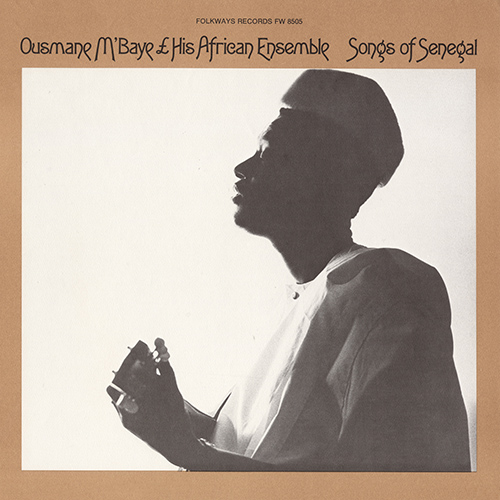
The two Ousmane M’bayes with the highest name recognition are a filmmaker and a designer who were born around the time this Folkways album came out. The Senegalese singer-songwriter M’Baye, though, perhaps got busy with the teaching career he talks about in the notes of Songs of Senegal, his only full album, after recording it. It’s a humble affair with that raw-grain sound that field recordings often have, but it’s unusual (and refreshing) in that a good portion of its songs are credited to M’baye as the songwriter. “Senegal’s Call” is the first of these, and it’s ripe and ready for a cover version with its cheerful, hop-around melody.

M’baye is from Ziguinchor, which is the capital of Senegal’s southern Casamance region. In 1961, the Disques Vogue label in France released a number of EPs under the Echos D’Afrique Noire heading. M’baye is featured on volumes 4 and 5, with each song sounding like haunted, nocturnal messages drifting in from the Atlantic.

“I Love My Dog” (1969) – Lynne Randell

“I Love My Dog” (1969) – Lynne Randell  * Written by Cat Stevens * Produced by Everett Rickett * 45: “I Love My Dog” / “Mind Excursion” * Label: Capitol

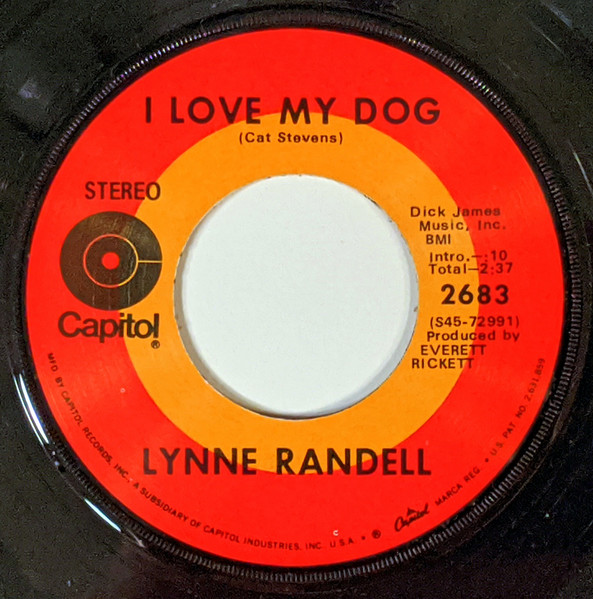
For his 1967 debut album Matthew and Son, Cat Stevens recorded a song for his Dachsund who, disappointingly, was not named Dog Stevens, but Pepe. In 1969 a singer named Lynne Randell, who was like an Australian Petula Clark, recorded the gorgeous version I’m presenting to you here. Who was this Everett Rickett that’s listed as producer with only this one record to his credit? Perhaps it was a pseudonymous Nooney Rickett, a Shindig era LA scenester whose real last name happened to be Everett. It seems unlikely, though, with this track sounding as seasoned and elegant as it does. (Who are the players, for that matter?)

Randell’s biggest hit in Australia was her version of “Ciao Baby,” and it’s sad to realize that “I Love My Dog” would be her very last single, a pinnacle at the end of the road. While touring with the Monkees, Jimi Hendrix, and others, Randell developed an addiction to methamphetine, which she’d battle for the rest of her days. She nonetheless kept herself in close proximity to the music business, marrying the head of Swan Song Records and working as Seymour Stein’s personal assistant at Sire. She passed away at age 57 in 2007.

“My Tennessee Mountain Home” (1972) – Dolly Parton

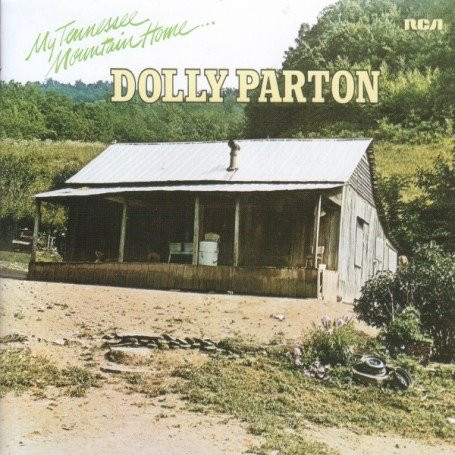
“My Tennessee Mountain Home” (1972) – Dolly Parton  * Written by Dolly Parton * Produced by Bob Ferguson * 45: “My Tennessee Mountain Home” / “The Better Part of Me” * LP: My Tennessee Mountain Home * Label: RCA Victor * Charts: Billboard country (#15)

Dolly Parton was a marvel who transcended category. I liked how Eric Weisbard interpreted her legacy in his Top 40 Democracy (2014) as an artist who had always been media-savvy enough to diversify her image, but never at the expense of her traditional appeal. He explains her importance as a key player in, if not the very inventor of, something we might think of as the “centrist country radio format,” a profitable pop outpost that’s separate from the country genre. 

Of course there’s  plenty more to consider with such a multi-layered musician and conscientious public figure as Dolly Parton. She wrote the career trajectory playbook for the sort of A-list crossover country queen we’re familiar with today. And although she never turned away from her origins, her multiple charitable foundations and aid initiatives gave that roots sensibility an exclamation point.

When news arrived today that she was gone, I paid attention to the music my inner thoughts cued up, and there was “My Tennessee Mountain Home” right there at the forefront. It’s not surprising, because it’s the title track for the autobiographical album that guided me, during the era of Dolly the early ’80s movie star, toward a different appreciation of her. The song embraces you as something you want to sing right along with, and so you do. And if someone told you it doubled up as a church hymn, you’d believe it.

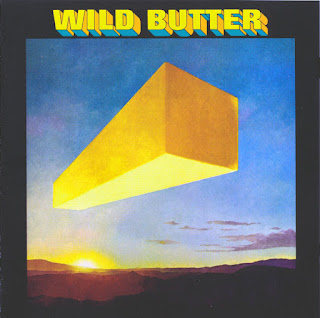
“Roxanna (Thank You for Getting Me High)” (1970) – Wild Butter

“Roxanna (Thank You for Getting Me High)” (1970) – Wild Butter * Written by John Senné * Produced by Eric Stevens * 45: “Roxanna (Thank You for Getting Me High)” / “Terribly Blind” * LP: Wild Butter * Label: United Artists * Billboard charts: Regional breakout—Cleveland * Entered: 1970-08-22

“Roxanna” will strike most listeners as a lost proto-power pop gem to be filed alongside Big Star or the American Dream, with its Beatle allegiances, airy melodicism, and odd refrain (“Naked heart and naked mind / Thank you Roxanna for getting me high”). The most available story about Akron’s Wild Butter is that drummer/vocalist Rick Garen and keyboardist Jerry Buckner (who, alongside a man named Garcia, would later enrich contemporary society with “Pac Man Fever”) scored a record deal with United Artists before having a full band. Their songwriter-guitarist friend John Senné, along with bassist Steve Price, then joined up to help get an album in the can.

Most of the songs on the album, including “Roxanna,” are Senné’s, but Price and Buckner also contribute alongside cover versions of the Bee Gees, Neil Young, and the Moody Blues. (The flipside “Terribly Blind” is a Senné/Price track.) Garen’s lead vocal has a British affectation that’s not uncommon for the era, but then it may remind you of Guided By Voices singer Robert Pollard (of Dayton), leading you to wonder if that’s an Ohio thing.

An August 1970 issue of Record World mentions Cleveland’s popular WIXY as a station giving “Roxanna” heavy rotation, which is no surprise because the record’s producer and the band’s manager was former WIXY program director Eric Stevens, who knew a thing or two about the radio biz and his city’s musical tastes. He’d also produce and manage local heavy rockers the Damnation of Adam Blessing and—his biggest success—Brownsville Station. Stevens is quoted in a book called Cleveland Rock and Roll Memories as being frustrated with United Artists who didn’t seem to know much about “bringing the record home,” ignoring the pre-installed roadblocks of Wild Butter’s overt “getting high” references. (Previously posted at Early ’70s Radio).

“River’s Invitation” (1969) – Aretha Franklin

“River’s Invitation” (1969) – Aretha Franklin * LP: Soul ’69 * Written by Percy Mayfield * Produced by Jerry Wexler and Tom Dowd * Label: Atlantic

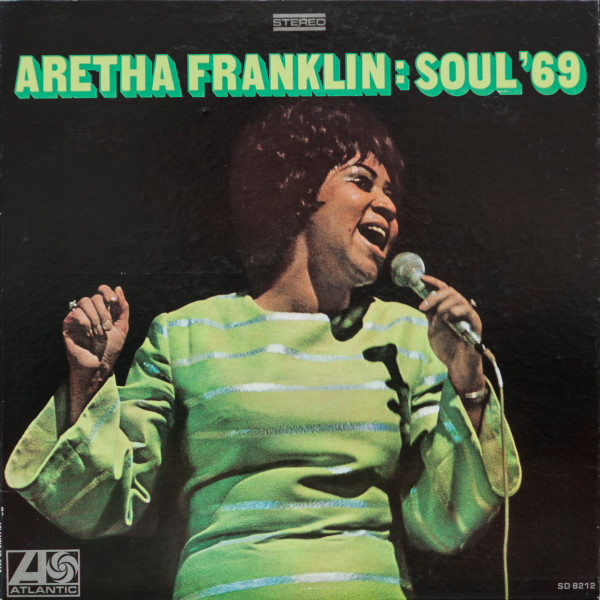
“River’s Invitation” sounds so joyful on Aretha Franklin’s Soul ’69 album that it may as well be what she’s singing on the cover image. Percy Mayfield’s lyrics express sadness, though, and they were born of it. In the early fifties, Mayfield was enjoying a rising career as a camera-friendly rhythm and blues singer and songwriter, propelled by his 1950 single “Please Send Me Someone to Love.” In late 1952, a chauffeur crashed the car Mayfield was riding in, and the impact disfigured his face. Fortunately, Mayfield continued on as a prolific and successful songwriter, working closely with Ray Charles and writing classic tracks like “Hit the Road Jack” and “Hide Nor Hair.”  Demons, though, would rise up in such titles as “Memory Pain,” “My Heart Is Cryin'” and “The Jug and I.”

Mayfield’s own downcast and bluesy 1953 recording of “River’s Invitation,” about resisting the temptation to let the current swallow him up, marked his return to business after the accident. In 1963, he redid the song with Charles as producer, adding the crucial river-rhythm riff running through it which all future cover versions would adopt. It peaked at number 99 on the Billboard Top 100 and should have risen higher.

When you listen to Franklin’s 1969 cover version, you don’t tend to think about the song’s melancholy history, and it likely won’t even dawn on you that the lyrics she’s singing reflect it. This is because it comes off as a celebration, and if you don’t listen too close, you’ll assume that she’s singing about the renewing waters of baptism. I like to think of the track as a celebration of Mayfield, who kept busy making music until his death in 1984.

“Havin’ Hard Times” (1980) – John Anderson

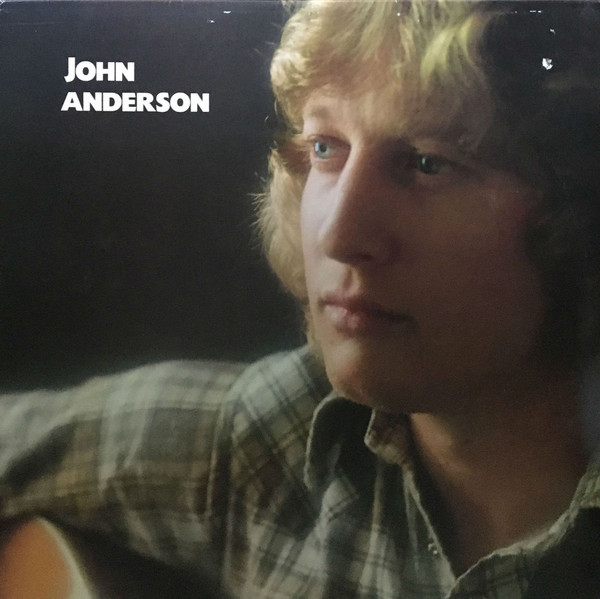
“Havin’ Hard Times” (1980) – John Anderson * LP: John Anderson * Written by John Anderson and Lionel Delmore * Produced by Norro Wilson * Label: Warner Bros. Records

“Havin’ Hard Times,” the first song on John Anderson’s 1980 debut album, starts out with the same kind of flangey, minor-key arpeggios and drizzly atmosphere that would accompany such geographically and stylistically faraway records by U2 or The Cure that same year. It’s a strange association to hear on a country record of any era. The lyrics, too, reflect the era’s economic doldrums, another characteristic more typical of music on the other side of the Atlantic. Anderson’s imploring drawls, though, do reach backward to the American Dust Bowl and forward to Farm Aid.

The rest of his album veers away from its opener’s stark social commentary, as does the rest of his successful career. Lifestyle material became more of John Anderson’s forte, with songs like “Swingin’,” “Black Sheep,” “I’ve Got It Made” and more. “Seminole Wind,” however, stands out for its Native American focus, and also for branding Anderson’s persona to his Florida roots in an honorable way.

“Havin’ Hard Times,” though, that opening track from his debut, still reps its timeframe with wide-angle authority, retaining all the promise of how country music in that forthcoming decade might have sounded.