“My Tennessee Mountain Home” (1972) – Dolly Parton

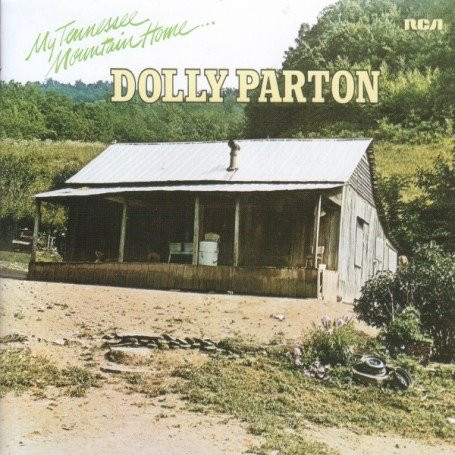
“My Tennessee Mountain Home” (1972) – Dolly Parton  * Written by Dolly Parton * Produced by Bob Ferguson * 45: “My Tennessee Mountain Home” / “The Better Part of Me” * LP: My Tennessee Mountain Home * Label: RCA Victor * Charts: Billboard country (#15)

Dolly Parton was a marvel who transcended category. I liked how Eric Weisbard interpreted her legacy in his Top 40 Democracy (2014) as an artist who had always been media-savvy enough to diversify her image, but never at the expense of her traditional appeal. He explains her importance as a key player in, if not the very inventor of, something we might think of as the “centrist country radio format,” a profitable pop outpost that’s separate from the country genre. 

Of course there’s  plenty more to consider with such a multi-layered musician and conscientious public figure as Dolly Parton. She wrote the career trajectory playbook for the sort of A-list crossover country queen we’re familiar with today. And although she never turned away from her origins, her multiple charitable foundations and aid initiatives gave that roots sensibility an exclamation point.

When news arrived today that she was gone, I paid attention to the music my inner thoughts cued up, and there was “My Tennessee Mountain Home” right there at the forefront. It’s not surprising, because it’s the title track for the autobiographical album that guided me, during the era of Dolly the early ’80s movie star, toward a different appreciation of her. The song embraces you as something you want to sing right along with, and so you do. And if someone told you it doubled up as a church hymn, you’d believe it.
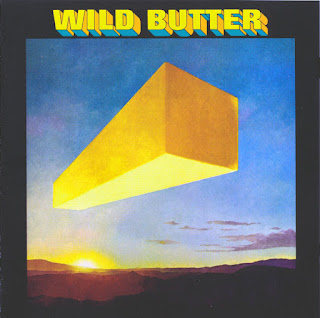
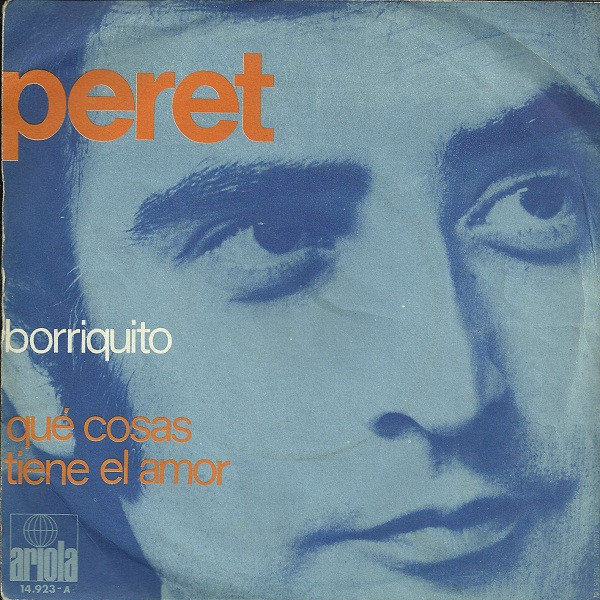
“Roxanna (Thank You for Getting Me High)” (1970) – Wild Butter

“Roxanna (Thank You for Getting Me High)” (1970) – Wild Butter * Written by John Senné * Produced by Eric Stevens * 45: “Roxanna (Thank You for Getting Me High)” / “Terribly Blind” * LP: Wild Butter * Label: United Artists * Billboard charts: Regional breakout—Cleveland * Entered: 1970-08-22

“Roxanna” will strike most listeners as a lost proto-power pop gem to be filed alongside Big Star or the American Dream, with its Beatle allegiances, airy melodicism, and odd refrain (“Naked heart and naked mind / Thank you Roxanna for getting me high”). The most available story about Akron’s Wild Butter is that drummer/vocalist Rick Garen and keyboardist Jerry Buckner (who, alongside a man named Garcia, would later enrich contemporary society with “Pac Man Fever”) scored a record deal with United Artists before having a full band. Their songwriter-guitarist friend John Senné, along with bassist Steve Price, then joined up to help get an album in the can.

Most of the songs on the album, including “Roxanna,” are Senné’s, but Price and Buckner also contribute alongside cover versions of the Bee Gees, Neil Young, and the Moody Blues. (The flipside “Terribly Blind” is a Senné/Price track.) Garen’s lead vocal has a British affectation that’s not uncommon for the era, but then it may remind you of Guided By Voices singer Robert Pollard (of Dayton), leading you to wonder if that’s an Ohio thing.

An August 1970 issue of Record World mentions Cleveland’s popular WIXY as a station giving “Roxanna” heavy rotation, which is no surprise because the record’s producer and the band’s manager was former WIXY program director Eric Stevens, who knew a thing or two about the radio biz and his city’s musical tastes. He’d also produce and manage local heavy rockers the Damnation of Adam Blessing and—his biggest success—Brownsville Station. Stevens is quoted in a book called Cleveland Rock and Roll Memories as being frustrated with United Artists who didn’t seem to know much about “bringing the record home,” ignoring the pre-installed roadblocks of Wild Butter’s overt “getting high” references. (Previously posted at Early ’70s Radio).

“Borriquito” (1971) – Peret

“Burriquito” (1971) – Peret * Produced by Juan Pardo * Written by Peret * 45: “Burriquito” / “Que Cosas Tiene el Amor” * Label: Ariola * Charts: Der Musikmarkt (Germany), #1 (2 weeks); Stichting Nederlandse Top 40 (Netherlands), #1 (7 weeks).

Peret (born Pedro Pubill Calaf) was the first big face, name, and voice of Catalan Rumba, the palmas y gitarra flamenco sound that became the backing track, in the late sixties and early seventies, for Spain’s booming status as a tourist destination. The widening up of Spain’s doors to outsiders by the heavy-handed Franco regime, however, didn’t ease up on the stifled cultural production for the country’s minorities. Peret, then, only released a few songs in Catalan during his heyday, with all of the rest being in Spanish.

This particular situation, in fact, sheds light on Peret’s biggest song, “Burriquito” (little donkey) which one first encounters as being brazenly meaningless (and possibly a goof on “Blame It on the Bossanova”). The implication of the title term is “dumb,” and when you watch the video of him along with a troupe of dancers doing routines in the streets of Ibiza with funny costumes and their bodies making letter shapes, you assume they’re just doing their best to keep things bizarre. “I’m a donkey like you,” he sings, enunciating vowel sounds like a mock nursery school lesson.

Peret’s own words, though, in a documentary called Yo Soy La Rumba, indicate that the whole “Burriquito” exercise had a language identity motive. He says he was “thinking about those people [in Spain] who didn’t want to seem like they were from here, who made songs in English.” This implies he’s poking fun at those singers using English to look for bigger audiences, but also adding self-deprecation regarding his own decision to sing in Spanish and not in Catalan. 

“A Good Year for the Roses” (1970) – George Jones

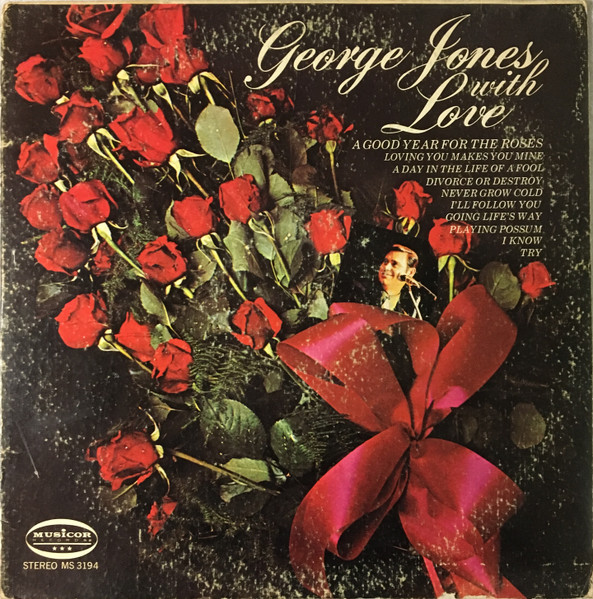
“A Good Year for the Roses” (1971) – George Jones * Written by Jerry Chesnut * Produced by Bob Moore * 45: “A Good Year for the Roses” / “Let a Little Loving Come In” * LP : George Jones with Love (1971)* Label: Musicor * Charts: Billboard country: (#2, entered 11/28/70 and peaked in ’71)

Daniel Johnston may have claimed that no woman could “make a George Jones” out of him, but his East Texas subject’s own self-pitying, heartbroken performance on “A Good Year for the Roses” could make a George Jones out of anyone. Put aside those aspects of the song (written by Jerry Chesnut) that come off as what Dave Marsh, en route to otherwise praising it, labeled unselfconscious chauvinism. (“After three full years of marriage, it’s the first time that you haven’t made the bed,” the Possum laments in his wobbly way.)

It’s the image of him sitting on the porch and watching his untended yard flourish that leads you to an assorted flowering of meaning. There’s that aspect of feeling immobile and letting the world do its thing—for better or worse—all around you; the tactic of distraction, allowing little cheerful things to crowd out the troubling ones; or this: that maybe the breakup was for the best and the blooms will, in the long run, continue attesting to that. (She did leave the baby too, right?) Whatever the interpretation, it’s a melancholy road to arrival.

Jones recorded two versions of the song, both produced by Bob Moore, in early 1970. The first one (a January session) clocks in at 3:12, has prominent piano lines in the intro, and a microphone pop on “funny.” The second one (February session) clocks in at 3:03 and is haunted by Pete Drake’s steel guitar and Bill Pursell’s winter piano. This was the radio version that reached #2 on the Billboard country chart and appeared on the 1971 George Jones with Love LP.

I mention this because that first version showed up, perhaps by accident, on a 1981 budget Gusto label cassette compilation called Golden Hits and reached the ears of many a listener. The discography in the 2009 Bear Family compilation A Good Year for the Roses: The Complete Musicor Recordings 1965-1971 (Part 2) overlooks this, rolling it out as a previously unissued first appearance. So goes life with country discographies, unkempt as George Jones’s lawn.

Elvis Costello reached the UK #6 singles slot with a genre-exercise rendition of this in 1981 featuring a Billy Sherrill production. Alan Jackson did a low-charting tribute duet with Jones in 1994.

“Lookin’ In” (1971) – Bobbie Gentry

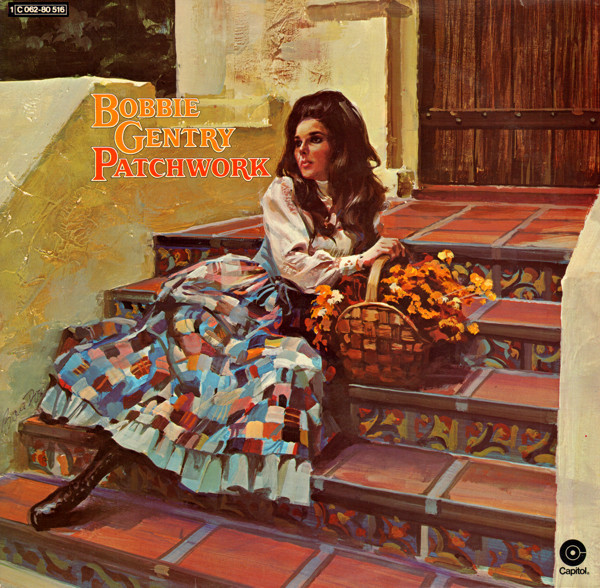
“Lookin’ In” (1971) – Bobbie Gentry * Written and produced by Bobbie Gentry * LP: Patchwork * Label: Columbia

“Mystique” became a key word for Bobbie Gentry when her very first (and biggest) single, the Southern-Gothic “Ode to Billy Joe” (1967), darkened the Love Summer sky with its moody account of an unclear event. Then, after a handful of distinctive albums, a popular run in Vegas, and a final public-eye appearance at the Academy of Country Music Awards in 1982, she vanished and became impossible to contact.

Her last proper album, 1971’s Patchwork, featured orchestral interludes and closed with a track called “Lookin’ In.” This turned out to be a suitable swan song of sorts. “I’m packin’ up and I’m checkin’ out,” she sings, claiming full ownership for the state she was in and eschewing the notion of “sacrifice” as the “ugliest word” that keeps people from being who they’re meant to be. 

Maybe one of the best clues for explaining her eventual disappearance comes from former Capitol Records executive Ken Mansfield. He writes in his memoir Between Wyomings (2009) about traveling with Gentry and seeing how intensively she’d study Ayn Rand’s Atlas Shrugged. The novel was Rand’s 1957 thousand-plus page opus about her “objectivist” philosophy, which boiled down to a belief in the complete, unregulated rights of the individual to pursue wealth and prosperity. There’s a key character in the book named John Galt, a genius innovator, engineer and philosopher who goes on strike, due to the inability of his world to allow him to work with no regulations and restraint. He also talks other innovators into joining him in his act of defiance. Makes you wonder, then, if Gentry simply pulled a John Galt.

“Once You Understand” (1972) – Lily Fields and the Family

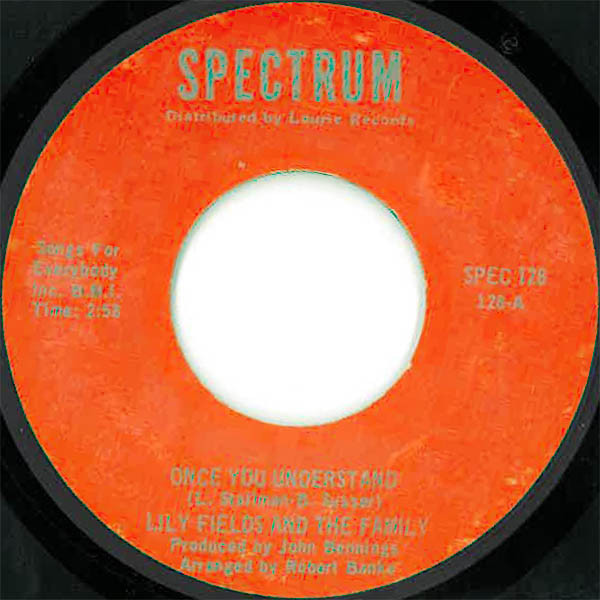
“Once You Understand” (1972) – Lily Fields and the Family * Written by Lou Stallman and Bobby Susser * Produced by John Bennings * 45: “Once You Understand” / “Help Me Make It Through the Night” * Label: Spectrum
If the original “Once You Understand”—a #23 hit for a studio project called Think—told a tragic tale, with its generation gap unrest and drug-overdose ending, the soul cover version by Lily Fields and the Family managed to lighten things up a bit.  Produced by Spectrum label head John Bennings, this one featured a chugging, danceable backing track with the kind of kitchen table family banter that became more of a familiar sound a few years later when black family sitcoms such as Good Times had a regular TV presence. For the climax of this new version of “Once You Understand,” the father merely finds out his son is at the police station, and it feels like more of a punch line than a tragic turn of events. The record never charted, but samples of it turned up on Biz Markie’s “Things Get a Little Easier” (1989). Lily Fields put out a number of recordings in the late sixties and early seventies, but the strongest of these, called “Changes,”  sat unissued and unappreciated until Northern Soul excavators brought it to light in 2019.  

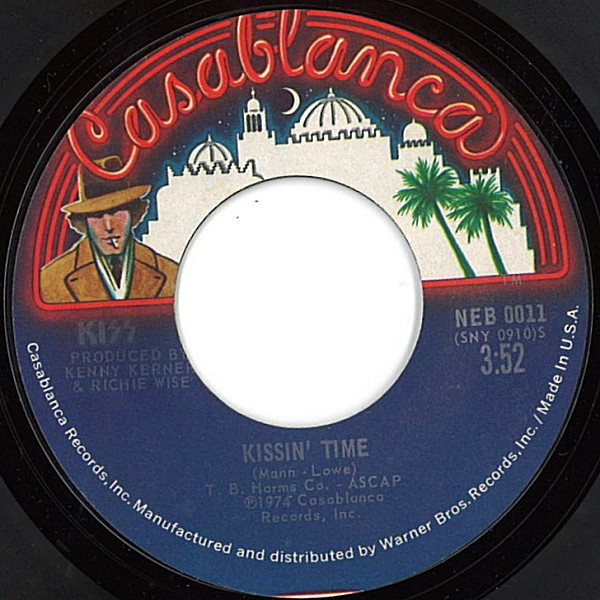
“Kissin’ Time” (1974) – Kiss

“Kissin’ Time” (1974) – Kiss * Written by Bernie Lowe and Kal Mann * Produced by Kenny Kerner and Richie Wise * 45: “Kissin’ Time” / “Nothin’ to Lose” * LP: Kiss * Label: Casablanca * Charts: Billboard (Hot 100 – #83)

It’s too bad that no single Kiss song featured alternate lead vocals by all four members. They were all so distinctive. The closest they got was “Kissin’ Time,” the Bobby Rydell cover that Casablanca Records head Neil Bogart insisted they do in April ’74 to spark radio action. (Rydell’s record had reached #11 in 1959.) Loaded up with large market city references and kissing contest promotional possibilities (which indeed happened), Bogart mailed out 45s and then made certain the track would show up on July reprints of the debut album they had already released in February.

The track sported vocal turns by Gene, Paul and Peter and embarrassed the group, but it shouldn’t have. It preserved the huckstery chutzpah of the original, and Peter’s bum-bum-diddit drums in the verses suggested both Led Zeppelin’s “Immigrant Song” and even cheeky Gene Krupa (“Disc Jockey Jump,” say). It also seems a tad appropriate that the introductory chart entry for the future lunchbox icons would have the sticky bubblegum residue of Neil Bogart—who’d brought the world “Yummy Yummy Yummy” and “Goody Goody Gumdrops”—all over it.

“Gone” (1971) – Alan Parker and Alan Hawkshaw

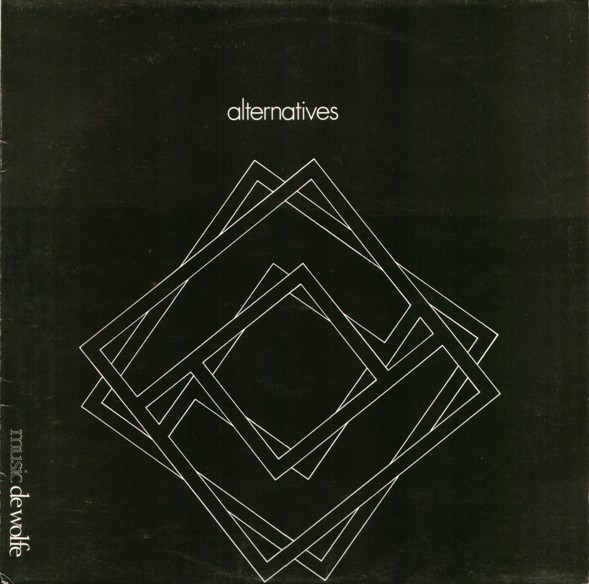
“Gone” (1971) – Alan Parker and Alan Hawkshaw * Written and produced by Alan Parker and Alan Hawkshaw * LP: Alternatives * Label: Music De Wolfe

If you can afford a slot on your classic album list for library music, consider Alternatives by the British composers Alan Parker (guitarist) and Alan Hawkshaw (keyboardist). They loaded up the master shelves at KPM with recordings done together, individually, and with others, and did much in the way of shaping that genre’s curiously evocative sound.  Alternatives was one of the few projects Parker and Hawkshaw did for De Wolfe instead of for KPM, but it seemed to overachieve in media placements during the seventies. “Jolly Thomas” is possibly the record’s most recognizable one, classified for prospective sync-ers as “bouncy” and “childlike,” but “Woodworm” (“heavy, comic…”) also made the rounds.

The track called “Gone” appeared as a “desolate, lonely” needle-drop in a well-circulated educational short produced by Brigham Young University called Cipher in the Snow (1974). Its flute and guitar blew chilly winds as Cliff, a neglected grade schooler, used his lunch money to craft a melancholy snowman’s face. For its closer, the film made use of the album’s “The Difference” (“dark, moody, mellow”), wherein the flute, raven-like, reappears. The film’s uninformative music credits have likely frustrated viewers who couldn’t shake the distinctive music from their minds.

Where did Cipher in the Snow‘s joyous frog sequence music, though, reminiscent of Sagittarius’s “Song to the Magic Frog” (1968), come from?

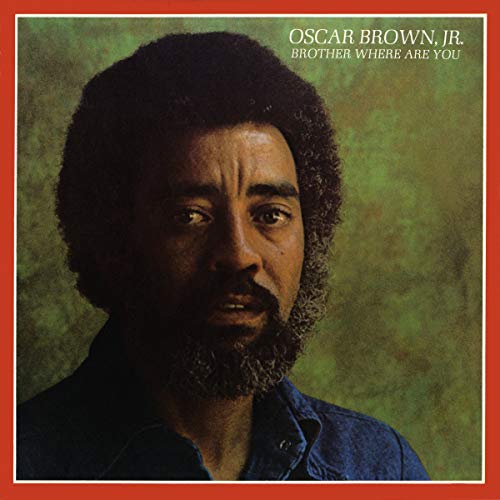
“The Lone Ranger” (1974) – Oscar Brown, Jr.

“The Lone Ranger” (1974) – Oscar Brown, Jr. * Written by Oscar Brown, Jr. * Produced by Joel Dorn * 45: “The Lone Ranger” / “Feel the Fire” * LP: Brother Where Are You? * Label: Atlantic * Charts: Billboard Hot 100 #69, Billboard Soul #27

Referring to Oscar Brown, Jr. as an influential Chicago musician doesn’t quite do the trick because he was such a hyphenate (playwright-activist-actor, etc.). Before recording his first album in his early thirties, though, he’d written lyrics for familiar tunes (“Dat Dere,” “Afro Blue”) and was interpreted by the likes of Mahalia Jackson and Nina Simone. By his late forties, in 1974, Brown finally looked poised to find a commercial groove of his own, but “The Lone Ranger” ended up as a one-off, peaking at #69 in Billboard as his only pop chart appearance. It’s a memorable timepiece that stands on the borderline of novelty and topical, riffing on the scenario of the masked TV hero, with sidekick Tonto, surrounded by Navajos. “We’re in trouble,” says the Lone Ranger. “What do you mean we?” answers Tonto. Even those only half-listening will inevitably get the hook of “we, white man?” stuck in their heads, as sung by Cissy Houston and Tender Loving Care. Billboard referred to this as a take on an “old joke,” while Mad magazine readers likely remembered it from a March 1958 issue in “TV Scenes We’d Like to See” by E. Nelson Bridwell. (Blogger Mark Evanier recently asked if that was the first appearance of the joke, so I’ll second that.) The record surely stung in its context, with the Wounded Knee Incident of 1973 still fresh in public memory.

“All Things Must Pass” (1970) – Billy Preston

“All Things Must Pass” (1970) – Billy Preston * Written by George Harrison * Produced by Billy Preston and George Harrison * LP: Encouraging Words * Label: Apple

Billy Preston’s Beatle connections went all the way back to 1962 Liverpool, when the starstruck foursome warmed up for their idol Little Richard, who included Preston in his touring group. So when Preston sat in on organ for their Get Back sessions in 1969, the comfortable music he made with them testified of their old-friend status. He recorded two albums for their Apple label, That’s the Way God Planned It (1969) and Encouraging Words (1970), with co-production and guitar work by the symbiotically God-conscious George Harrison. For Encouraging Words, Harrison allowed Preston to roll out two of his own songs, “My Sweet Lord” and “All Things Must Pass,” in September 1970, two months before he’d release his own versions. For his iteration of “All Things Must Pass” (which puts parentheses around “must” on the label), Preston adapts the song to an arrangement reminiscent of Nat King Cole’s “The Christmas Song,” working its way up to the IV in the verse beginnings, then scooting back down (III-II-I). By then the Christmas season market had become (and would continue to be) a major part of the Beatles’ commercial legacy, with Harrison’s All Things Must Pass release date of November 27, 1970, being a case in point. It’s hard not to hear Preston’s approach as some sort of St. Nicholas eye-wink, complete with falling snowflake strings at the end.