“I Love My Dog” (1969) – Lynne Randell * Written by Cat Stevens * Produced by Everett Rickett * 45: “I Love My Dog” / “Mind Excursion” * Label: Capitol
For his 1967 debut album Matthew and Son, Cat Stevens recorded a song for his Dachsund who, disappointingly, was not named Dog Stevens, but Pepe. In 1969 a singer named Lynne Randell, who was like an Australian Petula Clark, recorded the gorgeous version I’m presenting to you here. Who was this Everett Rickett that’s listed as producer with only this one record to his credit? Perhaps it was a pseudonymous Nooney Rickett, a Shindig era LA scenester whose real last name happened to be Everett. It seems unlikely, though, with this track sounding as seasoned and elegant as it does. (Who are the players, for that matter?)
Randell’s biggest hit in Australia was her version of “Ciao Baby,” and it’s sad to realize that “I Love My Dog” would be her very last single, a pinnacle at the end of the road. While touring with the Monkees, Jimi Hendrix, and others, Randell developed an addiction to methamphetine, which she’d battle for the rest of her days. She nonetheless kept herself in close proximity to the music business, marrying the head of Swan Song Records and working as Seymour Stein’s personal assistant at Sire. She passed away at age 57 in 2007.
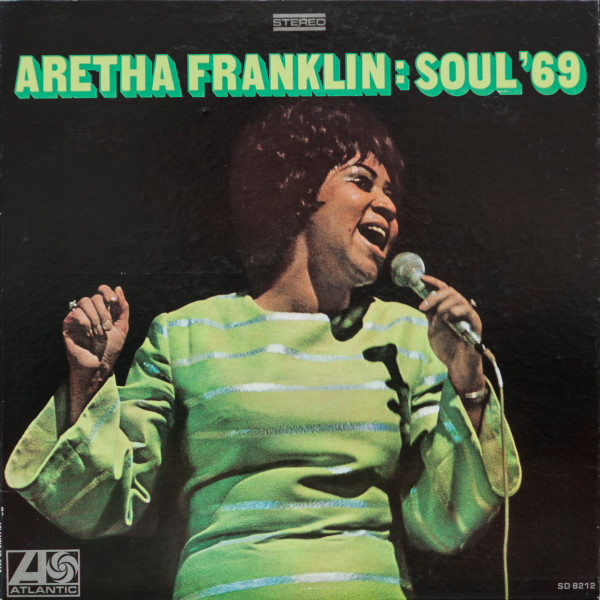
“River’s Invitation” (1969) – Aretha Franklin * LP: Soul ’69 * Written by Percy Mayfield * Produced by Jerry Wexler and Tom Dowd * Label: Atlantic
“River’s Invitation” sounds so joyful on Aretha Franklin’s Soul ’69 album that it may as well be what she’s singing on the cover image. Percy Mayfield’s lyrics express sadness, though, and they were born of it. In the early fifties, Mayfield was enjoying a rising career as a camera-friendly rhythm and blues singer and songwriter, propelled by his 1950 single “Please Send Me Someone to Love.” In late 1952, a chauffeur crashed the car Mayfield was riding in, and the impact disfigured his face. Fortunately, Mayfield continued on as a prolific and successful songwriter, working closely with Ray Charles and writing classic tracks like “Hit the Road Jack” and “Hide Nor Hair.” Demons, though, would rise up in such titles as “Memory Pain,” “My Heart Is Cryin'” and “The Jug and I.”
Mayfield’s own downcast and bluesy 1953 recording of “River’s Invitation,” about resisting the temptation to let the current swallow him up, marked his return to business after the accident. In 1963, he redid the song with Charles as producer, adding the crucial river-rhythm riff running through it which all future cover versions would adopt. It peaked at number 99 on the Billboard Top 100 and should have risen higher.
When you listen to Franklin’s 1969 cover version, you don’t tend to think about the song’s melancholy history, and it likely won’t even dawn on you that the lyrics she’s singing reflect it. This is because it comes off as a celebration, and if you don’t listen too close, you’ll assume that she’s singing about the renewing waters of baptism. I like to think of the track as a celebration of Mayfield, who kept busy making music until his death in 1984.
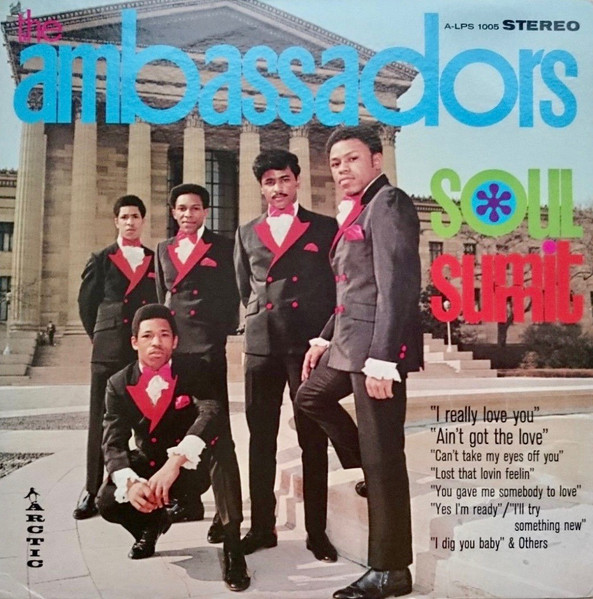
“I Really Love You” (1969) – The Ambassadors * LP: Soul Summit * Written by Jimmy Bishop and Kenny Gamble * Produced by Jimmy Bishop * Label: Arctic * Charts: #123 (Billboard Bubbling Under)
This is the only charting single by Philadelphia’s Ambassadors, and it has an ongoing mystique among soul collectors. The group recorded their first few singles on heavyweight Atlantic, but then shifted over to Arctic, which sounds a bit like a wisecrack. Arctic was a label belonging to Jimmy Bishop who, unlike Kenny Gamble (co-writer), Leon Huff (keyboards), and Bobby Martin (arranger), three future Philly soul VIP’s who worked on this record, opted to lay comparatively low.
“I Really Love You” captures everyone involved learning their craft, or am I not giving them enough artistic credit by saying that? There’s a murkiness and moodiness to the track that has much to do with the backup vocals being mixed way back with a touch of reverb. This gives it the effect of lead singer Herley Johnson being joined in by strangers farther down the street who are strangely aware of, and invested in, his situation. This kind of connection is something young people are more able to conceive of than older ones. The world is smaller, a bit kinder, and distant voices of solidarity seem more believable. (Maybe this is why people like musicals.)
So that’s one crucial part of this record that makes a listener feel wistful. Then again, those background singers could be the voices in Herley’s head – also a moody listening device. The rest of its appeal, of course, has to do with the musicians.
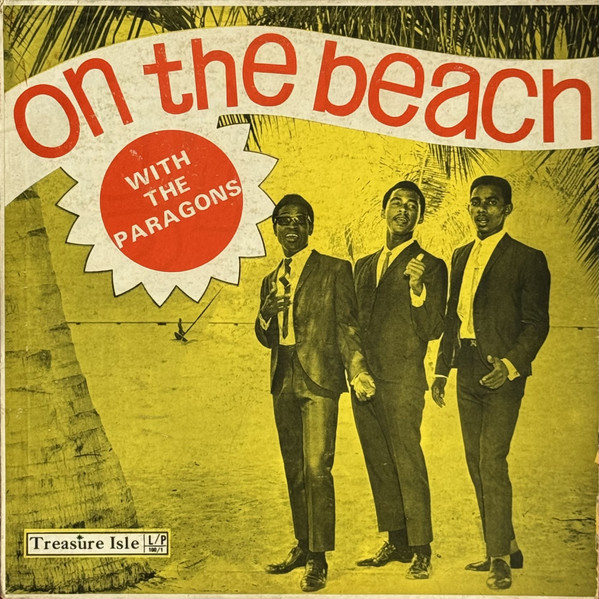
“The Tide Is High” (1967) – The Paragons * LP: On the Beach with the Paragons * Written by John Holt * Produced by Arthur “Duke” Reid * Label: Treasure Isle.
The Paragons’ original Jamaican version of “The Tide Is High” is the most palatable one for me. I, like you, have heard the Blondie version—a number one hit in the US and UK in early 1981—a zillion times, but that’s not the only reason I don’t need it on my desert island. There’s an easy going restraint to the original that gives it a richness in meaning. With Blondie, no calypso horns or steel drums can soften the well-known drive of the vocalist who sings “I’m not the kind of girl who gives up just like that,” who we also remember singing “one way or another, I’m gonna getcha getcha getcha” and “come on, rip her to shreds.” There’s an insistence in Blondie’s remake that gives its radio dominance a sense that we’re continually calling a truce and ceding space to it.
The Paragons, on the other hand, are more seductive, with singer and writer John Holt implying that although he’s “not the kind of guy who gives up just like that,” he will bide his time. Even the tide metaphor strikes the right tone, different from what Brutus said in Julius Caesar about there being one big wave in our lives that leads on to fortune, and that if we don’t take it “when it serves” we’ll spend the rest of our lives in “shallows and in miseries.”
This kind of narrow vision took Brutus to the grave not long after he uttered it. He would have done well to consult with an islander, who would have told him that “the tide is high,” but there are many more to come. Is there not an allure to island music, and surf music, for that matter, that implies that the tide is an ever changing thing? And that big waves are not to be feared or essentialized but celebrated and anticipated as long as we breathe?
In 2002, a girl group called Atomic Kitten took the song back to number one in the UK, and it played during the opening credits of The Lizzie McGuire Movie the following year. That it conveys no overtly non-manufactured message only supports the emotional reads I’m getting from the other two.
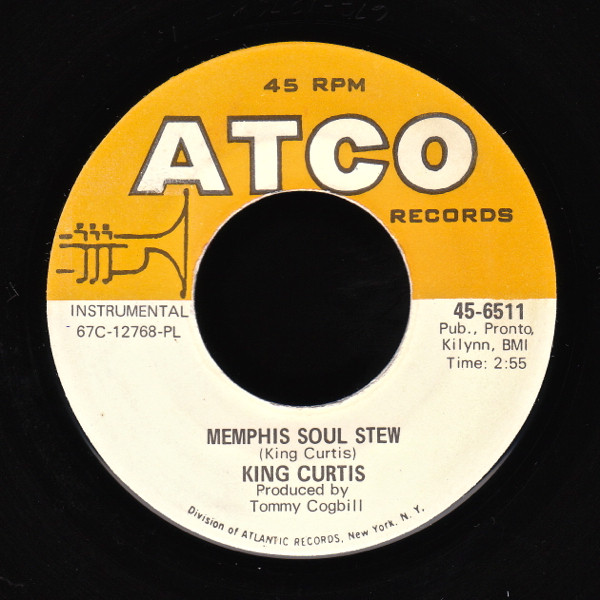
“Memphis Soul Stew” (1967) – King Curtis * Produced by Tommy Cogbill * 45: “Memphis Soul Stew” / “Blue Nocturne” * Label: Atco. Billboard Charts: Hot 100(#33), Soul (#6).
A Texan he may have been, but sax man King Curtis comes off as a top Memphis ambassador on this record. The spoken intro tells us that the soul stew on special contains “half a teacup of bass,” a “pound of fatback drums,” “four tablespoons of boiling Memphis guitars,” a “little pinch of organ,” and “half a pint of horns.” These are musical ingredients, but I don’t know if there’s any better place to experience sound-taste synesthesia. The track gets you hungry.
The great bassist Jerry Jemmott, who played on the 1971 version for King Curtis’s Live at Fillmore West, writes in his Makin’ It Happen memoir about his disappointment that he couldn’t have been the one to have played on the 1967 single, a Top 40 hit. But Tommy Cogbill was the producer, and why would a bassist of that caliber need anyone else? (Cogbill’s involvement also reminds you how much more of a multiracial affair so many of the great Southern soul records actually were.)
But here’s why “Memphis Soul Stew” always finds its way back in my head: At the inevitable times when I realize a stressful situation will work itself out, or not kill anyone if it doesn’t, I hear King Curtis’s voice saying “this is gonna taste all right,” sometimes altered as “this is gonna be alright.”
The B-side is a notable contrast. The saxophone’s excused itself and everyone else sounds like they’ve had way too much stew.
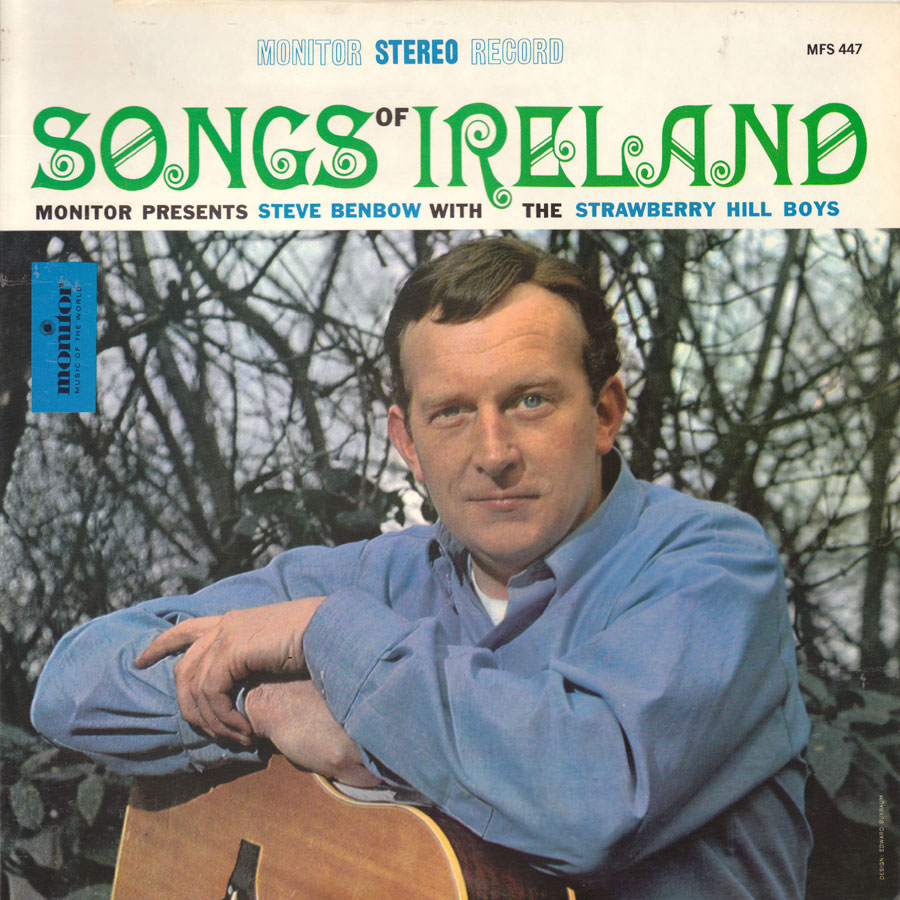
“Little Beggarman” (1965) – John Anderson * LP: Songs of Ireland * Label: Monitor
The late Londoner Steve Benbow recorded over 20 albums between 1957 and 2003, and his visibility as a fingerpicker during the early stages of the British folk revival inspired up and coming guitarists like Davy Graham. His 1965 Songs of Ireland album includes a version of “Little Beggar Man” that’s my favorite one on record. (My favorite overall performance, though, comes from the Clancy Brothers on the first episode of Pete Seeger’s Rainbow Quest TV show from 1966 – just three voices and a guitar.)
Benbow’s recording includes accompaniment by the Strawberry Hill Boys who would later shorten their name to the Strawbs and become a British folk rock institution. Their involvement, oddly enough, gives the English rendering of an Irish song an American bluegrass feel, which is the kind of band they were aiming to be back then.
In his liner notes, Benbow says the song uses the melody for a familiar Irish folk song called “Oul Lamas Fair in Ballycastle O,” which may be so, if you’re talking only about the melody line, which that song does use but over different chord changes. “Little Beggar Man” is more commonly understood as a relative of the fiddle tune “Red Haired Boy.”
I’ve puzzled a bit about the rest of Benbow’s eccentric liner notes for this song: “Nobody has much sympathy for a poor man if he be strapping and big. So if you want to steal, be a bit like Lautrec, for begging is stealing your own dignity from yourself.” I’ve got the Lautrec bit – a reference to the 4’8″ French painter – but his overall meaning, which has little to do with the lyrics, is still processing.
The Togolese singer Bella Bellow is a member of the “27 club” – the list of promising young musicians who died at that young age. Having recorded only thirteen songs, she perished in an auto accident in her home country in 1973. She made a strong impression, though, thanks to popular singles like “Rockia,” live performances, and a manager named Gérard Akueson (with whom she had broken ties before her death—possibly because she didn’t see herself as the next Miriam Makeba, as he evidently did).
The B-side of “Rockia” was called “Zelie,” a song about a child bride sung in Bellow’s native Kotokoli tongue, and she sang a version of this on the French TV show Discorama on June 1, 1969. This performance is truly angelic, capturing her essence—both visually and musically—as a future West African saint figure, backed only by two tuxedoed conga drummers and a guitarist, I assume, who is mimicking a kora. Her other performance on the show gives us a glimpse at these three players, and I wish I could somehow figure out what their names are.
Her two performances on the program can be found on the website for France’s National Audiovisual Institute (INA: Institut national de l’audiovisuel) at www.ina.fr, a rather incredible resource for other Discorama performances and much more.
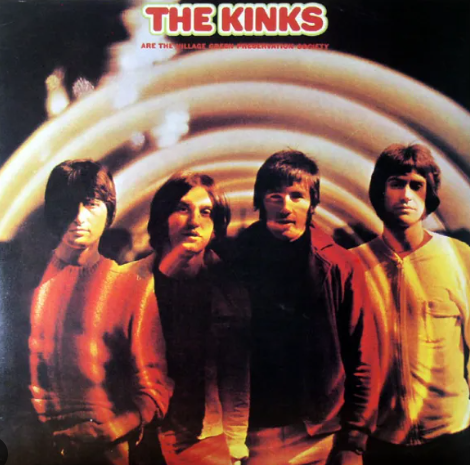
“Big Sky” (1968) – The Kinks * Written and Produced by Ray Davies * LP: The Kinks Are the Village Green Preservation Society* Label: Pye
Head Kink Ray Davies crafted an exercise in nostalgia as understated as it was grand with the Village Green Preservation Society album, focusing on the real and imagined cultural touchstones of an English upbringing. A certain archness, though, bends his delivery in every song. While it was clear in “Dedicated Follower of Fashion” (1966), for example, that he was poking fun by taking on an aristocrat’s accent near its fadeout, the subject matter in VGPS feels heartfelt if only for its very outpouring. So sportive is Davies’s voice, that you wonder if he’s feeling self-conscious about the project. (His face on the album cover, far right, makes you wonder doubly so.)
“Big Sky,” halfway through, is the biggie, where Davies rolls out God Himself as one of his album’s endangered curios. “Big Sky feels sad when he sees the children scream and cry,” he sings. “But the Big Sky’s too big to let it get him down.” He sounds like an imperious, inaccessible monarch who refers to himself in the third person. Davies once expressed regret over his delivery, and one wonders if he’d have rather sounded more sympathetic, angry, or less affected.
The band does the rest of the heavy lifting, giving the track all of the pent-up emotion, release, puzzlement, and memorialization the subject calls for. Being so big, the song can be taken a number of ways, a believable consensus being that it rouses the listener’s spiritual awareness. This brings to mind Tolstoy’s Andrei Bolkonsky, who lies inert on the War and Peace battlefield and discovers that “everything is empty, everything is a deception, except this infinite sky.” It’s an observation that sounds at first like mockery or disappointment, but in fact gives Bolkonsky new life, and for this he thanks God, a.k.a. Big Sky.
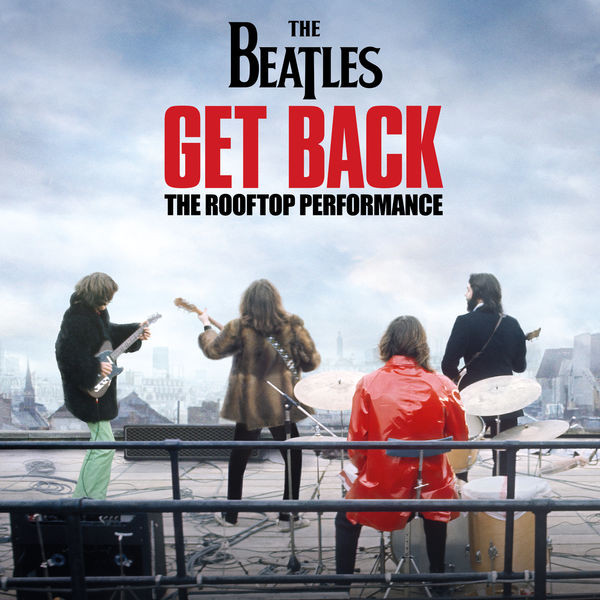
Big Beatle rollouts, even momentous ones like Peter Jackson’s Get Back project, get more irritating with each passing year. This is thanks to the noisy social media theatre we’re locked inside of, where every moptopologist we know, along with everyone else, feels obligated to weigh in. (Case in point: what you’re reading. Although I did wait a full fourteen months.) Granted, they’re the world’s favorite group, but it feels like you can barely take something Beatle in on your own anymore without needing to close your eyes and shut your ears to spare yourself of people’s chatter.
So I watched Get Back, thought my own thoughts, marveled and observed, felt my internal download of the 1970 Let It Be film come apart and turn irrelevant, saw the dust fly off the prevailing narratives, witnessed songs take shape before my eyes, songs so familiar that I probably don’t ever need to listen to them again, and noted all the prismatic enhancement of the principals and their coterie that only ample footage can provide. But then came a part that, although I knew it was coming, caught me off-guard in its extended form and got me all teary. It was the part when people on the street were given the opportunity to express how they felt about the Beatles.
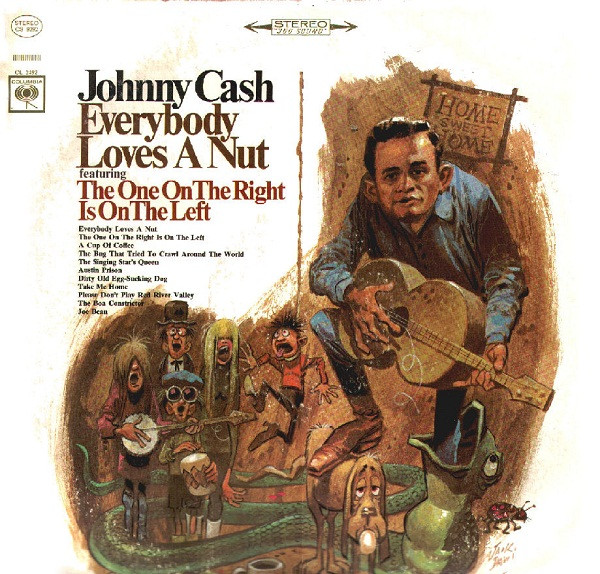
“The One on the Right Is on the Left” (1966) – Johnny Cash * Written by Jack Clement * Produced by Don Law and Frank Jones * 45: “The One on the Right Is on the Left” / “Cotton Pickin’ Hands” * LP: Everybody Loves a Nut * Label: Columbia * Billboard Charts: Country (#2); Hot 100 (#46)
Johnny Cash’s “The One on the Right Is on the Left” depicts a folk group whose incompatible politics bring them to an onstage brawl. Written by Jack Clement, the 1966 country hit appeared on an album called Everybody Loves a Nut with artwork by Mad magazine’s Jack Davis, and it rose up in the wake of two massive pop hits with folk panache and opposing viewpoints: Barry McGuire’s “Eve of Destruction” (#1, 1965) and S Sgt Barry Saddler’s “Ballad of the Green Berets” (#1, 1966). “Keep your politics to yourself” is the moral, which is usually the type of thing people with strong political views say about outspoken people with contradictory ones. Country audiences, after all, later adored brazen political songs by Merle Haggard, Guy Drake, and others.
But Cash was a rare bird who managed to straddle the middle ground in a polarized era. He showed deference for elected leaders in word and deed (for the most part—at a 1972 White House concert, he brushed off Nixon’s request to play Drake’s “Welfare Cadilac” (sic)). He also maintained a hardcore country audience even while voicing stances sympathetic to the American left (“What Is Truth?,” “Singin’ in Vietnam Talkin’ Blues,” the Bitter Tears album).
What’s interesting about “The One on the Right Is on the Left” is that the consequences he depicts for this band with messy politics go inward. It’s the band who pays the price. Cash’s own willingness to take on political topics in later years indicates that his heart was in this interpretation, that a band divided cannot stand. If a band is in agreement, on the other hand, let the topicality commence. This makes sense and applies especially to the hyper-polarized current era, where the middle ground is ever-elusive, where band members are liable to go rogue and maintain alternate political personas through social media, and struggle, on the road or between sets, to have stress-free conversations.
When did the flatted seventh resolving to natural (heard later in the song during the “land” parts of “folk songs of our land”) become a “great frontier” signifier and why? I think about it as being a transition that goes deeper than we expect, so it gives us a feeling of poignancy. It sounds like a near-loss of footing that finds recovery, symbolizing the countless recoveries that eventually tamed the frontier. Follow me? It shows up in Western themes all throughout the ’60s and ’70s and can likely just be chalked up as an Elmer Bernstein innovation. He used it in his theme for The Big Country (1958), and again in The Magnificent Seven (1960). That’s probably all it took to catch on.