“I Believe in Sunshine” (1967) – A Passing Fancy

I Believe in Sunshine” (1967) – A Passing Fancy * Written and produced by Greg Hambleton * 45: “I Believe in Sunshine” / “She Phoned” (Columbia) * LP: A Passing Fancy (1968) * Label: Columbia, Boo (LP)

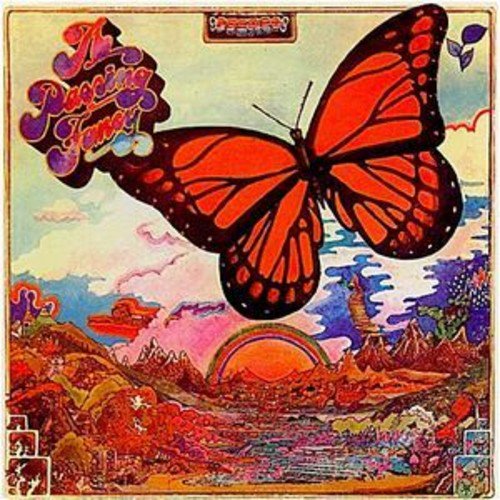
The only album by this Toronto quintet, who chose a name that implied a short life, had a striking, delicate butterfly on the cover, radiating a sense of hand-crafted independence. The back cover’s song titles and credits appeared in stencil-free characters full of character. Art direction credits go to “Rainbow Ink, incorporating Cannabis Rex and the Pig,” and typography to the Tolkien-inspired pseudonym Fatty Bolger. Its label—unsurprisingly—is a small entity called Boo, but four singles (all on the album) preceded it—surprisingly—on Columbia, the major-est of labels. Still, the music preserves a garage-bound crudity. The opener, “I’m Losing Tonight,” is a keeper for its uptempo libido, while the other standout, “I Believe in Sunshine,” grabs you for its more complex, melancholic layers. It’s written, with undoubtedly cheerful and commercial intentions, by Tuesday Records founder Greg Hambleton (the brother of Ferguson, who also appears on the album and will later replace band leader Greg Price). When Jay Tefler sings, though, you know his winter breath vapors are visible, and you imagine the Canadian sun sinking dark orange behind him at something like 4:30 in the afternoon. It’s teenage music from a realm where sunshine is precious, where not much of it’s left after the school dismissal bell rings. See their band publicity photo on the too-cold playground. Hear how the piano + organ interlude seem to be emanating from an ice cave. The album sequence follows this track up with another Hambleton composition called “Island,” which merges “In My Room” with “I Am a Rock.” “I Believe in Sunshine” gets a further dose of wistfulness from this subsequent banishment to the basement.

“Plastic Fantastic Lover” (live) (1969) – Jefferson Airplane

“Plastic Fantastic Lover” (live) (1969) – Jefferson Airplane * Written by Marty Balin * Produced by Al Schmitt * LP: Bless Its Pointed Little Head * Label: RCA Victor

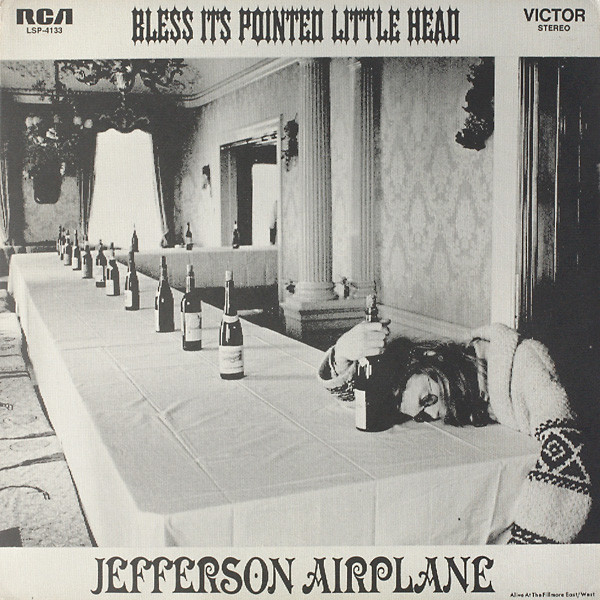
Not one of rock’s classic live albums, Bless Its Pointed Little Head is still memorable for the following: that hangar-esque ambience you also heard on the Jefferson Airplane’s first two studio albums; the introductory King Kong clip of Carl Denham saying “It was beauty killed the beast” to an audibly gratified Fillmore West crowd; the trippy cover and title; and the very end, when Grace Slick says, “I guess you can move your rear ends now.” But as Lucretius, the Roman philosopher, would point out, there’s atomistic, shape-forming activity going on beneath it all. They’ve named the album, in fact, after the final line in beat poet Philip Whalen’s “Homage to Lucretius,” where he writes of peeing on a snowbank and seeing it transmogrify into a yellow crystal cone, thus prompting the words “Bless your little pointed head!” In his Nature of Things, Lucretius does, indeed, refer to cones with pointed heads, and also to “trapezoids, rhombs, and so on” that atoms capriciously compose. In the album’s best track, Marty Balin sings of a lover’s “trapezoid thermometer taste,” and praises her pliable plasticity. So there you go.

“I Go to Sleep” (1966) – The Truth

“I Go to Sleep” (1966) – The Truth * Written by Ray Davies * Produced by Jeff Cooper * 45: “I Go to Sleep” / “Baby You’ve Got It” * Label: Pye

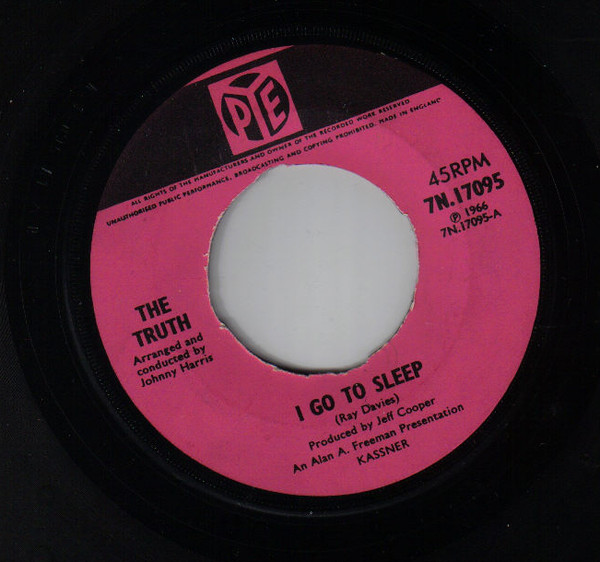
“I Go to Sleep,” an ode to what Virgil called “the sweetest gift of heaven,” was written by the Kinks’ Ray Davies and is one of his most musically crafty affairs.  Its verse melody descends helix-like into a chorus that would suit Henry Mancini’s Experiment in Terror soundtrack, while the middle eight contributes the sort of xenochronic surprise that only skillful songwriters can pull off. The Kinks never recorded it, with just a rough piano demo by Davies surviving. A good number of other artists, though, from Cher to the Applejacks to the Pretenders, made fumbling attempts.  The best versions, not surprisingly, were overseen by show band arrangers. Peggy Lee’s may well be the best, with its lush, sleepwalking tiptoe aura conjured up by Sid Feller, the man who produced Ray Charles’s Modern Sounds in Country Music. But a version by the Truth ties for first place and perhaps has the edge for achieving a proper mod rock iteration of the song. The Truth, not to be confused with the ’80s mod revival band, were the British duo Frank Aiello and Steve “Gold” Jameson, an escapee of the pogroms in Ukraine. The arranger was Johnny Harris, who later led the show bands for Tom Jones and Paul Anka and, as his autobiography boasts, had the opportunity to refuse Elvis twice. The Truth, whose work is now collected on the 2015 compilation Who’s Wrong, had a flair for cover versions, also doing the Beatles’ “Girl” and the Left Banke’s “Walk Away Renee” more than justice. Jameson, who recorded one solo LP in 1973, is now a Borscht Belt nostalgia comedian going by the name of Sol Bernstein.

“Sîrba Bătrînească” (1966) – Gheorghe Zamfir

“Sîrba Bătrînească” (1966) – Gheorghe Zamfir * Traditional * LP: Gheorghe Zamfir * Label: Electrecord

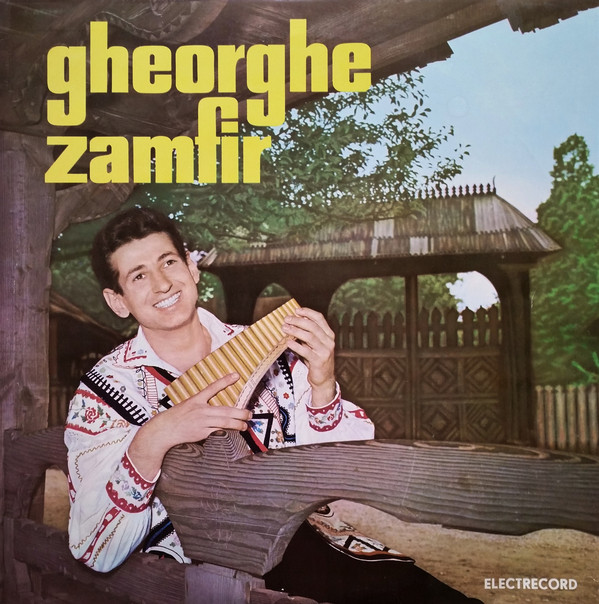
Most Americans first learned of Romanian pan flute virtuoso Gheorghe Zamfir on a last-name only basis, when late ’80s TV commercials plugged him as a mood music maestro. Of course there was, and would continue to be, more to him than that, but the small screen does have a knack for making things smaller. The pan flute tradition in Romania, where the instrument is known as the nai, stretches back to the 1600s as a regular component among lăutari musicians (that term started out meaning lutists, but has come to signify a fuller folk spectrum). Zamfir’s first record, which the national label Electrecord released when he was 25, demonstrates an expressiveness in him that manages to animate an already lively musical idiom. The last track, “Sîrba Bătrînească” (the in the middle of the second word is more commonly an a, but I’m going with the album cover), is a traditional 2/4 dance format with southern origins named after neighboring Serbia in the southwest.  It’s a fast-tempo environment that circulates with frequency in Romanian folk, evoking scenes of unattended handcarts full of bell peppers and eggplants breaking free and rolling down steep hills. Zamfir is accompanied here by the Orchestra Florian Economu. After a few more records, he’d scale things down with a smaller band and fewer orthodox restrictions.

“Handbags and Gladrags” (1969) – Rod Stewart

“Handbags and Gladrags” (1969) – Rod Stewart * Written by Mike D’Abo * Produced by Rod Stewart and Lou Reizner * LP: The Rod Stewart Album (US); An Old Raincoat Won’t Ever Let You Down (UK) * Label: Mercury (US); Vertigo (UK) * Charts: Billboard Hot 100 (#42)

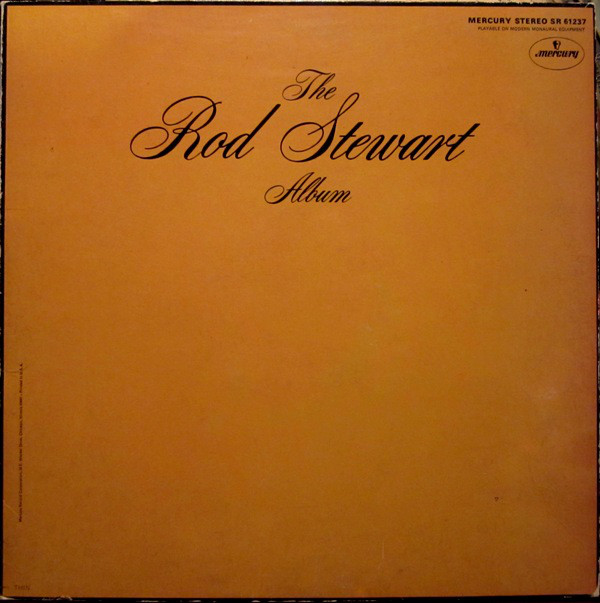
Although Rod Stewart had yet to become a chart presence in 1969, radar systems in both the UK and US recognized his soulful rasp as an oncoming event, thanks to his lead vocal stints in both the Jeff Beck Group and Faces. His debut album reached the US first as The Rod Stewart Album (Nov. 1969), then turned up in the UK as An Old Raincoat Won’t Ever Let You Down (Feb. 1970). The end of side one reaches an emotional crescendo with his version of Manfred Mann alumnus Mike D’Abo’s “Handbags and Gladrags,” a gentle, fatherly scold from the school of hard knocks to a young, trend-chasing girl. The vocal performance, musical arrangement and composition are all stunning. Stewart sings so convincingly, so wisely but wryly, that we forget then remember, on a crucial see saw, that he spent much of his career personifying youthful fashion-consciousness. An oboe and French horn sound pastoral airs from the lost youthful days of granddads, a piano (played by D’Abo) cries with regret, and all instruments rise together at the end for an adamant, overwhelming climax. Its self-effacing poignancy likely haunted Stewart as he wrote some of his own best lyrics (“Maggie May,” “Every Picture Tells a Story,” “I Was Only Joking,” “You’re in My Heart”), and the withering away of this side of his musical persona has indeed troubled his legacy. (Stewart admits in his autobiography that he found lyric writing to be a grueling process.) Probably because Chris Farlowe had already done an admirable hit version in the UK, “Handbags” only charted as a 1972 reissue in the US. The song found a revival audience in 2000 when Ricky Gervais’s The Office used a version by Big George as its smirking small-screen theme, with the Stereophonics cashing in shortly thereafter. Neither brought the chills the way Stewart (and Farlowe) did.

“Hair” (1969) – The Cowsills

“Hair” (1969) – The Cowsills * Written by Galt MacDermott, Gerome Ragni, and James Rado * Produced by Bill and Bob Cowsill * 45: “Hair” / “What Is Happy” * LP: The Cowsills in Concert * Label: MGM * Charts: Billboard Hot 100 (#2)

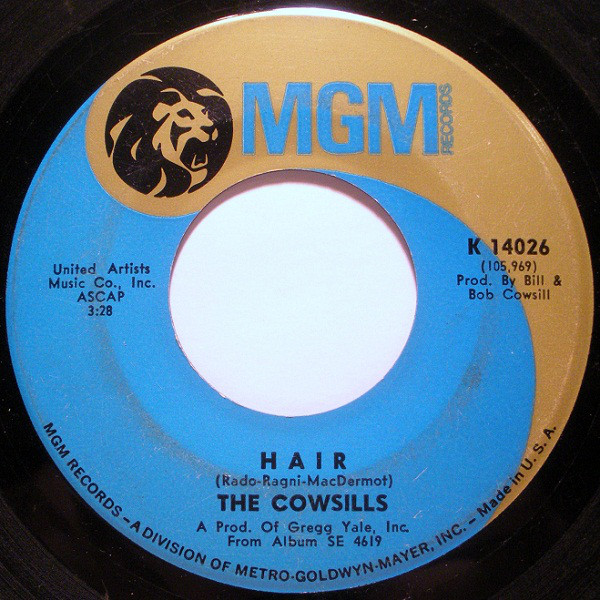
The Hair musical debuted on Broadway in April 1968 and grabbed attention quick with its unbridled depiction of bohemian youth (swearing, protesting, getting naked, etc.). As far as the unsympathetic side of the cultural divide was concerned, the handcart to hell bounced along to the beat of Hair‘s catchy songbook. By 1969, the shock had worn off and the show had settled in as a cultural given. Hair songs aired on top 40 stations, with the 5th Dimension taking “The Age of Aquarius” to #1 in the spring, holding the Cowsills’ “Hair” at #2. The Rhode Island family band’s record came about from an NBC TV special called The World of Pizzazz, co-hosted by Carl Reiner, which explored contemporary fashion styles spiced up with music. The Cowsills, otherwise seen in Tiger Beat and on milk commercials, lip-synced to their new record, looking like a pride of young lions in their shaggy wigs. Brothers Bill and Bob, the two oldest siblings, produced the record, and all the music and vocals you hear on it are brought to you by the family. No tricks.

The Cowsills are at the top of their game here, which imbues the song with a certain rest-of-the-story melancholy because shortly after this, loose-cannon Cowsill dad Bud would goad Bill into a fight that led to his dismissal from the band and family. He would never again ride the top of the charts the way he did here with such assuredness and professional sheen. That’s sad because he belonged there. An article in Mix magazine gives a detailed account of the recording session. (“Hair” appears as an opening studio bonus for the Cowsills in Concert album.)

“I’ve Got Five Dollars and It’s Saturday Night” (1965) – George and Gene

“I’ve Got Five Dollars and It’s Saturday Night” (1965) – George and Gene * Written by Ted Daffan * Produced by Pappy Daily * Label: Columbia/Musicor * Charts: Billboard Hot 100 (#99), Billboard Country (#16)

As the two biggest names on Pappy Daily (Texas) and Art Talmadge’s (New York) Musicor label, George Jones (Texas) and Gene Pitney (Connecticut) found themselves in a Nashville studio as “George and Gene.” They laid down two albums’ worth of material in 1965: George Jones and Gene Pitney and It’s Country Time Again. The two singers’ dichotomous deliveries—fervency on one side (Pitney) and fatalism on the other (Jones)—made for an unusual sounding country duo.

Their biggest hit together ended up being a cover of Ted Daffan’s “I’ve Got Five Dollars and It’s Saturday Night.” (Daffan had Houston roots, making him a comfortable resource for the Beaumont natives Jones and Daily.) The record reached Billboard’s country top 20, and was the fifth of seven or so forays by future country icon Jones, during his long career, into the lower regions of the Hot 100.

The record’s arrangement turns Daffan’s laconic original into something much peppier, while the instrumental refrain, sounding like a lost melody from the Civil War years, features fiddles in violin drag, and comes off as much more early sixties than ’65. (Adjusted to today’s currency value, the amount they’re celebrating is $40.56. When Daffan recorded the song in 1950, a fiver had the buying power of $51.56.)

“Feeling Alright” (1969) – Joe Cocker

“Feeling Alright” (1969) * Written by Dave Mason * Produced by Denny Cordell * 45: “Feeling Alright” / “Sandpaper Cadillac” * LP: With a Little Help from My Friends * Charts: Billboard Hot 100 (#69 – 1969; #33 – 1971 reissue)

“Feeling Alright,” the opening track on the first album (With a Little Help from My Friends) by explosive British rock n’ soul singer Joe Cocker, was an ideal complement for the cover image of Cocker in mid-convulsion. It’s a celebratory performance by him and his all-star studio band (Jimmy Page and Stevie Winwood grace the back cover), with pianist Artie Butler, especially, giving a signature contribution. The thing is, all this good feeling turns the original meaning of the song, first recorded in 1968 by writer Dave Mason’s (and Stevie Winwood’s) Traffic, on its head. “You feeling alright?” go the lyrics. “I’m not feeling too good myself.” It was a coy, bummer breakup song with a crucial question mark in the title.

In Cocker’s wake, the song would appear in numerous cover versions, usually as upbeat album filler. Two versions, by Mongo Santamaria (happy) and Grand Funk Railroad (sorta happy with a bummer undertone), charted in the lower regions. Cocker would finally claim virtual ownership of the song in its joyous guise by re-releasing it in 1971, probably in response to its electrifying presence in his 1970 Mad Dogs and Englishmen concert film. A Billboard ad (Jan 22, 1972) for the reissue featured a postcard with an inscription by Cocker saying, “My friends – I’m alive and well – and feeling alright!” (Note the exclamation point.) The 2012 Denzel Washington film Flight latched onto the song’s dual nature by using the Cocker track for an opening cocaine snort and the Traffic one for the sobering closing credits.

“Będzie kolęda” (1968) – Skaldowie

 
“Będzie kolęda” (1968) – Skaldowie * Written by Wojciech Młynarski (lyrics) and Andrzej Zieliński (music) * LP: Wszystko Mi Mówi, Że Mnie Ktoś Pokochał * Label: Pronit
 
Communism could never squelch the Christmas spirit of Poland, whose Catholic roots and traditions ran too deep, so the appearance of a brazenly festive track called “There Will Be Another Christmas Carol” on a 1968 album by the popular rock group Skaldowie was hardly unusual for its time. (A girl group called Ali Babka joins them, flavoring it with some Phil Spector Americana.) The church bell-simulating vocal refrains at the beginning and end are possibly borrowed from the chorus of Gene Pitney’s “Just One Smile” (1966). The melody reverberated further in the TV theme for The Smurfs (1981), the Wycliffe Gordon-penned theme for NPR’s All Things Considered (1995), and South Park’s cheesy poofs theme (1998).
 

“The Mistletoe and Me” (1969) – Isaac Hayes

“The Mistletoe and Me” (1970) – Isaac Hayes * Written and produced by Isaac Hayes * Arranged by Isaac Hayes and Dale Warren * 45: “The Mistletoe and Me” / “Winter Snow” * Label: Enterprise

Three Christmas singles from 1969-1970 heralded a new era of increasingly sophisticated, adult-friendly radio fare. These were the Carpenters’ “Merry Christmas Darling,” Donny Hathaway’s “This Christmas,” and Isaac Hayes’ “The Mistletoe and Me.” Each of these sound as though they could have been released at any point up to the present day since their appearance, but not prior. They also continue serving as templates for the art of the minimally-annoying Christmas record. Hayes’ seductive offering is a miracle of sound mixing, mood, and instrumentation. “Fate is Santa Claus, and Cupid’s his helper,” sings Hayes with his lady by his side and a quiet fire all ablaze. The song also stands as one of the towering indicators of promise for arranger Dale Warren, who had previously worked on Hayes’s “Walk on By,” but whose momentum and spirits gave way to alcohol and financial woes after apparently tying too many of his hopes to the doomed Stax label (which closed in 1975). Although all Christmas record arrangers like to cross-reference the standards, Warren is remarkably subtle. Listen for the interweaving melody snippets as the track plays: “Jingle Bells,” “Santa Claus Is Coming to Town,” “We Three Kings,” “Rudolph the Red Nosed Reindeer,” “No Place Like Home for the Holidays,” and a piano toying with “Up on the Housetop” and “The Christmas Song (Chestnuts Roasting on an Open Fire).”