“Most Anything That You Want” (1968) – Iron Butterfly

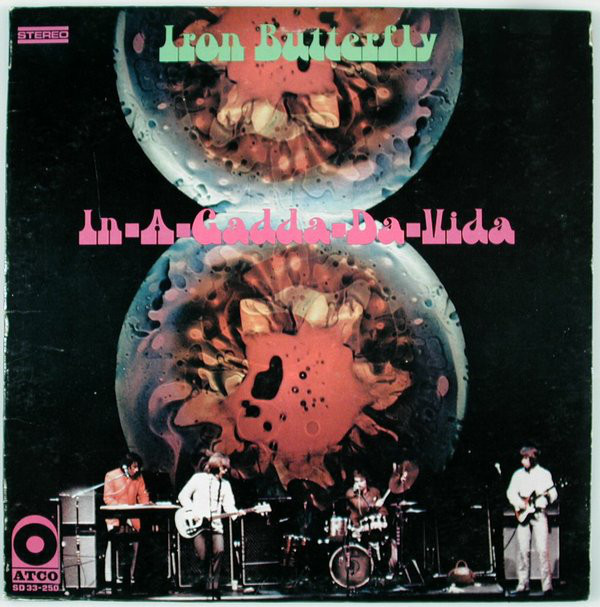
“Most Anything That You Want” (1968) – Iron Butterfly * Written by Doug Ingle * Produced by LP: In-A-Gadda-Da-Vidda * Label: ATCO Records
 

Iron Butterfly encouraged you to expect ultra-heaviness. Their signature track “In-A-Gadda-Da-Vida” clocked in at 17:05, an honorable tally during the free form radio years. The instrumental hook is sludgy and emblematic enough of the era, though, to immunize even the shortened version on 45 of any potential dishonor, especially when backed on the flipside by the haunted house anthem “Iron Butterfly Theme” (from their debut album titled Heavy). Doug Ingle’s Vox Continental organ asserted itself early on as the band’s key component, although they managed to sound holistically sprightlier than organ-centric contemporaries such as Deep Purple and (especially) Vanilla Fudge. Listen to the cheerful vibe on album opener “Most Anything You Want” for a clearer illustration of this premise. Also listen, at the bridge (around 1:48), to how Ingle teases on Ray Manzarek’s key riff for “Light My Fire.”

“Daddy Loves Baby” (1966) – The Toreros

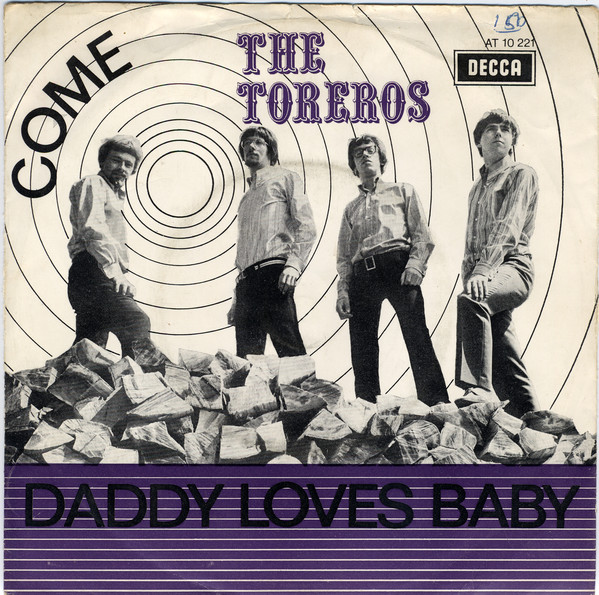
“Daddy Loves Baby” (1966) – The Toreros * Written by Don Covay * 45: “Come” / “Daddy Loves Baby” * Label: Decca

The Toreros, from the Netherlands, materialized in the early sixties under the spell of the Shadows’ Iberian motifs and echoing guitars. A 1966 single found them at a longhaired crossroads. Hollies or Stones? Side A proposed the former, while side B argued for the latter. That B side, “Daddy Loves Baby,” stands as the band’s best record, turning Don Covay’s suave, soft-shoe original into prime garage band stomp fodder. When you add Frank Sinatra’s 1957 “Baby Won’t You Please Come Home” to the timeline, a song that ends with Sinatra’s own “Daddy loves baby” statement, the Toreros find themselves at the two-levels-of-deevolution mark. To their credit.

“Ode to Billy Joe” (1967) – King Curtis and the King Pins

“Ode to Billie Joe” (1967) – King Curtis and King Pins * Written by Bobbie Gentry * Produced by Tom Cogbill and Tom Dowd * 45: “Ode to Billie Joe” / “In the Pocket” * Label: Atco * Charts: Billboard Hot 100 #28; R&B #6

Bobbie Gentry’s breakthrough single, in the summer of ’67, made for one of those pop music moments where every ear seemed bent toward a specific song. Gentry sang gently about an apparent suicide and some undisclosed item being thrown over the Tallahatchie Bridge. She gave more info about events surrounding the telling of the tale (multiple servings of apple pie and biscuits) than she did about the tale itself. More notably, the music churned irresolutelya lone nylon string guitar went back and forth between 9th and 7th chords while four violins and two cellos swirled into the ether and then back around.

The record made an impression on country music, proposing a Gothic approach that, on one hand, went against its audience’s culture of certainty, but on the other, paid tribute to the abiding darkness in Appalachian folk song. Soon Dolly Parton was singing about jumping from “The Bridge” with an unwanted child and Charlie Rich was reporting on the mysterious events of “July 12, 1939,” and all of Tanya Tucker’s first singles bumped Gentry on the shoulder while reaching for William Faulkner.

The best responses came from (runner up) Bob Dylan, whose “Clothesine Saga” on the Basement Tapes is his funniest song, carrying on about laundry en route to the primary revelation that the “Vice President’s gone mad,” and (winner) sax legend King Curtis, who rounded up all the spookiness, scrapped the lyrics altogether, and left us with an even more enticing mystery.

“Duel at Diablo (Main Title)” (1966) – Neal Hefti

“Duel at Diablo (Main Title)” (1966) – Neal Hefti * Written by Neal Hefti * LP: Duel at Diablo: Original Motion Picture Score * Label: United Artists

By 1966, the trumpeter and arranger Neal Hefti, having made a name for himself with Count Basie and Frank Sinatra, shifted his focus to film and TV scoring. Although his themes for The Odd Couple (1968) and Batman (1966) are his most enduring, other ones paired with lesser-known projects would nonetheless sport a certain trademark heft, shall we say. The Duel at Diablo theme is one of these, catchy and finger-snappy enough to work as a TV jingle. Instead, it accompanied one of the era’s more distinctly violent and emotionally complicated westerns. Based on Marvin H. Albert’s 1957 novel Apache Rising and featuring James Garner in perhaps his most sullen role, it grappled with the grim and messy reality of US/Indian relations and offered the viewer, whom it wore down with its relentless fighting and high body count, no convenient outs. When the snazzy theme kicks in for the closing credits, it feels like a tone-deaf maneuver, if not intended as outright mockery. What’s up with you? the peppy theme asks. It’s only a movie. (Duel at Diablo‘s opening sequence plays on a TV during Brian DePalma’s Carrie (1976), giving Hefti’s theme an opportunity to do double-mockery duty.)

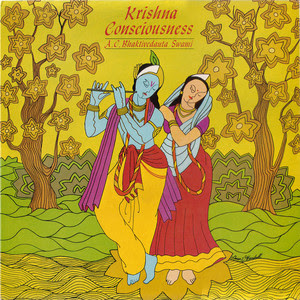
“Hare Krishna Mantra Chant” (1966) – A. C. Bhaktivedanta Swami

“Hare Krishna Mantra Chant” (1966) – A. C. Bhaktivedanta Swami * LP: Krishna Consciousness * Label: Happening Records

The charm of this 1966 album, one of the primary sources for the rise of Krishna consciousness beyond India (complete with an Allen Ginsberg endorsement on the back), is its simplicity. The message, as demonstrated in track one (presented here), and explained by A.C. Bhaktivedanta Swami Prabhubada himself on track two, is the inner peace one can find through chanting the holy names of Krishna. (See his widely available Chant and Be Happy.) Prabhubada made enough of a countercultural impression that observers were liable to view him as just another contemporary religious cult figure, one of the many who paraded through lifestyle avenues of the late sixties and early seventies. (He had led a two-hour chant of the Hare Krishna mantra at Tompkins Square in October 1966, in many ways kickstarting awareness of the now-familiar mantra, a few months before this album came out.) In truth, Prabhubada was a Vedic scholar and guru with a communicative flair, an eye- and ear-catching branch from the Banyan tree of Hinduism that’s been flourishing for millennia. In multiple interviews, George Harrison has credited this record for adding Krishna Consciousness to his Eastern spiritual menu.

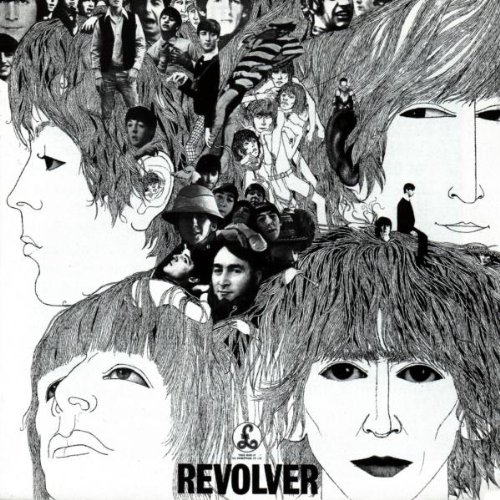
“Tomorrow Never Knows” (1966) – The Beatles

“Tomorrow Never Knows” (1966) – the Beatles * Written by John Lennon and Paul McCartney * Produced by George Martin * LP: Revolver * Label: Parlophone (UK), Capitol (US)
 

The US version of Revolver may rank as one of the more grievous hatchet jobs by Capitol Records. In this case, the label altered the original UK version by pruning three notable John Lennon songs altogether (“I’m Only Sleeping,” “Doctor Robert,” and “And Your Bird Can Sing”). But this action gave the two remaining Lennon branches a certain increase in gravitas, especially with both of them (“She Said She Said” and “Tomorrow Never Knows”) ending each side of the album, as if they were the only two slots that Lennon the new philosopher needed for his keynote words of wisdom. So extraordinary a production is “Tomorrow Never Knows” that all future attempts by anyone to do a cover version are rendered inadvisable and preemptively disappointing. Lennon reportedly found inspiration for the lyrics, including the opening line of “turn off your mind, relax and float downstream” from a book co-authored by Timothy Leary called The Psychedelic Experience: A Manual Based on The Tibetan Book of the Dead. Since then the conception of “turning off” the mind has traveled in status from being a radical “drop out” gesture, to one of regrettable escapism, to one of Buddha-endorsed mindfulness and a reliable 21st-century coping mechanism.

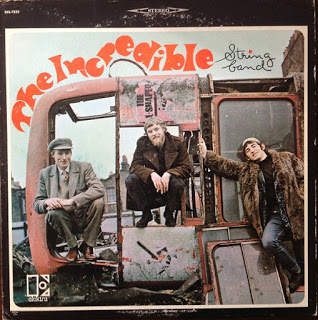
“October Song” (1966) – The Incredible String Band

“October Song” (1966) – The Incredible String Band * Written by Robin Williamson * Produced by Joe Boyd * LP: The Incredible String Band * Label: Elektra

With “October Song,” the hymn-like second track on the Incredible String Band’s 1966 debut album, Scotsman Robin Williamson introduces himself to the world as a bard with the ability to mystify, educate, and delight all at once. “Sometimes I want to murder time,” the 23 year-old sings of that most vexing human construct, “but mostly I just stroll along the path that he is taking.” Although the Incredible String Band album attracted positive notice in the British press, the initial trio split up after its release, with Williamson pursuing some of the Eastern musical yearnings he’d been expressing in song. He wound up in Morocco, where he amassed instruments and ran out of money; by the following year he’d be back in a duo with Mike Heron—another inventive songwriter with his own knack for expressing complexity as childlike wonder—for a series of remarkable late sixties albums. Continuing to defy/succumb to the passage of time, Williamson remains musically active.

“29 Settembre” (1969) – Lucio Battisti

“29 Settembre” (1969) – Lucio Battisti * Written by Mogol and Lucio Battisti * LP: Lucio Battisti * Label: Ricordi


Italian singer-songwriter Lucio Battisti (who passed away in 1998) was rarely the acoustic guitar type, which is too bad, because whenever he was, the sound suited him especially well. Battisti’s first full album appeared in 1969, when he’d already developed enough of a songwriting reputation to have placed songs with the Grass Roots (“Bella Linda”), the Amen Corner (“(If Paradise Is) Half as Nice”), and the Hollies (“Non Prego Per Me”). Throughout the rest of his professional life in the Italian music industry, he would maintain the persona of a studio hermit who rarely gave interviews or played live. His song “29 Settembre” (the 29th of September), about romantic ecstasy and confusion on a sunny autumn afternoon, is a refined folk rock number from the debut that leaves you wishing for a full album with similar instrumentation. Battisti collaborated with the one-named lyricist Mogol (born Giulio Rapetti) until 1980.

“Home at Last” (1968) – James Brown


“Home at Last” (1968) – James Brown * Written by Rudy Toombs * Produced by James Brown *  LP: Thinking About Little Willie John and Other Nice Things * Label: King


In his Godfather of Soul autobiography, James Brown writes of being in awe of Little Willie John and how his efforts to upstage the seasoned R&B hit maker at the Apollo Theater were crucial to his evolution as a performer. The rivalry forged a kinship that strengthened during their years as label mates at King. In the mid-sixties, John went to prison for manslaughter after an altercation at his own engagement party in Seattle. Brown worked to get him out on parole, only to see him put back after violating the terms (by leaving Washington state to visit Los Angeles). John’s 1968 death of illness while incarcerated hit Brown hard, prompting the release of Thinking About Little Willie John and Other Nice Things—one side of covers and one side of quickie instrumentals—the same year. A standout track is “Home at Last,” a 1956 R&B hit (#6) for John written by Rudy Toombs (who’d also penned the classics “Teardrops from My Eyes” and “One Mint Julep”). It’s a straightforward blues jumper about a “country girl” who fixes her man’s “breakfast, lunch, and dinner right on time,” but even in the act of paying tribute, James Brown works for the upstage, turning his version into the most memorable one. Listen to him scat at 4:00.

“That Lonely Feeling” (1965) – Dean Ford and the Gaylords

“That Lonely Feeling” (1965) – Dean Ford and the Gaylords * Written by John Carter and Ken Lewis * 45: “The Name Game” / “That Lonely Feeling” * Label: Columbia

This Scottish group became the Marmalade around 1966, right after which they recorded their “I See the Rain,” an alleged spark for Jimi Hendrix’s arrangement of “Hey Joe.” By 1968, they were a UK hit-making machine, with a cover of the Beatles’ “Ob-la-di Ob-la-da” reaching #1 in the UK and their elegiac “Reflections of My Life” (1970) reaching #10 in the US. As Dean Ford and the Gaylords, though, one of their standout tracks was a B-side called “That Lonely Feeling.” Although Scottish female duo the McKinleys had recorded it in 1963, this later version is a throwback slice of early Beatle balladry with a golden guitar solo.