“Jag Vill Ha En Hund, En Blå” (1969) – Jojje Wadenius


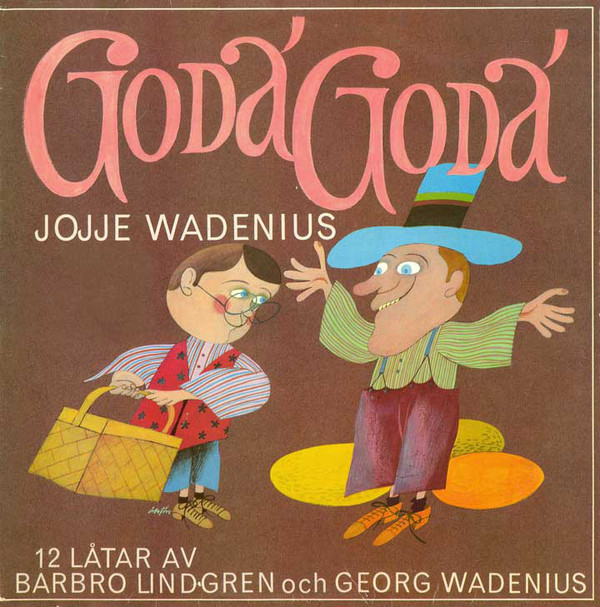
“Jag Vill Ha En Hund, En Blå” (1969) – Jojje Wadenius * Written by Barbro Lindgren and Georg Wadenius * LP: Goda’ Goda’ * Produced by Anders Burman * Label: Metronome

In 1969, during the early stages of his career, the Swedish guitarist Georg Wadenius established a productive side persona for himself as “Jojje,” the children’s troubadour. The ensuing years would see him joining Blood, Sweat and Tears, touring with Steely Dan, and becoming a member of the Saturday Night Live house band (from 1979 to 1985) in addition to playing on and producing numerous records at home. The Jojje albums, though—especially the first one—have become canonical, a strong reason being that the songs didn’t just not drive parents crazy, but actually appealed to them. Listen to “Jag Vill Ha En Hund, En Blå,” a song about “wanting a blue dog if it doesn’t eat me first” to see for yourself. The children’s author Barbro Lindgren (no relation to Astrid), who was also just getting started with a celebrated career, collaborated with Wadenius on both the words and music.

“Pena” (1969) – Captain Beefheart and His Magic Band

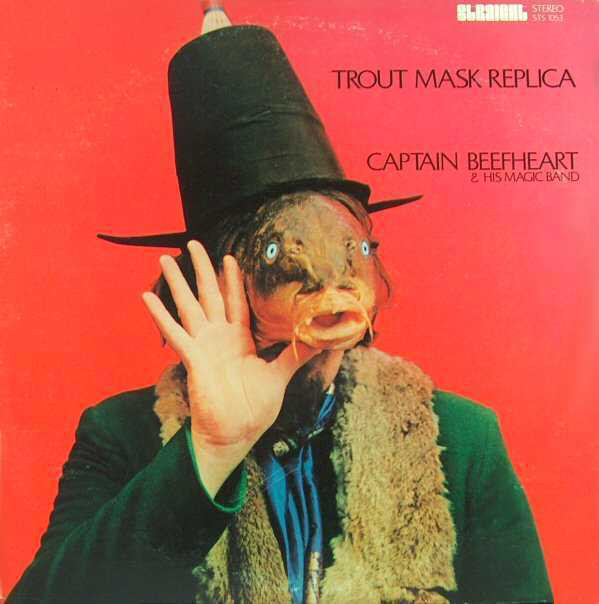
“Pena” (1969) – Captain Beefheart and His Magic Band * Written by Don Van Vliet * LP: Trout Mask Replica * Produced by Frank Zappa * Label: Straight

In his 1998 memoir Lunar Notes: Zoot Horn Rollo’s Captain Beefheart Experience, Magic Band guitarist Bill Harkleroad gives a song-by-song overview of the Trout Mask Replica album that probably ought to be considered by anyone who’s about to write the next indictment of the divisive sixties-rock milestone. It will, at very least, remove a few layers of fog. His words about “Pena” have a lingering effect in that they discuss contributions by guitarist Jeff Cotton (aka Antennae Jimmy Semens). He was the adroit slide guitarist who would quit the band after getting his ribs broken in one of the band’s many Beefheart-manipulated melees (and who would later recover with Merrell Fankhauser’s sun-streaked band Mu). “Pena” is among the rare recitations not handled by the gravelly-voiced Captain himself. It’s Cotton we hear, who—after some preliminary “fast and bulbous” words by Beefheart and Victor Hayden (aka The Mascara Snake)—also does the disturbing background shrieks. “It hurt [Cotton’s] voice so bad he’d be in tears at the end of making whatever that sound was,” writes Harkleroad. “He had barely made it and was almost choking by the end” (p. 44).

“Paint It, Black” (1966) – The Rolling Stones

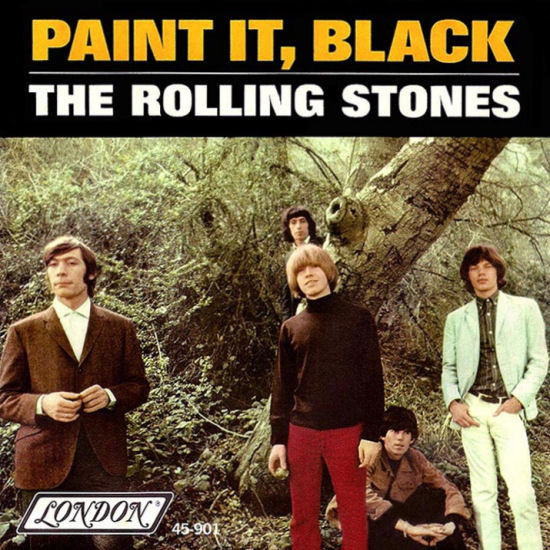
“Paint It, Black” (1966) – The Rolling Stones * Written by Mick Jagger and Keith Richard * Produced by Andrew Loog Oldham * 45: “Paint It, Black” / “Stupid Girl” * LP: Aftermath (US)
 

The Rolling Stones’ tendency to latch on to Beatle trends was a figment of no one’s imagination, but they would absolve themselves with their own abundance of originality. Guitarist Brian Jones, standing front and center on the picture sleeve of “Paint It, Black,” played sitar on the 1966 single, answering the Beatles’ (mostly) major-key “Norwegian Wood” in an angry, minor-key manner that commandeered it up to the #1 spot in both the US and UK. (“Stupid Girl” on side B upped the whole product’s mean-spirit meter.) Along with the sitar, another unusual component to the song was the ungrammatical comma in the title. This gave it an even more menacing, unschooled garage-band edge, or implied that they were, in this first of their overtly Satan-friendly songs, addressing someone or something, possibly the ominous dog Led Zeppelin and Nick Drake would later sing about. The US Aftermath album included the comma on the label, but not on the back-cover track list. The song became a punk cover staple, and never sounded ironic.

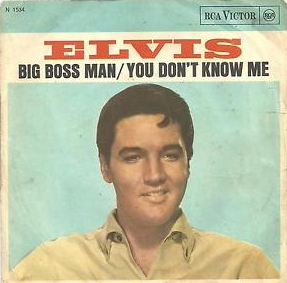
“Big Boss Man” (1967) – Elvis Presley

“Big Boss Man” (1967) – Elvis Presley * Written by Luther Dixon and Al Smith (credited on label to Jimmy Reed) * 45: “Big Boss Man” / “You Don’t Know Me” * LP: Clambake * Produced by Jeff Alexander and Felton Jarvis * Label: RCA * Billboard: #38 (Hot 100)

Putting aside questions of quality and substance, Elvis’s sixties movie output—the songs and the films themselves—have this animatronic, sped-up feel. Have you noticed? The effect is of everyone involved being in a hurry to get it over with. In context, “Big Boss Man” (a 1961 hit for Jimmy Reed), which Presley chose along with four other songs to round out the Clambake soundtrack’s seven prescribed film offerings, comes off as a grievance aimed toward the boss men (with tall shadows, at least), who had the king himself “workin’ round the clock.” Top-notch chicken-picker Jerry Reed (no relation to Jimmy), who also appears on the Clambake album’s version of his own “Guitar Man,” gives the message even more punch. The label credits Jimmy Reed as the writer, with no one having bothered to see that Reed’s original version credited songwriters Luther Dixon and Al Smith.

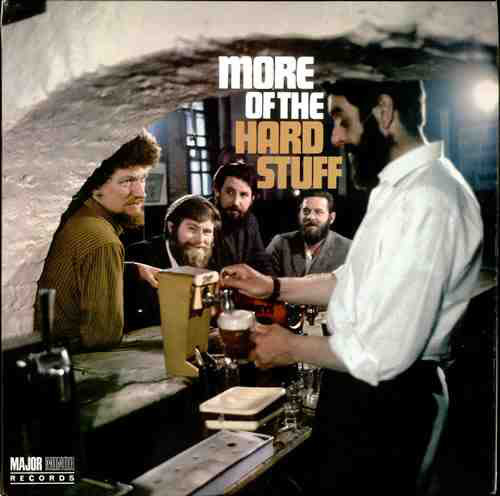
“Muirsheen Durkin” (1967) – The Dubliners


“Muirsheen Durkin” (1967) – The Dubliners
 * Arr. by the Dubliners * LP: More of the Hard Stuff * Produced by Tommy Scott

“Muirsheen Durkin” is sung from the point of view of an Irish potato digger hellbent on transforming himself into a Californian gold digger circa 1849. As folk songs are apt to do, it’s taken different shapes over time—the melody likely came from a dance reel called “Pretty Girls of Mayo,” while a similar song called “Molly Durkin” circulated among Irish Americans in the 1940s from a record by Murty Rabbett. A 1966 45 of “Muirsheen Durkin” by John McEvoy (credited to “The Rambler” on the label) reached #1 on the UK singles chart, but this version by the Dubliners—who were already Irish folk legends by 1967—ought to be considered definitive. Watch them perform it on the Ed Sullivan Show in March 1968 (linked below). Lead singer Luke Kelly personifies the song’s determined immigrant character and you don’t doubt that he will, in fact, make a name for himself in Amerikay. (Was he not performing right then on that nation’s highest rated TV show?) Ronnie Drew, meanwhile, plays the intimidator behind Kelly’s right shoulder, while the other three Dubliners hold forth as gnomish reinforcements.

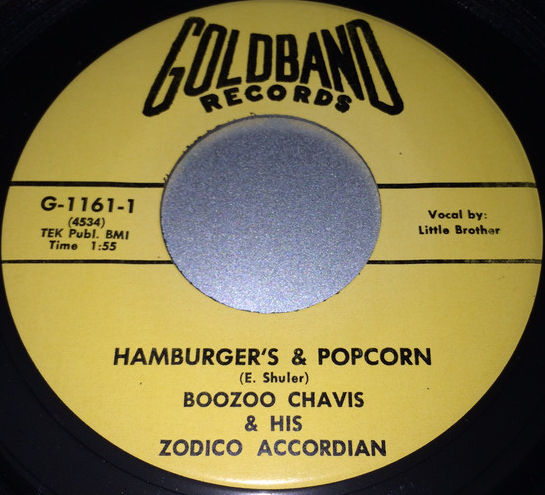
“Hamburger’s and Popcorn” (c. 1965) – Boozoo Chavis and His Zodico Accordian


“Hamburger’s and Popcorn” (c. 1965) – Boozoo Chavis and His Zodico Accordian
 * Written by Eddie Shuler * 45: “Hamburger’s and Popcorn” / “Tee Black” * Label: Goldband Records

Judging from where its serial number falls in relation to other Goldband releases, this Boozoo Chavis record appeared circa 1965, although the session for it likely happened near the mid-fifties. Based in Lake Charles, Louisiana, Goldband owner Eddie Shuler enjoyed regional success in 1954 with Chavis’s “Paper in My Shoe.” Cuts like this one, though, must have been let loose in dribs and drabs, with Chavis having gone on a studio strike until the mid-eighties. When Chavis re-emerged, he did so as an acknowledged zydeco pioneer. A key part of Chavis’s appeal throughout his entire career was his musical looseness and unpredictability. Stories about the original Goldband sessions depict scenes of mayhem. The words on the label themselves tell stories too, with the misspelling of zydeco indicating it as a barely conceptualized genre at that point. The music’s lunacy is the sort that attracts “real thing” devotion, and since Shuler is the credited songwriter, one imagines a bizarre scenario of him actually sitting down and teaching it to Chavis.

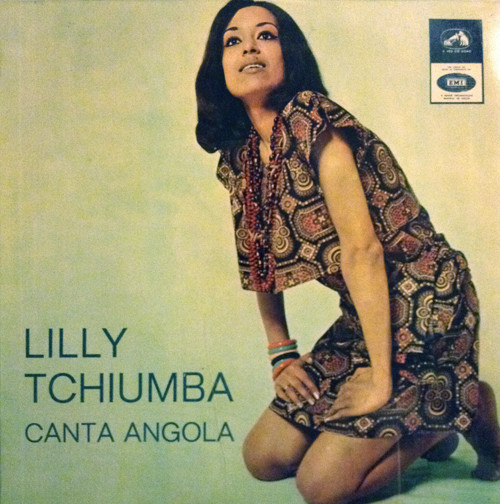
“Muáto Muá N’gola” (1967) – Lilly Tchiumba

“Muáto Muá N’gola” (1967) – Lilly Tchiumba * Traditional * EP: Canta Angola * Produced by Emilio C. Mateus * Label: RCA Victor/A Voz Do Dono

The late Angolan singer Lilly Tchiumba sang in the Kimbundu language on her recordings, all of them from the sixties and seventies. In 1975, the year Angola became independent from Portugal, the Monitor label made most of her songs available on a collection called Angola: Songs of My People, now available via Smithsonian Folkways. Why did Tchiumba stop recording? Recent interviews with her brother, the painter Eleutério Sanches (who recorded an EP with her in the late sixties) express a general sadness about her career, specifically lamenting that her records have never been properly remastered after so many years. The song “Muáto Muá N’gola” (“women of Angola”), with its decidedly Portuguese sound, first appeared on a 1967 EP called Canta Angola, then reappeared on the Monitor album mentioned above, whose liner notes sum up its lyrical content as follows: “All women of Angola should be respected no matter what their condition or social standing and they have the right to fight for their position in society.”

“Made My Bed: Gonna Lie In It” (1966) – The Easybeats


“Made My Bed: Gonna Lie In It” (1966) – The Easybeats
 * Written by George Young * US 45: “Friday on My Mind” / “Made My Bed: Gonna Lie In It” * Produced by Shel Talmy * Label: United Artists

Although the Easybeats were chart regulars back home in Australia, their only US Top 40 hit happened in 1966 with “Friday on My Mind” (#16 in Billboard). On the flipside was a track called “Made My Bed: Gonna Lie In It,” in which dirty deeds are taken ownership of. Did the song’s “tried so hard to be a man-a man-a man” hook get into Lou Reed’s head? Because its big vocalized V7 chord will remind you of the Velvet Underground’s “Who Loves the Sun.” And did the song’s main guitar riff intend to bring “Rhapsody in Blue” to mind? Easybeats guitarist George Young wrote “Made My Bed.” He’d later produce records for his two brothers Malcolm and Angus, who had a band called AC/DC, and who would never consider quoting Gershwin or singing a harmonized 7th chord.

“Little Girl” (1965) – Them

“Little Girl” (1965) – Them * Written by Van Morrison * UK LP: The “Angry” Young Them * Produced by Tommy Scott * Label: Decca

Here’s some menacing ballast to fill out a playlist of the classic Them songs you remember. The organ goes up and down/back and forth as young Van Morrison’s words get harder to figure. That face you see on the cover that identifies him as “angry” is peering at a schoolgirl through a classroom door. Then he’s watching her from his own home window as she stands like a ghost by an oak tree. The key never changes; the drums bang louder; the tempo gets faster…

“I’m Flying Home” (1968) – Merrell Fankhauser and HMS Bounty

“I’m Flying Home” (1968) – Merrell Fankhauser and HMS Bounty * Written by Merrell Fankhauser * 45: “Girl (I’m Waiting for You)” / “I’m Flying Home” * Produced by Glen MacArthur, Jack Hoffman, and Norman Malkin * Label: Shamley

Merrell Fankhauser’s pleasurable late sixties/early seventies recordings with Fapardokly, HMS Bounty and Mu still fly below the radar, but they take tuned-in listeners from the sparkling Southern California of the mind (late sixties) to the mythical jungles of Hawaii (early seventies) and beyond to where UFOs hover. “I’m Flying Home” is a psych rock nugget that showed up on the flipside of an HMS Bounty single, in which it sounds like they’re actually spinning farther away from home by the second. Shamley Records was a very short-lived imprint that branched off of the Universal Studios label (UNI), which had taken over Alfred Hitchcock’s Shamley Productions in the mid-sixties.