“Song of the Death Machine” (1970) – Bruce Haack

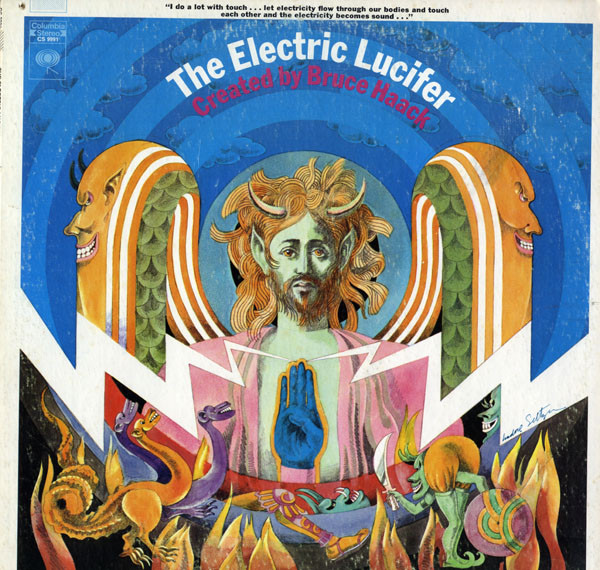
“Song of the Death Machine” (1970) – Bruce Haack * Written by Bruce Haack * Produced by Leroy Parkins * LP: The Electric Lucifer * Label: Columbia

Bruce Haack, the late Canadian electro music inventor and experimentalist, has such a reputation as an outsider that it’s easy to forget that his best known album came out with major label backing on Columbia Records. The Electric Lucifer, though, maintains the sort of homegrown, folk art charm that Moog masters, as a rule, are not expected to project. Haack’s liner notes declare his wish to end war with his music and also find him dwelling on the Milton/Blake subject matter of war in heaven. Standing on a larger stage than usual, Haack meant to unleash a “powerlove” so effective it could bring about the transformation and forgiveness of even Lucifer, the fallen “love angel.” The Christian angle gets more musically explicit near the end with yuletide signifiers. “Requiem” resolves into “The First Noel,” while “Song of the Death Machine” takes melodic cues from “Stars Were Gleaming, Shepherd Dreaming,” a children’s carol published in 1946 for the Presbyterian Hymns for Primary Worship (with lyrics by Nancy Byrd Taylor). But the music came from Poland, that most Christmasy of all Eastern Bloc nations, where it’s always been known as “W Żlobie leży” (in the manger).
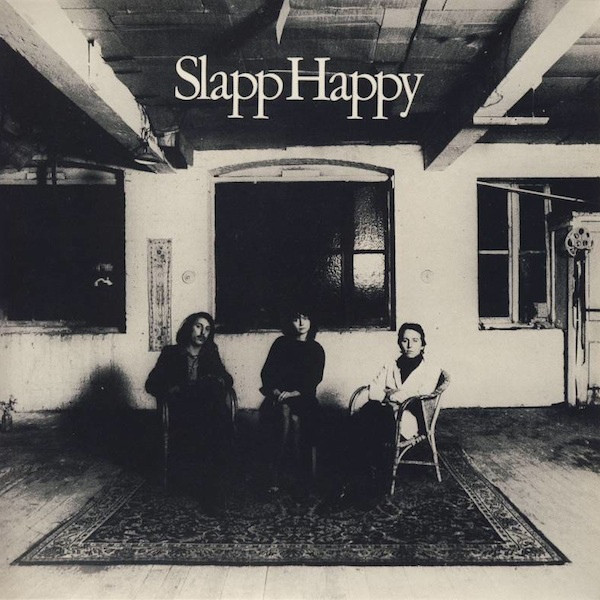
“Dawn” (1975) – Slapp Happy

“Dawn” (1974) – Slapp Happy * Written by Anthony Moore and Peter Blegvad * LP: Slapp Happy * Label: Virgin

Although Slapp Happy were one-third American (Peter Blegvad, later to create the surreal Leviathan comic strip), another third German (Dagmar Krause), and the final third British (Anthony Moore), they took shape in Hamburg and had an independent krautrock sensibility. This means that it’s not clear, when listening to the trio’s first two albums, if they’re being facetious, earnest, or experimental, because they’re being all three. “Dawn” sounds like they’re riffing on the Grass Roots or Tom Jones’s “She’s a Lady” but with retreat bugle calls and elliptical words about someone, in fact, in retreat. It also includes two separate insertions of “Oh Come All Ye Faithful.”

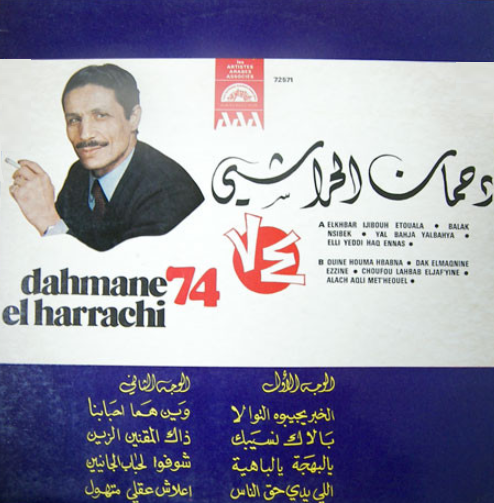
“Yal Bahja Yalbahya” (1974) – Dahmane El Harrachi

“Yal Bahja Yalbahya” (1974) – Dahmane El Harrachi * LP: 74 * Label: Les Artistes Arabes Associés

An album like Dahmane El Harrachi’s 74 is a godsend in that it verifies, more or less, the year of release. The balmy sea of Middle Eastern music is notoriously undocumented, even in regard to titans like Algeria’s king of chaabi (whose birth name is Amrani Abderrahmane). A greater portion of El Harrachi’s most well-known recorded output, such as the immigration anthem “Yah Rayah,” appears to come from the ’70s, when festival appearances gave him a career resurgence at home after spending several decades in France. The title of this track refers to “joy,” but after listening, you wouldn’t need a dictionary to know that.

“Chilly Winds” (1971) – The Osmonds

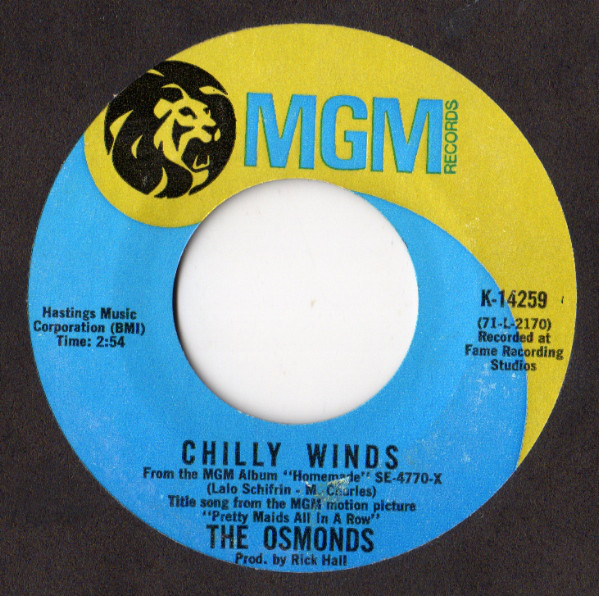
“Chilly Winds” (1971) – The Osmonds * Written by Lalo Schifrin and M. Charles (Mike Curb) * Produced by Rick Hall * 45: “Double Lovin'” / “Chilly Winds” * LP: Homemade * Label: MGM
 

In some alternate timeline (Star Trek foreshadowing alert), the Osmonds’ “Chilly Winds,” with its folky arrangement, philosophical lyrics and gorgeous vocals (possibly their finest on record) would have been a stage show staple, right up there with “He Ain’t Heavy, He’s My Brother.” In the less pleasant timeline we inhabit, though, the song is an embarrassing poison pill in the famous Mormon family’s history, something they were likely tricked into doing and have quite plausibly blocked from memory. Written by Lalo Schifrin and the pseudonymous conservative (when expedient) MGM president Mike Curb, it appeared as the theme for Roger Vadim’s 1971 movie Pretty Maids All in a Row, accompanying an opening sequence where a teenager (John David Carson) ogles his schoolmates.

Cynically salacious, even by sexual revolution standards, the film barely escaped an X rating, depicting Rock Hudson as a high school counselor who has his way with female students (minors) before murdering them. Along the way, Angie Dickinson seduces Carson (a minor), while Telly Salavas, James Doohan (Star Trek‘s Scotty), and William Campbell (Star Trek character actor alumnus) do hapless police investigations. The whole thing glows with inviting, vibrant Star Trek colors and associations, with production and screenplay credited to none other than Gene Roddenberry. John David Carson would later appear as the lead role in the Mormon church-funded short film John Baker’s Last Race (1976), contributing yet another bizarre ingredient to this nightmarish, mixed-moral matrix.

“Sault Ste. Marie” (1973) – The Original Caste


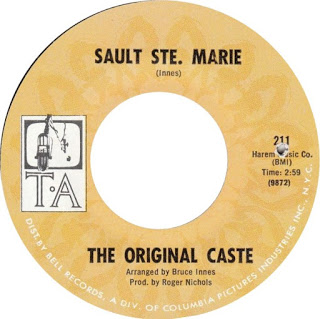
“Sault Ste. Marie” (1971) – The Original Caste * Written and arranged by Bruce Innes * Produced by Roger Nichols * 45: “Sault Ste. Marie” / “When Love Is Near” * Charts: Canada #35
Calgary’s Original Caste enjoyed a flurry of Canadian success between 1968 and 1971, after their version of the Dennis Lambert-Brian Potter song “One Tin Soldier” made the US Top 40.  Their sixth and final Canadian chart hit (not counting a 1973 revival of “Soldier”) happened in 1971, and was one of those situations where the radio stations ignored the A-side (a Paul Williams-Roger Nichols tune called “When Love Is Near”) and jumped all over the B-side, written by the band’s own Bruce Innes. In RPM Weekly, the Canadian music biz trade paper of the day, a young Terry David Mulligan praised “Sault Ste. Marie,” saying it was “about time the very talented and highly creative leader of this Canadian group received some recognition.” Mulligan and the radio stations were right about “Sault Ste. Marie,” which was a Canada-centric road song built to last, with a classic line in the chorus: “I’m just trying to make it to Montreal / I do believe that I’m going to hell.” In truth, the Original Caste were on their way to Japan for some touring, then into the studio, eventually, for one more album in 1974, but no more rides up any pop charts.

“Águas de Março” (1973) – João Gilberto


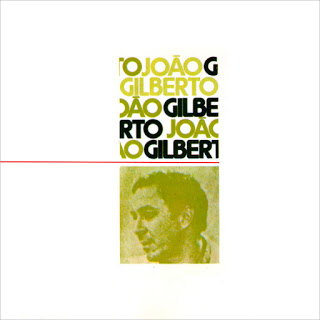
“Águas de Março” (1973) – João Gilberto * Written by Antonio Carlos Jobin * LP: João Gilberto * Label: Polydor

João Gilberto’s calm, singing-to-himself vocal delivery helped create a popular perception of Brazilian bossa nova as much as the compositions of Antonio Carlos Jobim did. Both men appeared on the 1964 hit album Getz/Gilberto, which also showcased American saxophonist Stan Getz and Gilberto’s then-wife Astrud. Throughout his career, Gilberto would pursue the ideal rendering of his “sound” while developing a difficult-artist reputation along the way. His manifesto of said sound may well be his 1973 self-titled album, which includes only voice, guitar, and spare percussion. The first song, a version of Jobim’s “Aguas de Marco” (the waters of March), turns like a pinwheel in a light afternoon breeze. The studio mic captures every micro-geometrical curve in Gilberto’s oral cavity, though, which is another way of saying that a little of this, for some listeners, may go a long way.

“Getting Over You” (1973) – Andy Williams


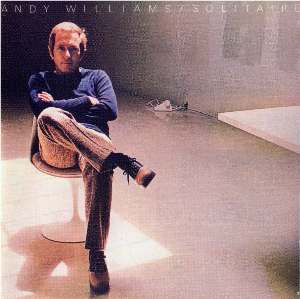
“Getting Over You” (1973) – Andy Williams * Written by Tony Hazzard * Produced by Richard Perry * UK 45: “Getting Over You” / “Remember (Andy Williams and Noelle)” * LP: Solitaire * Label: CBS * Charts: UK #35

With his Solitaire LP, Andy Williams shook things up a bit by getting in the studio with producer Richard Perry, who had been on a hot streak with hit albums by Carly Simon, Harry Nilsson, and Ringo Starr, among others. The song selection included deeper album tracks along with the usual hit covers, while Williams’s vocal now popped or swirled with new audio effects. The soft-rock flirtation, overall, brought forth three especially effective tracks: a version of George Harrison’s “That Is All,” which rescues it from the vocal-range issues of the former Beatle’s original, a version of Harry Nilsson’s “Remember,” featuring dreamy Nicky Hopkins piano (as did Nilsson’s original), and a song called “Getting Over You” by Tony Hazzard, a British songwriter who’d written some early hits for the Hollies (“Listen to Me”) and Manfred Mann (“Ha! Ha! Said the Clown”). How satisfying it must have been for him to hear his song done by one of pop music’s classic voices, with an arrangement full of such cascading instrumental payoffs (you need to listen all the way; Tom Hensley did these arrangements and took a lifelong gig with Neil Diamond thereafter). Hazzard himself had released a version of “Getting Over You” the same year, as did Hermans Hermits’ Peter Noone, but Williams’ was The One. Not released as a single in the US, it reached #35 in the UK with a B-side that included “Remember” revamped with shared vocals and dialogue with Williams’s daughter Noelle. (This all gets in the way of the sublime arrangement, so stick with the album version of that one.)

“Brown Eyed Handsome Man (TV version)” (1970) – Waylon Jennings

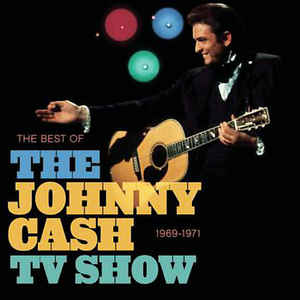
“Brown Eyed Handsome Man (TV version)” (1970) – Waylon Jennings * Written by Chuck Berry * Produced by Al Quaglieri * CD: The Best of the Johnny Cash TV Show 1969-1971 * Label: Columbia

The Johnny Cash Show celebrated the cross-pollination of American musical genres for two seasons between 1969 and 1971. Among the Man in Black’s guests were Bob Dylan, Joni Mitchell, Ray Charles, the Monkees, and Derek and the Dominos. In January 1971, Waylon Jennings appeared with his then-current incarnation of the Waylors, a group whose various personnel all shared a strong Phoenix, Arizona connection. Because Jennings’s contract with RCA forbade him from using anyone but studio vets on his records, his live sound distinguished itself with an alternate edginess. While his late-1969 country chart hit version (#3) of Chuck Berry’s “Brown Eyed Handsome Man” trotted along tamely to Charlie McCoy’s harmonica, the 1971 TV version (link below) jangled and snapped to the rhythm of Jimmy Byrd’s twelve-string guitar, which looks like a double-neck Mosrite. An archived website alludes to double-necks that Byrd had developed by himself.

“The Mosquito” (1972) – The Doors


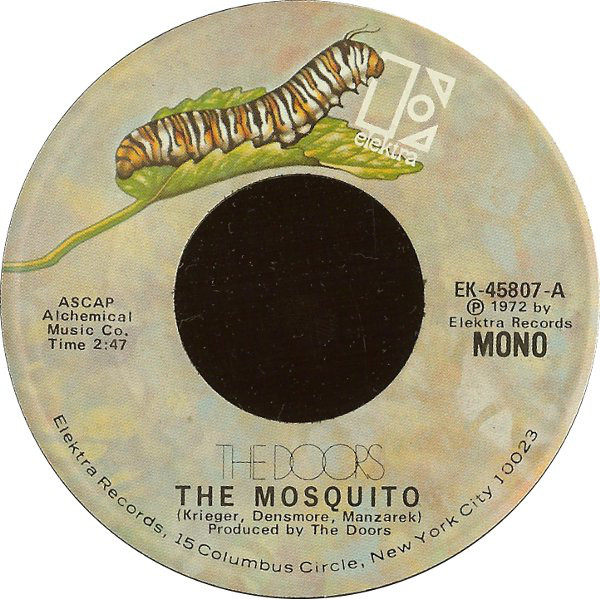
“The Mosquito” (1972) – The Doors * Written by Robby Krieger, John Densmore, and Ray Manzarek * Produced by The Doors * 45 B-side: “It Slipped My Mind” * LP: Full Circle * Label: Elektra * Charts: Billboard Hot 100 (#85)

Jim Morrison’s death in the summer of 1971 left the other three Doors with a glaring front-man vacancy, but they kept making music, including “The Mosquito,” a surprising borderline novelty hit. It wasn’t the single’s sales that registered surprise so much as the song itself, which had more in common with “La Cucaracha” than “Light My Fire.” Over a lightly engaged acoustic guitar, Robby Krieger mumbles for a mosquito to not bother him so he can eat his burrito, making way during the proceedings for two distinct instrumental interludes. One of these features Ray Manzarek’s organ, which overdoes it on the five-minute-plus LP version but bugs out mercifully on the under-three-minute 45. The single connected instantly with the international market, perhaps faster than any other Doors track. Before the year was over, cover renditions had begun sprouting up in Mexico, Spain, France, and beyond (none of which included the line about the burrito). Buyers of the Doors’ Full Circle album, incidentally, could enjoy the challenge of assembling a zoetrope included in the album packaging. Placed atop the record label, it would spin along at 33 1/3 rpm while showing a rudimentary animation of an evolving homosapien.

“All His Children” (1971) – Charley Pride with Henry Mancini

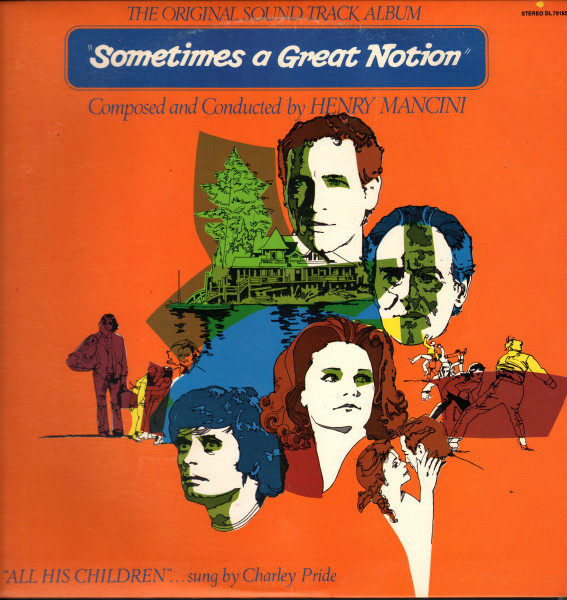
“All His Children” (1971) – Charley Pride with Henry Mancini * Written by Alan Bergman, Marilyn Bergman, and Henry Mancini * Produced by Jack Clement * LP: Sometimes a Great Notion (soundtrack) * 45 B-side: “You’ll Still Be the One * Label: Decca (LP); RCA (45) * Charts: #92 (Billboard Hot 100); #2 (Billboard country)

The 1971 Paul Newman film Sometimes a Great Notion (which had the much better overseas title of Never Give an Inch) put Ken Kesey’s Oregon logging novel to the big screen. If early seventies media tended to splash its feet in post-sixties cultural bewilderment, this film submerged itself, with every development—all the way to the closing credits—feeling like a gasping lunge through political and interpersonal complexity. Charley Pride’s forgettable theme song, written by composers who otherwise excelled in memorability, seemed to be telegraphing their low estimation of the country genre. The oddly-paired billing of Pride and Mancini (who gave the arrangement scoopfuls of stock background vocals) only added to the entire project’s murkiness. What makes “All His Children” special, though, is Pride’s final note, which sputters with knowing exasperation.