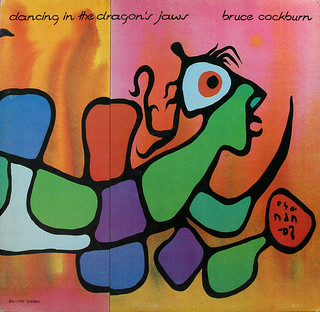
“After the Rain” (1979) – Bruce Cockburn * Written by Bruce Cockburn * LP: Dancing in the Dragon’s Jaws * Produced by Gene Martynec * Label: True North “After the Rain” is a wordy expression of pantheistic ecstasy in which a frolicking piano hook settles into a bemused minor 7th chord. The song’s bliss-amid-blight theme recurs all throughout Dancing in the Dragon’s Jaws, perhaps the most poetic and musically sophisticated of all Christian pop albums. The following year of 1980 would find the inventive Canadian singer-singwriter Cockburn newly divorced and taking a much harder look at his world.
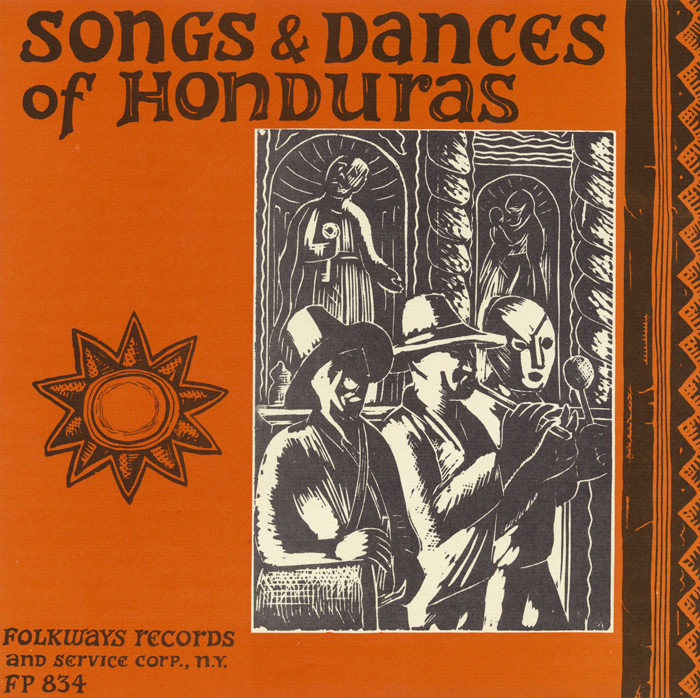
Antonio Giron – “Corrido a Honduras” (1955) * Written by Antonio Giron * LP: Songs and Dances of Honduras * Label: Folkways Tucked away on this 1955 Folkways release, which otherwise has a coarse field-recording sound, is a quite polished “ballad for Honduras.” The song’s main thrust is loyalty to the beautiful Central American country, but it also name-checks both the national hero Morazán (a freedom fighter and eventual president of the Federation of Central American States who fell to an assassin in 1842) and the Virgin of Suyapa, patroness of Honduras. Why do the liner notes, written by Doris Stone, go out of their way to keep the suave-sounding performer of “Corrido a Honduras” a mystery? This is a mystery in itself. Is it to preserve an aura of authenticity for Peter K. Smith’s field recordings? Performing credits go to “Instrument: Guitar,” and a footnote cranes its head in to point out that the contracted usage of “que ellos” is typical of songs “not sung by a professional singer.” Writing credit, though, is given to a man named Antonio Giron, so I’ll assume that the performance, worthy of much better recognition and respect, is also by him.
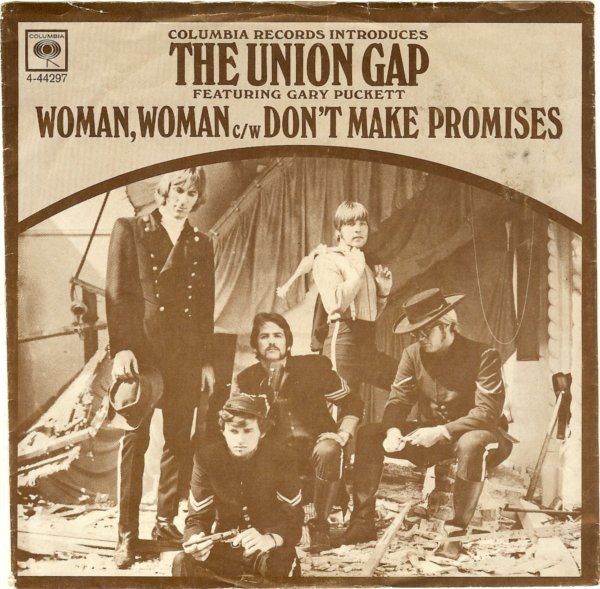
“Don’t Make Promises” (1967) – Gary Puckett and the Union Gap * Written by Tim Hardin * 45: * “Woman, Woman” / “Don’t Make Promises” * LP: The Union Gap Featuring Gary Puckett * Produced by Jerry Fuller * Label: Columbia The costume gimmick didn’t match the sound of Gary Puckett’s group at all: his big casino voice and the records’ bloated arrangements (mostly by Al Capps) catered, with financial savvy, to the other side of the generational divide. Then as now, kids were likely to change the station on parent-friendly hit songs like “Woman, Woman,” “Lady Willpower,” and “Young Girl.” But in the Union Gap’s hands, Tim Hardin’s “Don’t Make Promises,” a song admittedly hard to go wrong with, gets an ideal commercial treatment.
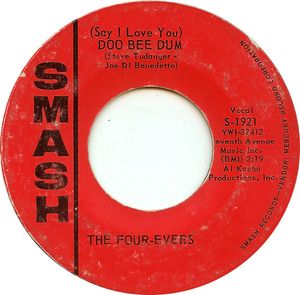
“(Say I Love You) Doo Bee Dum” (1964) – The Four-Evers * Written by Steve Tudanger and Joe Di Benedetto * 45: “(Say I Love You) Doo Bee Dum” / “Everlasting” * Produced by Al Kasha * Label: Smash This Brooklyn group’s name and sound play off of their models the 4 Seasons. Their eventual hookup with that group’s Bob Gaudio and producer Bob Crewe secured them a record contract. “(Say I Love You) Doo Bee Dum” would be their last single, though, and that knowledge gives it a special dose of sweet pain. The short instrumental break at 1:28 sparkles and yearns like the sun setting on Coney Island on the last day of summer. Peaked at #119 in Billboard.
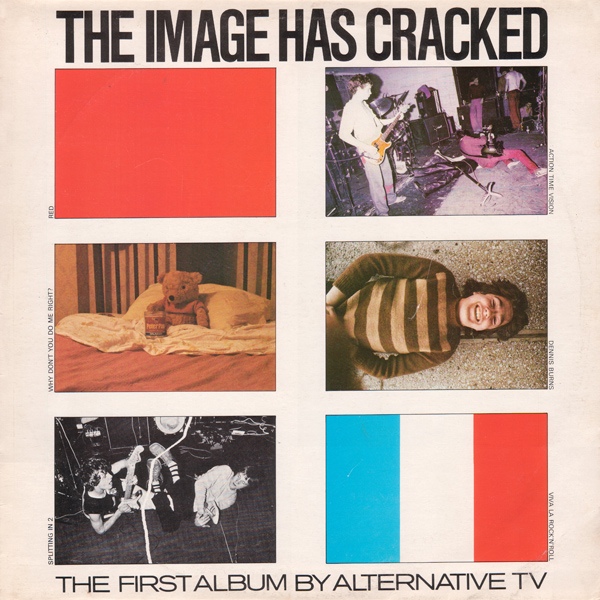
“Action Time Vision” (1978) – Alternative TV * Written by Alex Fergusson and Mark Perry * 45: “Action Time Vision” / “Another Coke” * LP: The Image Has Cracked * Produced by Alternative TV and Chris Gray * Label: Deptford Fun City Records Punk manifesto music in which the London band’s initials are given an “alternate” reading. Singer Mark Perry, the former editor of the punk zine Sniffin’ Glue, sings the title words with such authority – as though someone were taking dictation – that the listener assumes more meaning is intended than is actually perceived. He does the same upward curls at the end of his phrases that Johnny Rotten always did. They’re oratorical, didactic flourishes, and they make his announcement elsewhere on their The Image Has Cracked album (“Good Times”) that original member Alex Fergusson got kicked out for being a “dictator” seem ironic. The band’s previous single, in fact, was a reggae-tinged expression of sexual lethargy called “Love Lies Limp,” and there’s no question that the Fergusson-less lineup sounded more committed to virility.
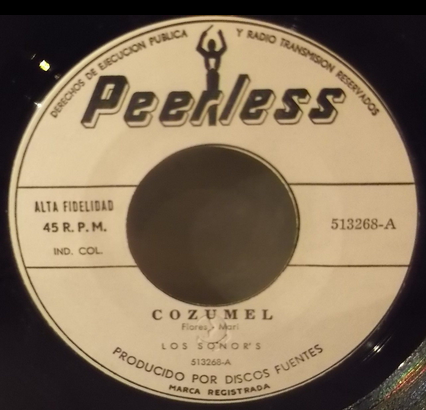
“Cozumel” (1969) – Los Sonor’s * Written by Flores and Mari * 45: “Cozumel” / “El Tudel” * Label: Peerless This Michoacan organ + sax attack, a tribute to the Caribbean island near Cancun, came out in 1969, sold big, and became a party staple south of the border by 1970. You’ll feel even more like dancing if you watch Los Sonor’s (The Sounds) perform it. The songwriting is credited to “Flores and Mari,” who are mysteries for now. If you go hunting for more from this group’s catalog, you’ll come across rock ‘n’ roll en español records by Los Sonor, a group from Spain. This is a different entity from our cumbia combo in question (who always used an apostrophe s). Los Sonor were, in fact, an early incarnation of Los Bravos (“Black is Black”).
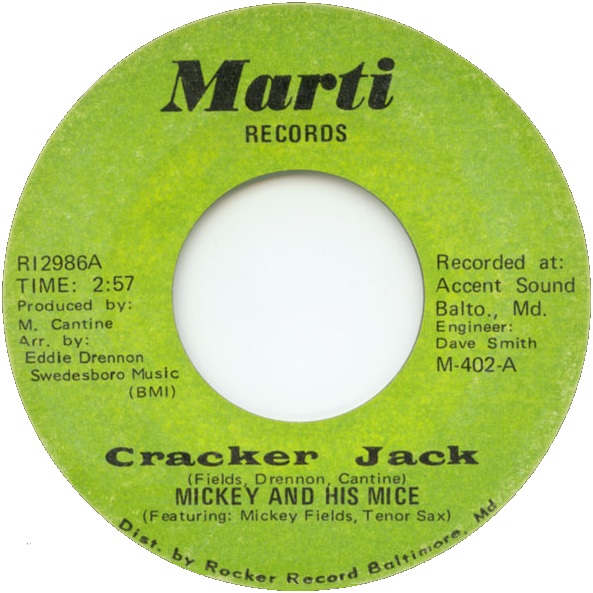
“Cracker Jack” (1970) – Mickey and His Mice * Written by Mickey Fields, Eddie Drennon, and Martin Cantine * 45: “Cracker Jack”/”Abraham, Martin and John” * Produced by Martin Cantine * Label: Marti * Charts: Billboard (Regional breakout hit [non-numbered list]: Washington DC) Q: “Hey baby, what is this cracker jack thing?” A: “Ain’t nothin’ but the popcorn with some sweet jive on it.” The “popcorn” was a James Brown concoction—a dance he’d started doing onstage in 1968, according to some accounts, to the song “Bringing Up the Guitar.” He then recorded a stack of popcorn-oriented records, including “Mother Popcorn” (1969), a highlight in the James Brown hall of finest funk. But “popcorn” might have had more to do with the Godfather of Soul’s personal lexicon of booty synonyms than with any specific dance moves. “Popcorn music” has also become a term adopted by soul music aficionados in Europe to describe a sweeter strain of the obscure vintage sixties dance cuts you see categorized as “Northern soul” (so named for their popularity in certain Manchester clubs). It’s safe to assume, though, that Mickey Fields, the tenor sax man and bandleader answering the lady’s question at the beginning of “Cracker Jack,” is referring to the James Brown popcorn sound. The single showed up on Billboard as a regional breakout hit in Washington D.C., having likely racked up some airplay on WPGC or WEAM. It might have gotten more traction if Fields wouldn’t have refused to ever leave the Baltimore area.
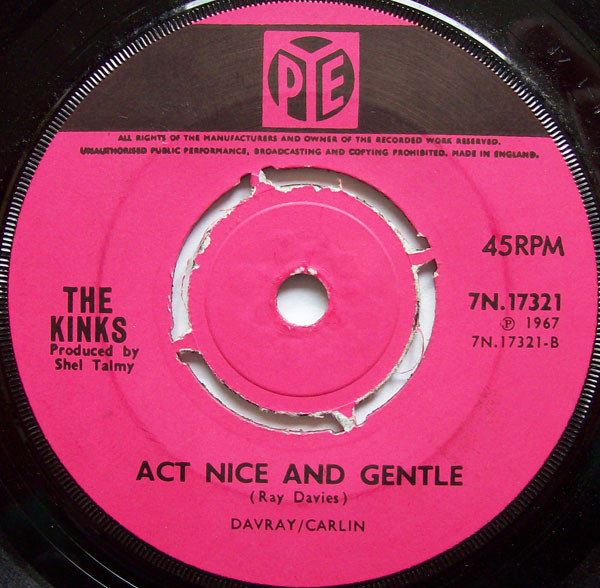
“Act Nice and Gentle” (1967) – The Kinks * Written by Ray Davies * 45: “Waterloo Sunset” / “Act Nice and Gentle” * Produced by Shel Talmy * Label: Pye Jug-rock flipside for the UK version of the Kinks’ “Waterloo Sunset” single. This is a song that would have suited the Lovin’ Spoonful nicely, but perhaps they’re the ones that inspired Ray Davies. Covered by the Black Keys in 2004, who demonstrate it to be suitable sludge material.
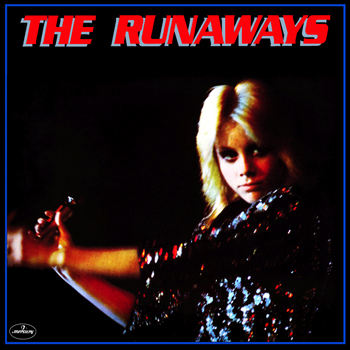
“Thunder” (1976) – The Runaways * Written by Kari Krome and Mark Anthony * LP: The Runaways * Produced by Kim Fowley * Label: Mercury In this song from side A of the Runaways’ debut LP (never released as a single), the double-tracked voice of Cherie Currie shares similarities with the double-tracked voice of Denise Nickerson, who sang lead on some of the “Short Circus” sequences on The Electric Company, the kids show on PBS that ran from 1971 to 1977. It invites mental images, as it plays, of pre-teen kids in rust-colored polyester outfits shimmying while the word THUNDER flashes across the screen.
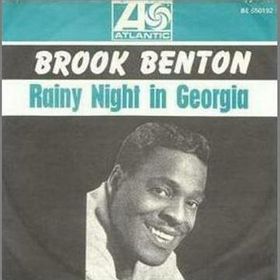
“Rainy Night in Georgia” (1970) – Brook Benton * Written by Tony Joe White * 45: “Rainy Night in Georgia” / “Where Do I Go from Here” * LP: Brook Benton Today * Produced by Arif Mardin * Label: Atlantic With no top ten hits since 1962’s “Hotel Happiness,” Benton took a shot with a song by Tony Joe White, who’d reached #8 with the deep southern “Polk Salad Annie” in 1969. The resulting #4 smash not only became a career-defining moment for Benton, but also for the prolific producer-arranger Arif Mardin. Dripping in aching strings and a lonely piano, the song transferred a detectable sense of resignation to the airwaves, as if to signal the end of a more youthful and carefree era. Benton’s next two 45s were versions of the new Sinatra signature song “My Way” and Joe South’s “Don’t It Make You Want to Go Home,” each of which seemed to verify and emphasize Benton’s elegiac mindframe in “Rainy Night in Georgia.”