“Urca Urca Tirulero” (1974) – Gianni Marzocchi * Written by Roger Miller and Pertita * LP: Walt Disney Productions Presenta Robin Hood * Label: Disneyland Records
The 1973 Disney cartoon version of Robin Hood distinguished itself with American country music star Roger Miller doing the laconic voice and vocals of its rooster narrator. The 1974 Italian dub of the film offered something different, but equally wonderful, with the elegant croon of actor Gianni Marzocchi doing rooster duty. As a late 50s/early 60s Italian teen idol, Marzocchi already gathered some Disney credentials from an appearance with Annette Funicello in a 1962 film called Escapade in Florence. From the mid-sixties onward, Marzocchi shifted gears and devoted himself mostly to the type of voice dubbing he would do for Robin Hood. The opening tune “Urca Urca Tirulero”—the Italian version of Miller’s “Oo-De-Lally”—appeared on a 1974 children’s record and has shown up on a number of reissues, such as the 1996 Italian CD Il Magico Mondo Di Walt Disney. Marzocchi’s version of “Not in Nottingham” (“Non a Nottingham”), which also swoons with special Italian romance and melancholy, has yet to receive the reissue treatment. A whole album of this sort of acoustic material from Marzocchi would have been heavenly; he died of a tumor, alas, at the young age of 56.
Author: Kim Simpson
“Ain’t No Way” (1968) – Aretha Franklin
“Ain’t No Way” (1968) – Aretha Franklin * Written by Carolyn Franklin * 45: “(Sweet, Sweet Baby) Since You’ve Been Gone” / “Ain’t No Way” * LP: Lady Soul * Produced by Jerry Wexler * Label: Atlantic
This B-side to Franklin’s “(Sweet Sweet Baby) Since You’ve Been Gone” single comes across as a sacred rendering of sexual longing. Written by Aretha’s sister Carolyn, “Ain’t No Way” evokes Book of Genesis patriarchy with the line “I know that a woman’s duty is to help and love a man.” It also contains high notes sung to heaven by Cissy Houston, which the early sixties taught us to associate with death songs.
“Break Away” (1969) – The Beach Boys
“Break Away” (1969) – The Beach Boys * Written by Brian Wilson and Reggie Dunbar * 45: “Breakaway” / “Celebrate the News” * Produced by Brian Wilson and Murry Wilson * Label: Capitol
This 1969 single was written and produced by Brian Wilson and father Murry (as “Reggie Dunbar”), the infamously abusive man whose exile from band business in 1965 gave this later partnership a strange aura. The single was certainly bouncy enough for a higher chart position than #69, where it stalled in the US, but its disappointing performance may also have to do with its potentially confusing coexistence with an ad campaign for the 1969 Pontiac, which used a jingle (written by Steve Karmen) called “Breakaway.” In 1974, the song appeared on the Beach Boys’ nostalgic Endless Summer compilation, where it sounded conspicuously out of place among all the earlier tracks.
“Gravy” (1970) – The Globetrotters
“Gravy” (1970) – The Globetrotters * Written by Rudy Clark, J.R. Bailey, and Ken Williams * 45: “Gravy” / “Cheer Me Up” * LP: The Globetrotters * Produced by Jeff Barry * Label: Kirshner
Cartoon characters usually had corresponding music business obligations in the early ’70s. The animated Globetrotters, who scrapped the “Harlem” from their name during this peak era of theirs in pop cultural prominence, were no exception. They also owed some kind of debt for their conceptual musical careers to Don Kirshner, who had dreamed up the Monkees and the Archies. The Globetrotters’ only album, released on the Kirshner label (with Archies producer Jeff Barry on board), featured a fun gatefold cover with pop-out art. Although Meadowlark Lemon was the only real life Globetrotter to participate on the album by contributing background vocals, it was journeyman vocalist and songwriter J.R. Bailey who sang lead. No Globetrotter singles cracked the Billboard Hot 100.
“Mindrocker” (1967) – Keith Colley
“Mindrocker (demo)” (1967) – Keith Colley * Written by Keith Colley and Linda Colley * LP: Mindrocker * Label: Sonic Past
Although it never charted, the song “Mindrocker,” as recorded by the group Fenwyck, developed a reputation as one of the psychedelic garage rock era’s definitive swirls. It may surprise you, then, that it came to the band courtesy of career songwriter Keith Colley and his wife Linda. (Colley had charted as an artist in 1963 with his song “Enamorado.”) Even more surprising is how self-contained his own demo sounds, giving Fenwyck’s version a run for its money. The track appears on Mindrocker, a compilation of Colley versions of songs he’d also written for the Knickerbockers, Gene Vincent, and more.
“Dancing the Night Away” (1977) – The Motors
“Dancing the Night Away” (1977) – The Motors * Written by Andy McMaster and Gordon Hann * 45: “Dancing the Night Away” (edit) / “Whiskey and Wine” * LP: 1 * Producer: Robert John Lange
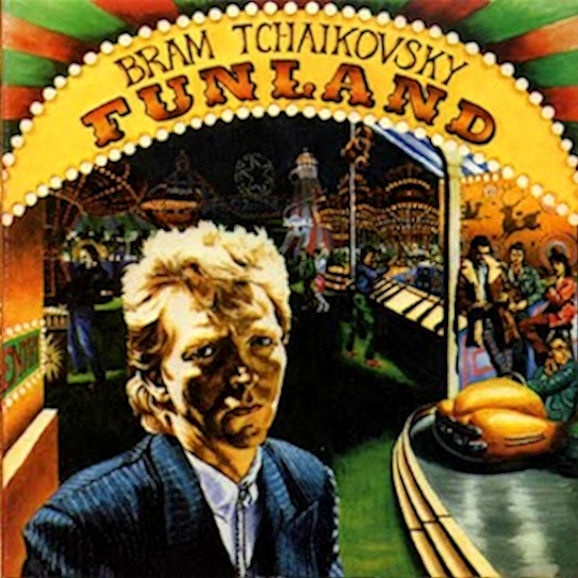
The Motors, on “Dancing the Night Away” (produced by “Mutt” Lange), sound like a rock band for the ages. The album version of the track plays twice as long as the edited 45 version, but both have their merits. The album track lets us bliss out on Bram Tchaikovsky and Nick Garvey’s guitars during the extended intro, while the single version trims it off and saves it for us to experience only as a yearning bridge. (The “Dancing the Night Away” 45 also stands out for being a double-sided 1977 killer, with “Whiskey and Wine” on side B.) The song’s lower register guitar octaves in the verses sound like vintage Cheap Trick, whose debut album appeared the same year and who would later cover this song badly. Although the Motors had some future UK hits, they’d never rise to the level of musical authority they demonstrated right out of the gate.
“You Can Love Her” (1994) – Angelfish
“You Can Love Her” (1994) – Angelfish * Written by Holly Vincent * CD: Angelfish * Produced by Chris Frantz and Tina Weymouth * Label: Radioactive
Scottish singer Shirley Manson fronted Angelfish before getting recruited to sing for the astute founders of Garbage. Out of all the other tracks on the Angelfish CD, “You Can Love Her” rises above the nineties’ mountains of scuffed jewel cases with authority bestowed on Manson from Holly Vincent of Holly and the Italians. A listen-through of Vincent’s 1988 demo shows that this Angelfish version – produced by former Talking Heads/Tom Tom Club duo Chris Frantz and Tina Weymouth – stays true to the intended leather-jacket-in-the-rain vibe.
“Shoes” (1970) – Brook Benton
“Shoes” (1970) – Brook Benton * Written by Don Covay and George Soule * Produced by Arif Mardin * 45: “Shoes” / “Let Me Fix It” * LP: Story Teller * Produced by Arif Mardin * Label: Cotillion
Slinky, forgotten single recorded with Memphis studio aces the Dixie Flyers in which the singer has a hard time saying goodbye with his “shoes” that “keep walking back.” In retrospect, with the knowledge that it would be Benton’s second to last charting hit, it seems to function as a post-“Rainy Night in Georgia” encore. Listen to “Shoes” all the way to the fadeout so you can hear the harps sprinkle haunted, lovesick stardust. The flipside is a steamy give-and-take with the Sweet Inspirations called “Let Me Fix It,” for which Benton got full writing credit.
“Alla fiera dell’est” (1976) – Angelo Branduardi
“Alla fiera dell’est” (1976) – Angelo Branduardi * Written by Angelo Branduardi * LP: Alla fiera dell’est * Arrangements and direction by Maurizio Fabrizio * Label: Polydor
Song created by the Italian troubadour Branduardi with circular, repetitive lyrics reminiscent of “There Was an Old Lady Who Swallowed a Fly” or “This Is the House that Jack Built.” With images, musical motifs, and instrumentation that tapped in to historical traditions from Israel to the UK, the song became a familiar nursery rhyme in short order, and Branduardi would perform it as a leaping pied piper. It tells the tale of a fairground purchase of a mouse, which sets off a chain events that ultimately requires intervention from the Almighty. An English version of the song, with lyrics translated by Pete Sinfield as “Highdown Fair,” came out in 1978.
“One Less Bell to Answer” (1970) – The 5th Dimension
“One Less Bell to Answer” (1970) – The 5th Dimension * Written by Burt Bacharach and Hal David * 45: “One Less Bell to Answer” / “Feelin’ Alright” * LP: Portrait * Produced by Bones Howe * Label: Bell
The plush “One Less Bell to Answer” is the sound of an abandoned housewife reclining on her personal crushed velvet chaise lounge; she’ll miss her man and his company but she won’t be going anywhere and won’t be losing anything other than him. It’s definitely a more complicated economic iteration of the breakup songs that populated the soul and country charts in its day. The other four members of the 5th Dimension are virtually absent on “One Less Bell to Answer,” which was the group’s first hit (Billboard #2) on the Bell label after switching over from Soul City. Marilyn McCoo contributed the lead vocal as she would do on all of their biggest subsequent hits. A classic entry in the Burt Bacharach-Hal David catalog, the song originally appeared as a 1967 Keely Smith vehicle, which employed an opening doorbell gimmick and projected an aura of despair. McCoo’s version, in contrast, featured her cool composure and an elegant arrangement that gave the song a more sophisticated range of emotional responses.