“I Go to Sleep” (1966) – The Truth

“I Go to Sleep” (1966) – The Truth * Written by Ray Davies * Produced by Jeff Cooper * 45: “I Go to Sleep” / “Baby You’ve Got It” * Label: Pye

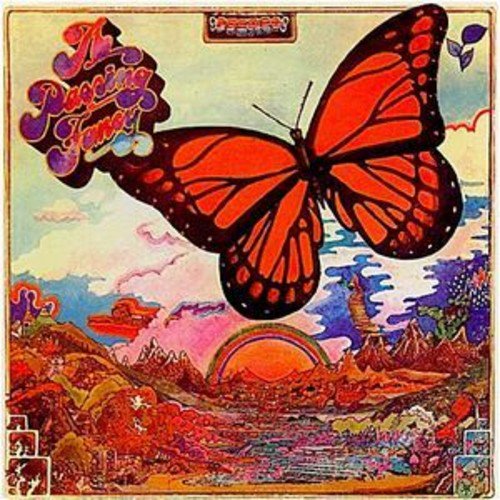
“I Go to Sleep,” an ode to what Virgil called “the sweetest gift of heaven,” was written by the Kinks’ Ray Davies and is one of his most musically crafty affairs.  Its verse melody descends helix-like into a chorus that would suit Henry Mancini’s Experiment in Terror soundtrack, while the middle eight contributes the sort of xenochronic surprise that only skillful songwriters can pull off. The Kinks never recorded it, with just a rough piano demo by Davies surviving. A good number of other artists, though, from Cher to the Applejacks to the Pretenders, made fumbling attempts.  The best versions, not surprisingly, were overseen by show band arrangers. Peggy Lee’s may well be the best, with its lush, sleepwalking tiptoe aura conjured up by Sid Feller, the man who produced Ray Charles’s Modern Sounds in Country Music. But a version by the Truth ties for first place and perhaps has the edge for achieving a proper mod rock iteration of the song. The Truth, not to be confused with the ’80s mod revival band, were the British duo Frank Aiello and Steve “Gold” Jameson, an escapee of the pogroms in Ukraine. The arranger was Johnny Harris, who later led the show bands for Tom Jones and Paul Anka and, as his autobiography boasts, had the opportunity to refuse Elvis twice. The Truth, whose work is now collected on the 2015 compilation Who’s Wrong, had a flair for cover versions, also doing the Beatles’ “Girl” and the Left Banke’s “Walk Away Renee” more than justice. Jameson, who recorded one solo LP in 1973, is now a Borscht Belt nostalgia comedian going by the name of Sol Bernstein.

“The Little Old Lady from Pasadena” (1964) – Jan and Dean

“The Little Old Lady from Pasadena” (1964) * Written by Don Altfeld, Jan Berry, and Roger Christian * Produced by Jan Berry * LP: The Little Old Lady from Pasadena * 45: “The Little Old Lady from Pasadena” / “My Mighty G.T.O.” * Label: Liberty * Charts: Billboard Hot 100 (#3)

Jan and Dean’s “Little Old Lady from Pasadena” rode in the slipstream of a commercial campaign featuring Kathryn Milner as a high-speed Dodge driver. Lyricist Roger Christian did penance for his role in the Beach Boys’ “Shut Down”—where he had depicted a Chevy outpacing a Dodge—by celebrating Dodge’s popular ad mascot. The mythical “old widow in Pasadena” with a set of barely-driven wheels in the garage was by then a California car lot cliché, but where are its origins? Perhaps the first mention of it appears in the 1953 theatre cartoon Magoo Slept Here, in which the near-sighted hero boasts of getting his antique TV (actually a washing machine) from an “elderly lady in Pasadena.” A different archetype in the song is Jan Berry’s bored, vibrato-free Cali-teen drawl, which you later hear in everything from early Black Flag to Green Day to Blink 182.  Wrecking Crew regular Tommy Morgan is likely playing the harmonica, giving it a backwoods flavor that also summons the familiar character of Granny in The Beverly Hillbillies. (Dean Torrance’s “Blue Fox” sweatshirt advertises a Tijuana bar with a sleazy reputation, foretelling the duo’s 1967 rewrite of “Little Old Lady from Pasadena” as “Tijuana,” which turns her into a narcocorrido metaphor.)

“Mobile” (1955) – Julius LaRosa

“Mobile” (1955) – Julius LaRosa * Written by Robert Wells and David Holt * Orchestra conducted by Joe Reisman * 45: “Mobile” / “I Hate to Say Hello” * Billboard Territorial Best Sellers: #9 (Kansas City)

Julius LaRosa was an Italian-American singer from Brooklyn who, fresh out of the Navy, became a TV darling on Arthur Godfrey and His Friends. His popular run as a regular on “the old redhead” Godfrey’s show started in 1951 and ended in 1953 when, after an on-air performance, Godfrey announced to the audience that that was the last they’d be hearing of LaRosa. Nevermore to be known, after this surprising incident, as quite so affable a fellow, the host had apparently felt his protégé was getting too big for his bowtie. Here was a precedent, then, of an orange-hued entertainment figure attaching himself to the catchphrase “you’re fired.” (Hear Stan Freberg lampoon him on “That’s Right, Arthur,” an unreleased track that aired only once on the radio in 1956.) After the firing, LaRosa had a #2 hit with “Eh Cumpari,” one of the era’s great red sauce celebrazione records. In late ’54, LaRosa offered up a track called “Mobile,” a title that certainly roused anticipation for a pop canzone treatment of Verdi’s famous “La donna è mobile.” It turns out, though, that the song didn’t salute Italia so much as Alabama. Nifty enough tune, but unexpected. The chart placements fizzled out by 1962, and you have to wonder if a little topical discipline could have prevented that.

“Ei Mittään (Työttömän Arkiviisu)” (1978) – Hector

“Ei Mittään (Työttömän Arkiviisu)” – Hector * Trad arr. by Hector * 45: “Ei Mittään (Työttömän Arkiviisu)” / “Kadonneet Lapset” * LP: Kadonneet Lapset * Label: Love Records * Charts: What Finland Plays #9

Finland’s Hector released his first single in 1965 and persists as one of his homeland’s most durable singer-songwriters. (His real name is Heikki, and the nickname he adopted is an exoticization in a country that doesn’t typically employ the letter C. He does sing only in Finnish, though.) A certain stylistic unorthodoxy adds to his appeal, with his original songs adhering to no strict formulas (save for the ever-surfacing Finnish taste for fifties rock ‘n’ roll).

Hector’s also translated numerous songs from English (mostly) and other European tongues. His debut 45 translated Buffy Sainte-Marie’s “Universal Soldier,” thus establishing cultural criticism as one of his more discernible trademarks. His 1978 “Ei Mittään (Työttömän Arkiviisu),” possibly his most beloved track, revamped the Fugs’ 1965 “Nothing.”  Those folk rabble-rousers had presented it first as an amusing dada/Eastern spiritualism lark based on the Yiddish shtetl song “bulbes” (potatoes), in which Monday is nothing, Tuesday is nothing, Wednesday and Thursday are nothing, etc.

Hector turns it into an expression of Finnish despair. Reflecting his homeland’s unprecedented late seventies rise in unemployment (1.6 in 1974 to 7.3 in 1978), he retitled it “Nothing (The Unemployment Archive)” with additional lines tying one’s sense of “nothing” and “nowhere” to the state of not working. Scottish band the Shamen did a scowling version of “Nothing” for a 1988 John Peel session, giving it its first overdue punk iteration. So there are your three faces of “Nothing”: mischief in ’65, misery in ’78, and menace in ’88. 

“Knockin’ On Heaven’s Door (live)” (1994) – Bob Dylan

“Knockin’ On Heaven’s Door (live)” (1994) – Bob Dylan * Written by Bob Dylan * LP: MTV Unplugged (1995) * Label: Columbia

MTV’s still-extant Unplugged franchise, with its “hey what would it sound like” premise, now seems a little quaint, but during its ’90s heyday it rolled out a lot more keeper versions of tracks, hit singles, and platinum albums than you may remember. Bob Dylan did two tapings for the series in 1994, then culled tracks for a single disc with quickie cover art that appeared the following year. It captures him right after an insular trad-folk phase on the way to a new creative awakening in 1997, and is more worthwhile than its used CD bin veneer wants you to believe.

His stinging anti-war rarity “John Brown” makes you wonder if the Iraqi Kurdish confict had gotten seriously under his skin. “Love Minus Zero/No Limit” (on the European edition) hijacks “If Not for You,” and “Rainy Day Women #12 & 35” preserves for posterity the comically garbled and hurried delivery he’d been treating live audiences to (“theyllstoneyou-abblablloo”).

With “Knockin’ on Heaven’s Door,” Dylan reclaims the 1973 original from the realm of the maddeningly rote cover exercise. He changes up vocal cadences and brings its conflicted essence back to the fore, even adding words to the refrain, “knock-knock-knockin’ on heaven’s door, just like so many times before” in a weary way that reminds his prospective interpreters that to be on heaven’s door is to be, in fact, almost dead.

“Dolorita” (2007) – Puerto Plata

“Dolorita” (2007) – Puerto Plata * Traditional * Produced by Benjamin de Menil and David Wayne * CD: Mujer de Cabaret * Label: Iaso

If you’re familiar with the story of bachata music in the Dominican Republic, how the dicatator Rafael Leónidas Trujillo (assassinated in 1961) played a part in developing an ongoing popular conception of guitar music as being inferior to the accordion sounds of merengue típico, it’s difficult not to approach Puerto Plata’s music away from that context. José Cobles is his real name, having adopted the resort town he was born in as a stage moniker, and his vocals and guitar graced his very first internationally-distributed album, which happened in 2007 when he was 83 years old. (But that’s Dominican guitar wiz Edilio Paredes handling those lead parts.) It took that long for musicians like this to finally gain acceptance? Surely there’s more complexity to his timeline than this, but what if we just zero in on the music, which Puerto Plata actually transports from an era predating the popular emergence of bachata. That’s definitely something to think about as you marvel at its effervescence. [Cobles passed away on January 4, 2020 at the age of 96.] 

“I’m a White Boy” (1977) – Merle Haggard

“I’m a White Boy” (1977) – Merle Haggard * Written by Merle Haggard *  Produced by Fuzzy Owen and Ken Nelson * LP: A Working Man Can’t Get Nowhere Today * Label: Capitol

Behold Merle Haggard’s “white album.” By 1977, his war-boostering reputation, propped up by “Okie from Muskogee” and the “Fighting Side of Me,” had been nuanced to a putty-like consistency by a listenership too smitten by his deep talent and otherwise humanistic lyrical track record. Word on the street even had it that he’d considered releasing an original cut called “Irma Jackson,” a mixed-race romance track predating “Brother Louie,” as a follow-up single to “Fighting Side.” None of this makes “I’m a White Boy,” which crouches as an album-ending addendum to the album-opening “A Working Man Can’t Get Nowhere Today,” easy to fathom. No country singer, even “Welfare Cadillac” Guy Drake, came closer to spelling out the racial aspects in welfare state contempt. “I don’t want no handout livin’ and don’t want any part of anything they’re givin’,” Haggard sings. “I’m proud and white and I’ve got a song to sing.” Do some reading – you’ll see that all published treatments of this inconvenient track either tiptoe or hurry by.

“Sirba Romaniaska” (1925) – Naftule Brandwein’s Orchestra

“Sirba Romaniaska” (1925) – Naftule Brandwein’s Orchestra * Traditional * 78: “Leben Zol Palestina”/ “Sirba Romaniaska” * Label: Victor

Clarinetist Naftule Brandwein’s 48 or so recorded tracks have become a series of blueprints for how klezmer, the traditional dance-friendly Jewish genre, ought to sound. Is this because he’s doing it “right” or because he plays with such listenable personality that he may as well be considered the authority? Brandwein came to the USA in 1908 from his home in Austrian Galicia, which would become part of Poland shortly thereafter, but is now part of Ukraine. He knew enough songs from all over Eastern Europe that he could have claimed citizenship with any of the region’s ethnicities, from Romani to Romanian. This record, from the latter part of his whirlwind recording career in the 1920s, is called “Sirba Romaniaska,” with Sirba being the Romanian word for a fast dance associated with Serbia. The word “Romaniaska ” has its closest parallel to Ukranian, which testifies of Brandwein’s origins. On side A of this 78 is a track called “Long Live Palestine.” How do we assign any kind of idiomatic propriety to such festive ethnic goulash? (“Sirba Romaniaska” does not appear on Rounder’s 1997 roundup King of the Klezmer Clarinet.)

“Sîrba Bătrînească” (1966) – Gheorghe Zamfir

“Sîrba Bătrînească” (1966) – Gheorghe Zamfir * Traditional * LP: Gheorghe Zamfir * Label: Electrecord

Most Americans first learned of Romanian pan flute virtuoso Gheorghe Zamfir on a last-name only basis, when late ’80s TV commercials plugged him as a mood music maestro. Of course there was, and would continue to be, more to him than that, but the small screen does have a knack for making things smaller. The pan flute tradition in Romania, where the instrument is known as the nai, stretches back to the 1600s as a regular component among lăutari musicians (that term started out meaning lutists, but has come to signify a fuller folk spectrum). Zamfir’s first record, which the national label Electrecord released when he was 25, demonstrates an expressiveness in him that manages to animate an already lively musical idiom. The last track, “Sîrba Bătrînească” (the in the middle of the second word is more commonly an a, but I’m going with the album cover), is a traditional 2/4 dance format with southern origins named after neighboring Serbia in the southwest.  It’s a fast-tempo environment that circulates with frequency in Romanian folk, evoking scenes of unattended handcarts full of bell peppers and eggplants breaking free and rolling down steep hills. Zamfir is accompanied here by the Orchestra Florian Economu. After a few more records, he’d scale things down with a smaller band and fewer orthodox restrictions.

“Handbags and Gladrags” (1969) – Rod Stewart

“Handbags and Gladrags” (1969) – Rod Stewart * Written by Mike D’Abo * Produced by Rod Stewart and Lou Reizner * LP: The Rod Stewart Album (US); An Old Raincoat Won’t Ever Let You Down (UK) * Label: Mercury (US); Vertigo (UK) * Charts: Billboard Hot 100 (#42)

Although Rod Stewart had yet to become a chart presence in 1969, radar systems in both the UK and US recognized his soulful rasp as an oncoming event, thanks to his lead vocal stints in both the Jeff Beck Group and Faces. His debut album reached the US first as The Rod Stewart Album (Nov. 1969), then turned up in the UK as An Old Raincoat Won’t Ever Let You Down (Feb. 1970). The end of side one reaches an emotional crescendo with his version of Manfred Mann alumnus Mike D’Abo’s “Handbags and Gladrags,” a gentle, fatherly scold from the school of hard knocks to a young, trend-chasing girl. The vocal performance, musical arrangement and composition are all stunning. Stewart sings so convincingly, so wisely but wryly, that we forget then remember, on a crucial see saw, that he spent much of his career personifying youthful fashion-consciousness. An oboe and French horn sound pastoral airs from the lost youthful days of granddads, a piano (played by D’Abo) cries with regret, and all instruments rise together at the end for an adamant, overwhelming climax. Its self-effacing poignancy likely haunted Stewart as he wrote some of his own best lyrics (“Maggie May,” “Every Picture Tells a Story,” “I Was Only Joking,” “You’re in My Heart”), and the withering away of this side of his musical persona has indeed troubled his legacy. (Stewart admits in his autobiography that he found lyric writing to be a grueling process.) Probably because Chris Farlowe had already done an admirable hit version in the UK, “Handbags” only charted as a 1972 reissue in the US. The song found a revival audience in 2000 when Ricky Gervais’s The Office used a version by Big George as its smirking small-screen theme, with the Stereophonics cashing in shortly thereafter. Neither brought the chills the way Stewart (and Farlowe) did.