“Hamburger’s and Popcorn” (c. 1965) – Boozoo Chavis and His Zodico Accordian


“Hamburger’s and Popcorn” (c. 1965) – Boozoo Chavis and His Zodico Accordian
 * Written by Eddie Shuler * 45: “Hamburger’s and Popcorn” / “Tee Black” * Label: Goldband Records

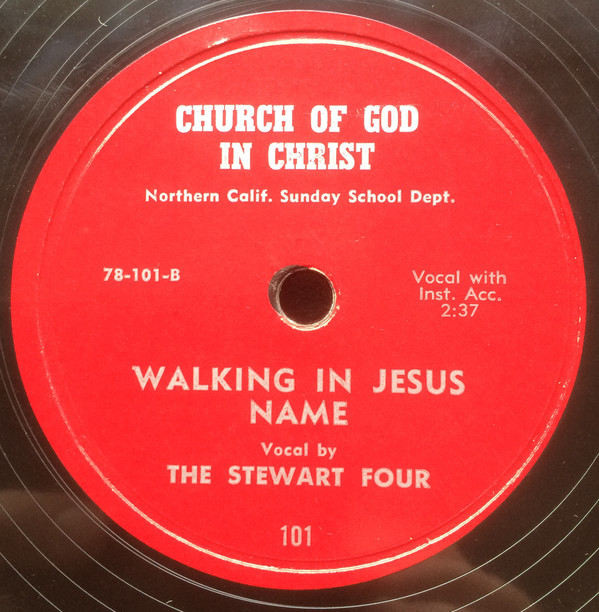
Judging from where its serial number falls in relation to other Goldband releases, this Boozoo Chavis record appeared circa 1965, although the session for it likely happened near the mid-fifties. Based in Lake Charles, Louisiana, Goldband owner Eddie Shuler enjoyed regional success in 1954 with Chavis’s “Paper in My Shoe.” Cuts like this one, though, must have been let loose in dribs and drabs, with Chavis having gone on a studio strike until the mid-eighties. When Chavis re-emerged, he did so as an acknowledged zydeco pioneer. A key part of Chavis’s appeal throughout his entire career was his musical looseness and unpredictability. Stories about the original Goldband sessions depict scenes of mayhem. The words on the label themselves tell stories too, with the misspelling of zydeco indicating it as a barely conceptualized genre at that point. The music’s lunacy is the sort that attracts “real thing” devotion, and since Shuler is the credited songwriter, one imagines a bizarre scenario of him actually sitting down and teaching it to Chavis.

“No More Auction Block” (1964) – The Goldebriars

“No More Auction Block” (1964) – The Goldebriars * Traditional arrangement by the Goldebriars * LP: The Goldebriars  * Produced by Bob Morgan * Label: Epic

“No More Auction Block,” also known as “Many Years Gone,” is a slavery song that’s been traced back to the 1830s as a possible musical rephrasing of the Roman Catholic hymn “O Sanctissima.” The early sixties folk revivalists knew the song, with Bob Dylan even reshaping the melody into his own “Blowin’ in the Wind.” (You can hear him do a 1962 live version of “No More Auction Block” on the first volume of his Bootleg series.) In 1964, a version of the song appeared on the debut album by the Goldebriars, a short-lived quartet who were led by Curt Boettcher before he’d gain lasting sunshine-pop cult status through his work with The Millennium and Sagittarius. Critics of folk revivalists complain about the sparkling sheen they imposed on traditional song, but here’s an example where such polish, with voices that meshed uncannily, equaled beauty.

“Muáto Muá N’gola” (1967) – Lilly Tchiumba

“Muáto Muá N’gola” (1967) – Lilly Tchiumba * Traditional * EP: Canta Angola * Produced by Emilio C. Mateus * Label: RCA Victor/A Voz Do Dono

The late Angolan singer Lilly Tchiumba sang in the Kimbundu language on her recordings, all of them from the sixties and seventies. In 1975, the year Angola became independent from Portugal, the Monitor label made most of her songs available on a collection called Angola: Songs of My People, now available via Smithsonian Folkways. Why did Tchiumba stop recording? Recent interviews with her brother, the painter Eleutério Sanches (who recorded an EP with her in the late sixties) express a general sadness about her career, specifically lamenting that her records have never been properly remastered after so many years. The song “Muáto Muá N’gola” (“women of Angola”), with its decidedly Portuguese sound, first appeared on a 1967 EP called Canta Angola, then reappeared on the Monitor album mentioned above, whose liner notes sum up its lyrical content as follows: “All women of Angola should be respected no matter what their condition or social standing and they have the right to fight for their position in society.”

“Made My Bed: Gonna Lie In It” (1966) – The Easybeats


“Made My Bed: Gonna Lie In It” (1966) – The Easybeats
 * Written by George Young * US 45: “Friday on My Mind” / “Made My Bed: Gonna Lie In It” * Produced by Shel Talmy * Label: United Artists

Although the Easybeats were chart regulars back home in Australia, their only US Top 40 hit happened in 1966 with “Friday on My Mind” (#16 in Billboard). On the flipside was a track called “Made My Bed: Gonna Lie In It,” in which dirty deeds are taken ownership of. Did the song’s “tried so hard to be a man-a man-a man” hook get into Lou Reed’s head? Because its big vocalized V7 chord will remind you of the Velvet Underground’s “Who Loves the Sun.” And did the song’s main guitar riff intend to bring “Rhapsody in Blue” to mind? Easybeats guitarist George Young wrote “Made My Bed.” He’d later produce records for his two brothers Malcolm and Angus, who had a band called AC/DC, and who would never consider quoting Gershwin or singing a harmonized 7th chord.

“Ling, Ting, Tong” (1954) – The Five Keys


“Ling, Ting, Tong” (1954) – The Five Keys
 * Written by Mable Godwin * 45: “Ling, Ting, Tong” / “I’m Alone” * Label: Capitol

The “Hong Kong” sound settles in early with a yangqin (Chinese hammered dulcimer) that is possibly just piano strings. Although the Five Keys (from Newport News, Virginia) kill it on this single, and its arrangement pops like fifties neon-lit Chinatown on Saturday night, the cartoonish cultural stereotype approach dooms it to the artifact bin. A 2010 Playstation video game called Mafia II, even so, has used it within the context of its subject’s already politically incorrect context. Songwriter Mable Goodwin (from Suffolk, Virginia) was a beloved mainstay as a singer and pianist at Arthur’s Tavern in Greenwich Village from 1960 to 1993. Her only additional writing credit of note was another politically incorrect boo boo recorded by the Five Keys: “Me Make Um Pow Wow.”

“I Just Want to See His Face” (1972) – The Rolling Stones


“I Just Want to See His Face” (1972) – The Rolling Stones
 * Written by Mick Jagger and Keith Richards * LP: Exile on Main Street * Produced by Jimmy Miller * Label: Rolling Stones Records

“I Just Want to See His Face,” which fades in and fades out near the end of side 3 on the Rolling Stones’ Exile on Main Street, is like a moment when that album’s blood gets tested and American gospel is confirmed, indeed, to run through the album’s veins. Derek and the Dominos keyboardist Bobby Whitlock has claimed to have lost out on rightful album credits, describing the session as a Wurlitzer piano riff he concocted in response to Mick Jagger’s queries about his religious upbringing. Did Jagger also have the Rufus H. Cornelius 1916 hymn “Oh I Want to See Him” running through his mind, with its prominent “just to see his face” line in the chorus? Possible recordings of it that may have reached his ears include ones by Mother McCollum’s Sanctified Singers (1930), James Cleveland and the Cleveland Singers (1964), or the Famous Davis Sisters (1967). Whatever the case, Jagger would be stirring gospel into goat’s head soup while dancing with Mr. D. in 1973.

“Little Girl” (1965) – Them

“Little Girl” (1965) – Them * Written by Van Morrison * UK LP: The “Angry” Young Them * Produced by Tommy Scott * Label: Decca

Here’s some menacing ballast to fill out a playlist of the classic Them songs you remember. The organ goes up and down/back and forth as young Van Morrison’s words get harder to figure. That face you see on the cover that identifies him as “angry” is peering at a schoolgirl through a classroom door. Then he’s watching her from his own home window as she stands like a ghost by an oak tree. The key never changes; the drums bang louder; the tempo gets faster…

“I’m Flying Home” (1968) – Merrell Fankhauser and HMS Bounty

“I’m Flying Home” (1968) – Merrell Fankhauser and HMS Bounty * Written by Merrell Fankhauser * 45: “Girl (I’m Waiting for You)” / “I’m Flying Home” * Produced by Glen MacArthur, Jack Hoffman, and Norman Malkin * Label: Shamley

Merrell Fankhauser’s pleasurable late sixties/early seventies recordings with Fapardokly, HMS Bounty and Mu still fly below the radar, but they take tuned-in listeners from the sparkling Southern California of the mind (late sixties) to the mythical jungles of Hawaii (early seventies) and beyond to where UFOs hover. “I’m Flying Home” is a psych rock nugget that showed up on the flipside of an HMS Bounty single, in which it sounds like they’re actually spinning farther away from home by the second. Shamley Records was a very short-lived imprint that branched off of the Universal Studios label (UNI), which had taken over Alfred Hitchcock’s Shamley Productions in the mid-sixties.

“Rock Against Romance” (1981) – Holly and the Italians


“Rock Against Romance” (1981) – Holly and the Italians
 * Written by Holly Beth Vincent * LP: The Right to Be Italian * Produced by Richard Gottehrer * Label: Epic

The cover photo on Holly and the Italians’ debut album, depicting Holly Beth Vincent as some sort of eighties-rock Connie Francis, misrepresents the enduring appeal she could have on listeners. So, too, does “Tell That Girl to Shut Up,” the album’s best-remembered song that once earned her group a touring gig as openers for “Rip Her to Shreds” Blondie. A better representation is “Rock Against Romance,” the album’s last song, that engulfs you in teen symphonics and gives you a clear sense of Vincent’s urban Ronettes/Shangri-Las foundation. Better still is her performance of the song on the British Old Grey Whistle Test show, playing lead guitar, standing on a plastered leg, and looking like the real deal.

“Death Defying” (1985) – Hoodoo Gurus

“Death Defying” (1985) – Hoodoo Gurus * Written by Dave Faulkner * Single: “Death Defying” / “Turkey Dinner” * LP: Mars Needs Guitars * Produced by Charles Fisher * Label: Elektra

Australia’s Hoodoo Gurus developed a healthy US alt rock following in the eighties with songs like “I Want You Back” and “Bittersweet.” Their 1985 song “Death Defying” seemed to indicate a turn toward reflective metaphysics in songwriter Dave Faulkner. What if more of their songs merged the thoughtful wisdom you hear in these lyrics with their “oo-wee” sound? “What’s My Scene” from 1987 was the only other one that delivered in that same way, though, and the group mostly carried on with their usual party/love/anti-hypocrisy themes. But no one really complained. (The single version on the Electric Soup compilation is different from the one on the Mars Needs Guitars album, which is the one you want.)