“Shot By Both Sides” (1978) – Magazine

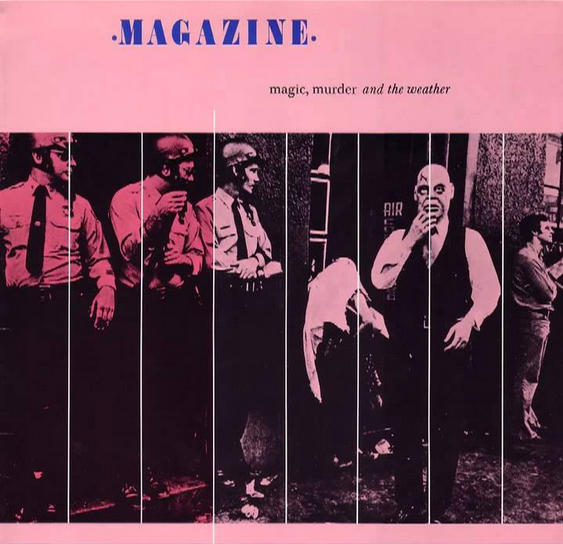
“Shot By Both Sides” (1978) – Magazine * Written by Howard DeVoto and Pete Shelley * Produced by Mick Glossop and Magazine * UK 45: “Shot By Both Sides” / “My Mind Ain’t So Open”

Debut single by Howard Devoto’s post-Buzzcocks quintet built on a snarling ascending guitar riff that would work well as a US crime show TV theme. The single version strikes harder than the version on their Real Life LP.  In his Heart of Rock and Soul, Dave Marsh points to Bruce Springsteen’s opening riff for “Roulette” (recorded in 1979 and released as a 1988 B-side) as a “Shot By Both Sides” mimic, but it’s really just vaguely similar. DeVoto’s former Buzzcocks bandmate Pete Shelley, who also used the main riff for that group’s “Lipstick,” gets co-writing credit.

“All of My Heart” (1983) – ABC

“All of My Heart” (1983) – ABC * Written by ABC * 45: “All of My Heart” / “Overture” * LP: The Lexicon of Love * Produced by Trevor Horn * Label: Neutron/Mercury

On the lavish Lexicon of Love album’s climactic track, quipmaster Martin Fry confronts genuine heartache. Orchestra strings swell, bells and piano keys sparkle, and memories of pink silk, colliding stars, hearts and flowers spill forth with a sigh. This was—and still is—British New Pop music of the highest order. Trevor Horn produced, with the true “poison arrow” being Anne Dudley’s orchestration.

“Acka Raga” (1968) – Shocking Blue

“Acka Raga” (1968) – Shocking Blue * Written by John Mayer * LP: At Home * Produced by Shocking Blue * Label: Pink Elephant

None of the official compilations for the Dutch “Venus” group do justice to their facility with the three minute pop song. You have to go digging through all of their album cuts and B-sides and construct your own playlist. “Acka Raga” is a post-pyschedelic sitar instrumental, a cover of a track from the Joe Harriott-John Mayer Double Quartet’s 1967 Indo-Jazz Fusion LP. In 1999, a techno group called Mint Royale covered the song and retitled it, but hilariously claimed writer credits, giving Harriott-Mayer liner note honors for the “sample.” They even had the song placed in the Alias TV show and the Vanilla Sky film soundtrack. How did the licensing for that go down?

“Ljeta koja dolaze” (1988) – Crvena Jabuka

“Ljeta koja dolaze” (1988) – Crvena Jabuka * Written by Zlatko Arslanagić * LP: Sanjati * Producer: Nikša Bratoš * Label: Jugoton


Tucked away on the second and third albums by the Bosnian pop group Crvena Jabuka (red apple) were three acoustic ballads that ached with old world melancholy. These were “Tugo, Nesrećo” (sorrow, unhappiness) and “Uzmi me kad hoćeš ti” (take me when you will) from their 1987 Za sve ove godine (for all these years) album, and also “Ljeta koja dolaze” (the coming summer) from 1988’s Sanjati (to dream).

These songs connected the band to Bosnian soil and its many centuries of vitality, hurt and survival, and excused them for their eighties teen idol orientation. The chorus of “Ljeta koja dolaze” translates as follows: “Summer is coming, does it bring me anything new? Will I find paths that lead me to you?” Listening to these simple words in their historical Dawn-of-the-Yugoslav-collapse context gives them more ominous meaning.

“(I Can Feel Those Vibrations) This Love Is Real” (1970) – Jackie Wilson

“(I Can Feel Those Vibrations) This Love Is Real” (1970) – Jackie Wilson * Written by Johnny Moore and Jack Daniels * 45: “(I Can Feel Those Vibrations) This Love Is Real” / “Love Uprising” * LP: This Love Is Real * Produced by Willie Henderson * Label: Brunswick

This was a top ten soul chart hit for the legendary “Mr. Excitement,” featuring his famous octave leaps in the choruses. (This was the third to last of his Billboard Hot 100 appearances, peaking at #59.) In the intro and at the 1:42 mark, it pays specific tribute to “Danny Boy,” which Wilson had taken to the charts in 1965. Songwriting credits go to Johnny Moore and his frequent collaborator Jack Daniels. (Moore is not the same one who sang vocals with the Drifters; neither is he the former leader of the Three Blazers. He’s an unheralded Chicagoan whose catalog as a singer and songwriter is most familiar to Northern Soul fans.)

“Airplane” (1977) – The Beach Boys

“Airplane” (1977) – The Beach Boys * Written and produced by Brian Wilson * LP: Love You * Label: Brother/Reprise

The Beach Boys’ Love You record hides complexity behind a tossed off, damaged veneer: when Wilson sings on it, the group’s guiding light sounds like he’s trying not to cough, and the synth he plays gives it a low budget feel. But these are beguiling, clever songs. “Airplane,” which is about buckling into an airplane seat, chatting idly to strangers about loved ones back home, and gazing out the window at the incomprehensibilities of size and distance, is given a mopey delivery (on verses) by Mike Love on lead vocals, but you picture Brian as the lead actor. Its elegaiac feel and crafty chord changes call for a version on nylon string guitar, something like Simon and Garfunkel’s “So Long Frank Lloyd Wright.”

“Abigail Beecher” (1964) – Freddy Cannon

“Abigail Beecher” (1964) – Freddy Cannon * Written by Bob Boulanger and Richard Heard * 45: “Abigail Beecher” / “All American Girl” * LP: Freddie Cannon * Produced by Frank Slay * Label: Warner Bros.

In the style of Johnny Otis’s “Willie and the Hand Jive,” slinky voodoo guitar underscores Cannon’s raves about the high school history teacher, who knows all the dances, drives a Jaguar XK-E, and has the goods to be a rock ‘n roll singer. Such high school stomp-friendly vignettes from teenage life distinguished the man nicknamed “Boom Boom” from the other ducktailed singers all over the early sixties charts. Reached #16 on Billboard.

“Borracho de Amor” (1962) – José Manuel Calderón

“Borracho de Amor” (1962) – José Manuel Calderón * Written by José Manuel CalderónLP: Este es Jose Manuel Calderon * Label: Zuni

The guitar-oriented “bachata” sound, an offshoot of the bolero and son genres, rose up in the Dominican Republic with José Manuel Calderón’s popular 1962 “Borracho de Amor” (“love drunk”) single. Sadly for him, the music couldn’t shake a decades-long Dominican perception of it being the soundtrack of crime, which eventually drove a disheartened Calderón off to more supportive communities in New York City, where he still makes music. To appreciate “Borracho de Amor” fully, don’t go previewing and skipping around. Just let it play so you can experience the full effect of the pause at 1:17, after which Calderón’s vocals, suddenly intoxicated with reverb, sound like voices in your head.

“Dear Prudence” (1968) – The Beatles

“Dear Prudence” (1968) – The Beatles * Written by John Lennon and Paul McCartney * LP: The Beatles * Produced by George Martin * Label: Apple

This eminently coverable John Lennon song (never released as a single) from the White Album featured a descending chord pattern and children’s rhyme melodies that flitted about like Maypole ribbons. Written during the Beatles’ celebrity-studded summer audience with the Maharishi Mahesh Yogi, it drew inspiration from Mia Farrow’s sister Prudence, a fellow student who preferred to meditate in private. On the Kinfauns Demo version of the song, you can hear Lennon wondering aloud if the Maharishi had driven her “berserk” or “insane.” She has since written an autobiography.

“African and White” (1981) – China Crisis


“African and White” (1981) – China Crisis
* Written by Gary Daly, Eddie Lundon, and Dave Reilly * 45: “African and White” / “Be Suspicious” * LP: Difficult Shapes and Passive Rhythms * Produced by Jeremy Lewis * Label: Inevitable/Virgin

“African and White” was the minimalist debut single from Liverpool’s China Crisis, a group led by Gary Daly and Eddie Lundon, whose flair for electropop enchantment had few rivals during the early ’80s. Although their lyrics tended not to communicate clearly, “African and White” actually had the building blocks for a social protest message about Israel’s support of South Africa’s Apartheid. Most of the low-quality lyric repository sites have this one wrong, missing the “Israel” in the chorus. Reached #45 on the UK singles chart.