“Hair” (1969) – The Cowsills

“Hair” (1969) – The Cowsills * Written by Galt MacDermott, Gerome Ragni, and James Rado * Produced by Bill and Bob Cowsill * 45: “Hair” / “What Is Happy” * LP: The Cowsills in Concert * Label: MGM * Charts: Billboard Hot 100 (#2)

The Hair musical debuted on Broadway in April 1968 and grabbed attention quick with its unbridled depiction of bohemian youth (swearing, protesting, getting naked, etc.). As far as the unsympathetic side of the cultural divide was concerned, the handcart to hell bounced along to the beat of Hair‘s catchy songbook. By 1969, the shock had worn off and the show had settled in as a cultural given. Hair songs aired on top 40 stations, with the 5th Dimension taking “The Age of Aquarius” to #1 in the spring, holding the Cowsills’ “Hair” at #2. The Rhode Island family band’s record came about from an NBC TV special called The World of Pizzazz, co-hosted by Carl Reiner, which explored contemporary fashion styles spiced up with music. The Cowsills, otherwise seen in Tiger Beat and on milk commercials, lip-synced to their new record, looking like a pride of young lions in their shaggy wigs. Brothers Bill and Bob, the two oldest siblings, produced the record, and all the music and vocals you hear on it are brought to you by the family. No tricks.

The Cowsills are at the top of their game here, which imbues the song with a certain rest-of-the-story melancholy because shortly after this, loose-cannon Cowsill dad Bud would goad Bill into a fight that led to his dismissal from the band and family. He would never again ride the top of the charts the way he did here with such assuredness and professional sheen. That’s sad because he belonged there. An article in Mix magazine gives a detailed account of the recording session. (“Hair” appears as an opening studio bonus for the Cowsills in Concert album.)

“I’ve Got Five Dollars and It’s Saturday Night” (1965) – George and Gene

“I’ve Got Five Dollars and It’s Saturday Night” (1965) – George and Gene * Written by Ted Daffan * Produced by Pappy Daily * Label: Columbia/Musicor * Charts: Billboard Hot 100 (#99), Billboard Country (#16)

As the two biggest names on Pappy Daily (Texas) and Art Talmadge’s (New York) Musicor label, George Jones (Texas) and Gene Pitney (Connecticut) found themselves in a Nashville studio as “George and Gene.” They laid down two albums’ worth of material in 1965: George Jones and Gene Pitney and It’s Country Time Again. The two singers’ dichotomous deliveries—fervency on one side (Pitney) and fatalism on the other (Jones)—made for an unusual sounding country duo.

Their biggest hit together ended up being a cover of Ted Daffan’s “I’ve Got Five Dollars and It’s Saturday Night.” (Daffan had Houston roots, making him a comfortable resource for the Beaumont natives Jones and Daily.) The record reached Billboard’s country top 20, and was the fifth of seven or so forays by future country icon Jones, during his long career, into the lower regions of the Hot 100.

The record’s arrangement turns Daffan’s laconic original into something much peppier, while the instrumental refrain, sounding like a lost melody from the Civil War years, features fiddles in violin drag, and comes off as much more early sixties than ’65. (Adjusted to today’s currency value, the amount they’re celebrating is $40.56. When Daffan recorded the song in 1950, a fiver had the buying power of $51.56.)

“The Oo-Oo Bossa Nova” (1964) – Milt Jackson

“The Oo-Oo Bossa Nova” (1964) – Milt Jackson * Written by Manny Albam* Produced by Bob Thiele * Label: Impulse

“Ooh ooh” and “do you mind?” were catchphrases for Joe E. Ross on Car 54, Where Are You? (1961-1963), a Nat Hiken sitcom with a “character actors on parade” quality. Each player specialized in facial distinctions that made it hard for viewers to turn away. Fred Gwynne and Al Lewis of The Munsters were there, for example, each of whom actually look more interesting without their makeup. Joe E. Ross, who played the dimwitted but loveable officer Gunther Toody, might also have transitioned nicely to The Munsters, but he was apparently a severe headache to work with.

Two records helped to capture Ross’s pop culture moment. The first is the 1963 single “Ooh Ooh,” featuring him delivering those catchphrases with a stock rock track and nyah-nyah girl chorus, something that would have fit in well for a hypothetical episode calling for Toody to launch an ill-advised recording career.  The second, though, is an album track by the suave jazz vibraphonist Milt Jackson (written by Manny Albam) called “The Oo-Oo Bossa Nova,” which appeared on Jackson’s 1964 Jazz ‘N’ Samba album a year after the show had run its course. (Producer Bob Thiele, while at Impulse, always kept an eye open for the commercial tie-in).

The jazz journalist Leonard Feather, in his liner notes, points to the song’s kinship with “Who’s Got the Pain (When They Do the Mambo)” from Broadway’s Damn Yankees. The gatefold features an image of Joe E. Ross in the studio recording this record’s oo-oo‘s, which would perhaps be his final high-profile Car 54 utterances.

“Zagzan” (2012) – Abdallah Ag Oumbadougou

“Zagzan” (2012) – Abdallah Ag Oumbadougou * Written by Abdallah Ag Oumbadougou * Album: Zozodinga * Label: Culture & Résistance

Abdallah Ag Oumbadougou, a revered figure in Tishoumaren music (also known as Tuareg blues or desert blues), passed away on January 4, 2020 at the age of 58. Those seem to be the only details available. Oumbadougou’s “desert rebel” nickname was no trifle – when his Tuareg people faced increased marginalization in the northwest African region, especially in his homeland of Niger, he became an exile, occasionally getting sent back to Niger to serve prison sentences after which he’d return to life as an outcast. His main offense: involving himself in the Tuareg resistance, lending voice to the movement through his own music and with the group Takrist n’Akalt (build the country), which he joined in the training camps of Libya. When peace agreements were signed in 1995, Oubadougou was able to return home to perform to—and record for—the audience he’d cultivated via cassette circulation. His influence on the popular Tuareg sound, by replacing traditional instruments with his guitar, is enormous. Its hypnotic strains now fill auditoriums in major cities, particularly when artists such as Tinariwen or Etran Finatawa go touring. Words of resistance continued to be Oumbadougou’s stock and trade throughout the remainder of his years. The song “Zagzan,” which translates to “Trust,” is about the uneasiness of life among city folk as opposed to the mountain folk, who “fight for and claim the rights of their people.”


“Feeling Alright” (1969) – Joe Cocker

“Feeling Alright” (1969) * Written by Dave Mason * Produced by Denny Cordell * 45: “Feeling Alright” / “Sandpaper Cadillac” * LP: With a Little Help from My Friends * Charts: Billboard Hot 100 (#69 – 1969; #33 – 1971 reissue)

“Feeling Alright,” the opening track on the first album (With a Little Help from My Friends) by explosive British rock n’ soul singer Joe Cocker, was an ideal complement for the cover image of Cocker in mid-convulsion. It’s a celebratory performance by him and his all-star studio band (Jimmy Page and Stevie Winwood grace the back cover), with pianist Artie Butler, especially, giving a signature contribution. The thing is, all this good feeling turns the original meaning of the song, first recorded in 1968 by writer Dave Mason’s (and Stevie Winwood’s) Traffic, on its head. “You feeling alright?” go the lyrics. “I’m not feeling too good myself.” It was a coy, bummer breakup song with a crucial question mark in the title.

In Cocker’s wake, the song would appear in numerous cover versions, usually as upbeat album filler. Two versions, by Mongo Santamaria (happy) and Grand Funk Railroad (sorta happy with a bummer undertone), charted in the lower regions. Cocker would finally claim virtual ownership of the song in its joyous guise by re-releasing it in 1971, probably in response to its electrifying presence in his 1970 Mad Dogs and Englishmen concert film. A Billboard ad (Jan 22, 1972) for the reissue featured a postcard with an inscription by Cocker saying, “My friends – I’m alive and well – and feeling alright!” (Note the exclamation point.) The 2012 Denzel Washington film Flight latched onto the song’s dual nature by using the Cocker track for an opening cocaine snort and the Traffic one for the sobering closing credits.

“The Lone Ranger” (1974) – Oscar Brown, Jr.

“The Lone Ranger” (1974) – Oscar Brown, Jr. * Written by Oscar Brown, Jr. * Produced by Joel Dorn * 45: “The Lone Ranger” / “Feel the Fire” * LP: Brother Where Are You? * Label: Atlantic * Charts: Billboard Hot 100 #69, Billboard Soul #27

Referring to Oscar Brown, Jr. as an influential Chicago musician doesn’t quite do the trick because he was such a hyphenate (playwright-activist-actor, etc.). Before recording his first album in his early thirties, though, he’d written lyrics for familiar tunes (“Dat Dere,” “Afro Blue”) and was interpreted by the likes of Mahalia Jackson and Nina Simone. By his late forties, in 1974, Brown finally looked poised to find a commercial groove of his own, but “The Lone Ranger” ended up as a one-off, peaking at #69 in Billboard as his only pop chart appearance. It’s a memorable timepiece that stands on the borderline of novelty and topical, riffing on the scenario of the masked TV hero, with sidekick Tonto, surrounded by Navajos. “We’re in trouble,” says the Lone Ranger. “What do you mean we?” answers Tonto. Even those only half-listening will inevitably get the hook of “we, white man?” stuck in their heads, as sung by Cissy Houston and Tender Loving Care. Billboard referred to this as a take on an “old joke,” while Mad magazine readers likely remembered it from a March 1958 issue in “TV Scenes We’d Like to See” by E. Nelson Bridwell. (Blogger Mark Evanier recently asked if that was the first appearance of the joke, so I’ll second that.) The record surely stung in its context, with the Wounded Knee Incident of 1973 still fresh in public memory.

“Starry Eyes” (1979) – The Records

“Starry Eyes” (1979) – The Records * Written by John Wicks and Will Birch * Produced by Dennis Weinreich and Will Birch * 45: “Starry Eyes”/ “Paint Her Face” * Label: Virgin * Charts: Billboard Hot 100 (#56)

For the most part, “Starry Eyes,” the candy-flavored record by England’s Records, deserves its place as an all time power pop short-lister. It had the right kind of title, the right kind of instrumentation, and the right kind of structure (an opening octave-guitar refrain that returns happily as a middle eight). It also has historical credentials with its #56 Billboard chart position and verified presence as a transistor jangler during the late years of AM hit radio.

Where it doesn’t check the right box is in lyrical content. It’s a record about the virtues of hard work and a dis on their manager, who hangs out in the hotel pool while they handle business in the conference rooms. “Get me out of your starry eyes and be on your way,” they sing, but so uplifting is the music that the average undemanding listener likely assumes all the words have romantic connotations. (Even in their romantic songs, after all, the Records always did come across as smarter than the rest.)

The 45 version that became a hit in the US had a more jagged guitar sound than the UK LP (Shades in Bed) version, to which producer Snuff Garrett also added unnecessary pacing tweaks. (Lending value to the single is a non-album flipside called “Paint Her Face” with a distinctly uillean guitar refrain.)

“Canary in a Coalmine” (1980) – The Police

“Canary in a Coalmine” (1980) – The Police * Written by Sting * Produced by the Police and Nigel Gray * LP: Zenyatta Mondatta * Label: A&M

A song like this, where the singer expresses exasperation over someone’s environmental hyper-sensitivity, someone you imagine wearing a surgeon’s mask at the grocery store as standard practice, would have sounded woefully out of step only five years previous, when environmental consciousness still made for relevant pop music subject matter. Sting likely drew from Dave Edmunds’s 1977 cover of Bob Seger’s “Get Out of Denver” for the wordy Chuck Berry-like cadence in “Canary in a Coalmine,” an ideal match for their brand of sped-up ska. And what an appropriate source song, implying an exit from a fresh-air Rocky Mountain environment or, by implication, an era where singers like John Denver used to sing about it.

“Carioca” (1934) – RKO Studio Orchestra

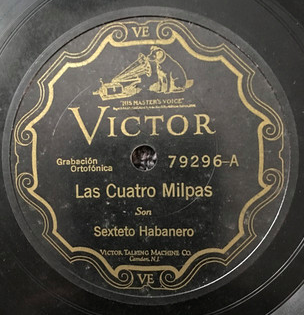
“Carioca” (1933) – RKO Studio Orchestra * Written by Vincent Youmans, Edward Eliscu, and Gus Kahn * 78: “Raftero” (Nat Finston and Studio Paramount Orchestra) / “Carioca” * Label: Victor

“Carioca” is an early manifestation of the soundtrack trade, taking music directly from a film—in this case the 1933 Fred Astaire and Ginger Rogers vehicle Flying to Rio—and selling it on disc. Curiously, it includes none of the vocals that accompanied its opulent movie sequence, in which Fred and Ginger did their very first dance on film together, and in which the other dancers introduced an odd move involving the touching of foreheads. Although many versions of “Carioca” turned up in the movie’s wake, this source version, in spite of being credited in blasé fashion to the RKO Studio Orchestra, is the peppiest one. The title is a Brazilian term for the people of Rio De Janeiro and has no connection with the Japanese term karaoke. The song on side A, credited to Nat Finston and the Paramount Orchestra, is “Raftero,” named for George Raft—normally typecast as a gangster—who dances to it in the 1934 film Bolero.

“Grandma Got Run Over By a Reindeer” (1979) – Elmo ‘n’ Patsy

“Grandma Got Run Over By a Reindeer” (1979) * Written by Randy Brooks * Produced by Gary Potterton * 45: “Grandma Got Run Over By a Reindeer” / “Christmas” * Label: Oink * Charts (first appearance): Billboard Christmas (#1) * Chart Entry: 12/17/83

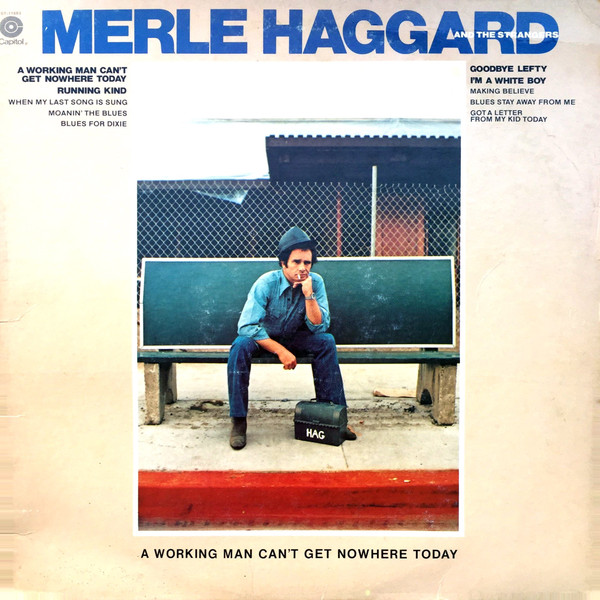
In his Sleigh Rides, Jingle Bells and Silent Nights, Ronald D. Lankford, Jr., reports that songwriter Randy Brooks had found inspiration for “Grandma Got Run Over By a Reindeer” from Merle Haggard’s “Grandma’s Homemade Christmas Card” (1973). In that recording, Haggard describes his subject against the steel guitar backdrop of “O Little Town of Bethlehem,” with all cues pointing toward a maudlin death that never happens. So Brooks took that as a challenge (and stole the VII7-IV-I hook from Haggard’s “If We Make It Through December” along the way). After showing his creation to Elmo and Patsy, who recorded it on their own label in 1979, the record became America’s favorite perennial Christmas crudity. It could be that songs that never go away contain some sort of open-ended message that keeps our subconscious minds engaged. In this song, it’s most certainly the refrain “as for me and Grandpa, we believe.” The word “believe” is loaded with yuletide pixie dust as it is, but that seven-word line alludes to 1) factual reality (the belief that Grandma got run over), 2) a statement of faith (the belief that there must really be a Santa Claus, with Grandma’s possibly fortuitous death offered up as evidence), and 3) a fearful warning (the belief that Santa lives, and he may not only withhold presents from you but he might also kill you). Additional interpretations are by all means conceivable. Side B is a penance-flip that plays Christmas straight.