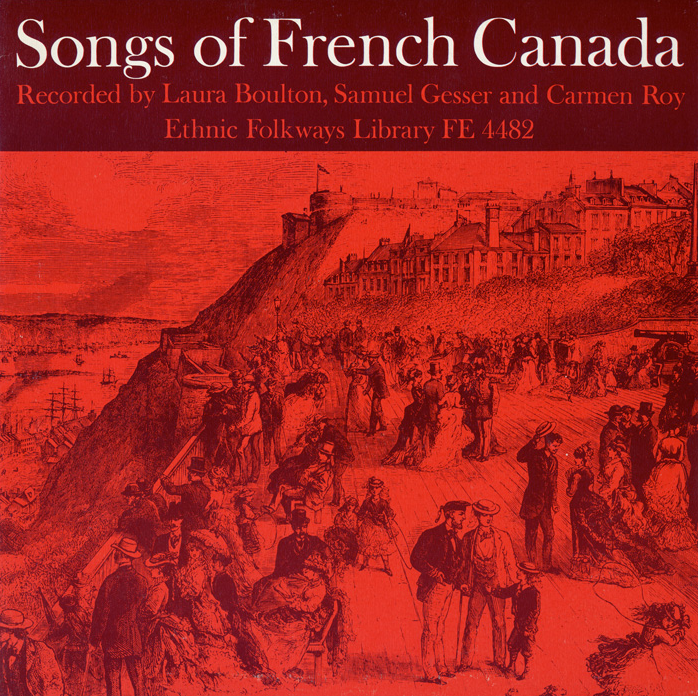
“Son Voile Qui Volant” (1957) – Mrs. Beavan with Children * LP: Songs of French Canada * Label: Folkways
I’m not sure if this call-and-response song qualifies as proper turlutte, but it incorporates similar foot-tapping and vocal demands. It’s a well-loved folk song that the Quebecois actor/singer/radio star Ovila Légaré had recorded on Columbia in 1929.
The lyrics are as follows: “Her shawl flew here, her shawl flew there, her shawl that flew, that flew…in the wind…The wind picked up her dress, I saw her pretty white stockings…her lovely garters bordered with white ribbons…Happy, oh ladies, the one to be her lover… They will not often get the chance.”
The seemingly racy song must have been through the ringer enough times by 1957 for the “Mrs. Beavan” on the recording to have felt fine about leading a singalong of those words with her school children.
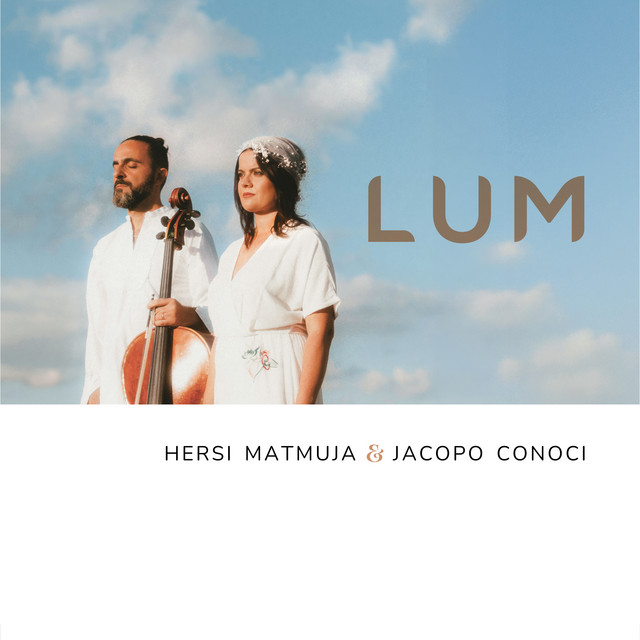
“Vare Vare” (2025) – Hersi Matmuja & Jacopo Conoci * Produced by Valerio Daniele, Jacopo Conoci, and Hersi Matmuja * Written by (Traditional) * Album: Lum * Label: Maladisco Music.
Hersi Matmuja (as Hersjana Matmuja) represented Albania for Eurovision 2014, singing in English and finishing fifteenth. Eleven years later, on the 2025 album Lum, she reemerged as a wellspring of traditional song. (“Lum” is an expression of joy that also corresponds to “lumë,” the Albanian word for “river.”)
Matmuja recorded the album with the Italian-Albanian cellist Jacopo Conoci, in which they explore the music of the Albanian Arbëreshë communties that have populated Southern Italy since the 1400s. The Albanian exodus happened after the death of Albanian-Ottoman War hero Skanderbeg, who had been holding off Ottoman invasions until his death in 1468.
Many of these communities speak a hybrid language called Arbërisht, which is the language you can hear Hatmuja using on “Vare, Vare” (let’s dance, let’sdance). Conoci, meanwhile, casts a spell on his cello to make it sound like a sultry upright bass.
A good reference point for this recording is one by the Italian-Albanian singer Silvana Licursi, from her album Far from the Land of Eagles: Albania Italy, recorded in 1991, one year after Matmuja was born.
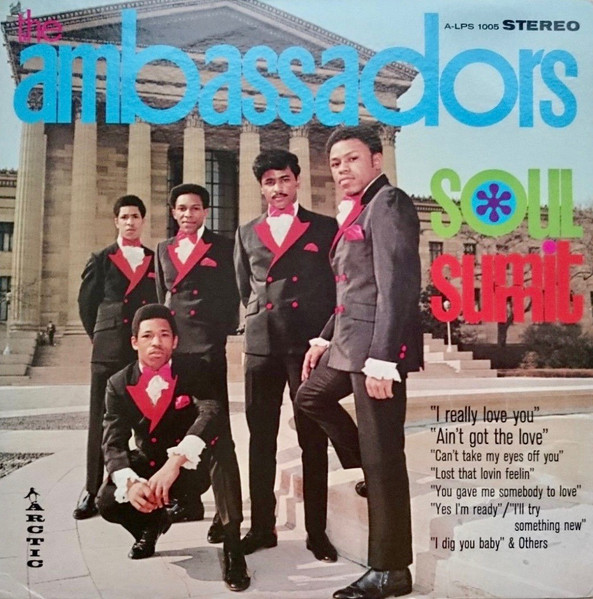
“I Really Love You” (1969) – The Ambassadors * LP: Soul Summit * Written by Jimmy Bishop and Kenny Gamble * Produced by Jimmy Bishop * Label: Arctic * Charts: #123 (Billboard Bubbling Under)
This is the only charting single by Philadelphia’s Ambassadors, and it has an ongoing mystique among soul collectors. The group recorded their first few singles on heavyweight Atlantic, but then shifted over to Arctic, which sounds a bit like a wisecrack. Arctic was a label belonging to Jimmy Bishop who, unlike Kenny Gamble (co-writer), Leon Huff (keyboards), and Bobby Martin (arranger), three future Philly soul VIP’s who worked on this record, opted to lay comparatively low.
“I Really Love You” captures everyone involved learning their craft, or am I not giving them enough artistic credit by saying that? There’s a murkiness and moodiness to the track that has much to do with the backup vocals being mixed way back with a touch of reverb. This gives it the effect of lead singer Herley Johnson being joined in by strangers farther down the street who are strangely aware of, and invested in, his situation. This kind of connection is something young people are more able to conceive of than older ones. The world is smaller, a bit kinder, and distant voices of solidarity seem more believable. (Maybe this is why people like musicals.)
So that’s one crucial part of this record that makes a listener feel wistful. Then again, those background singers could be the voices in Herley’s head – also a moody listening device. The rest of its appeal, of course, has to do with the musicians.
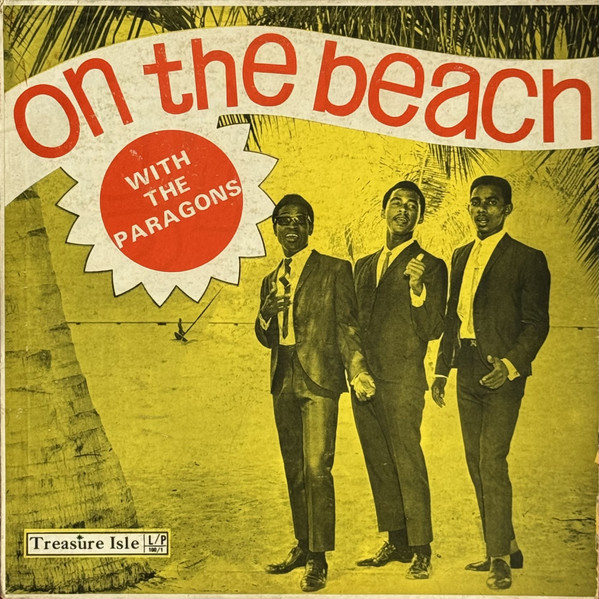
“The Tide Is High” (1967) – The Paragons * LP: On the Beach with the Paragons * Written by John Holt * Produced by Arthur “Duke” Reid * Label: Treasure Isle.
The Paragons’ original Jamaican version of “The Tide Is High” is the most palatable one for me. I, like you, have heard the Blondie version—a number one hit in the US and UK in early 1981—a zillion times, but that’s not the only reason I don’t need it on my desert island. There’s an easy going restraint to the original that gives it a richness in meaning. With Blondie, no calypso horns or steel drums can soften the well-known drive of the vocalist who sings “I’m not the kind of girl who gives up just like that,” who we also remember singing “one way or another, I’m gonna getcha getcha getcha” and “come on, rip her to shreds.” There’s an insistence in Blondie’s remake that gives its radio dominance a sense that we’re continually calling a truce and ceding space to it.
The Paragons, on the other hand, are more seductive, with singer and writer John Holt implying that although he’s “not the kind of guy who gives up just like that,” he will bide his time. Even the tide metaphor strikes the right tone, different from what Brutus said in Julius Caesar about there being one big wave in our lives that leads on to fortune, and that if we don’t take it “when it serves” we’ll spend the rest of our lives in “shallows and in miseries.”
This kind of narrow vision took Brutus to the grave not long after he uttered it. He would have done well to consult with an islander, who would have told him that “the tide is high,” but there are many more to come. Is there not an allure to island music, and surf music, for that matter, that implies that the tide is an ever changing thing? And that big waves are not to be feared or essentialized but celebrated and anticipated as long as we breathe?
In 2002, a girl group called Atomic Kitten took the song back to number one in the UK, and it played during the opening credits of The Lizzie McGuire Movie the following year. That it conveys no overtly non-manufactured message only supports the emotional reads I’m getting from the other two.
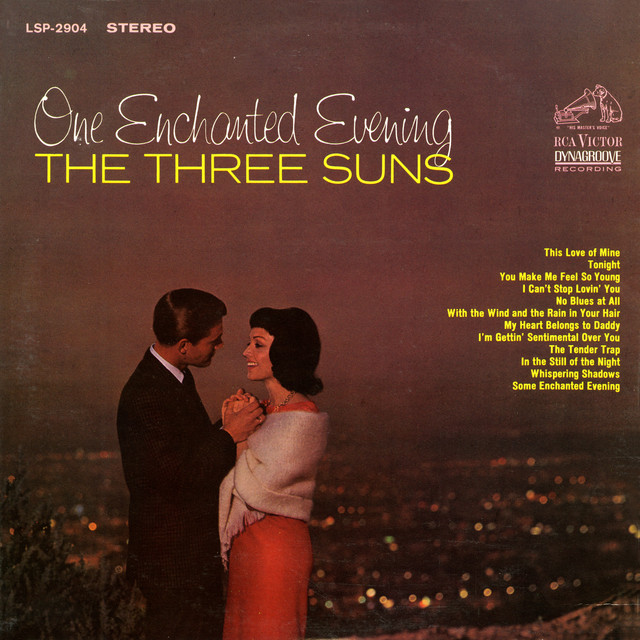
“Some Enchanted Evening” (1964) – The Three Suns * Written by Richard Rodgers and Oscar Hammerstein II * Produced by Al Nevins * Arranged by Roy Glover * LP: Some Enchanted Evening * Label: RCA Victor
This is the title track from an album that has never sounded hip, even considering that the Three Suns, armed with organ, accordion, and guitar, eventually found the favor of record collectors under the auspices of both irony and sincerity. Many surprises and pleasures do exist in their 40-plus album oeuvre, but this one, at the tail end of their run, will make you feel as if you’ve barged in on the amours of a couple who have just removed their polyester. What caught my ear was the organ riff at 2:39. Was this the idea of trio member Artie Dunn or arranger Roy (LeRoy) Glover? Because it foretells the instrumental hook of the Temptations’ “I Wish It Would Rain” a good three years before that single would saturate Top 40 radio.
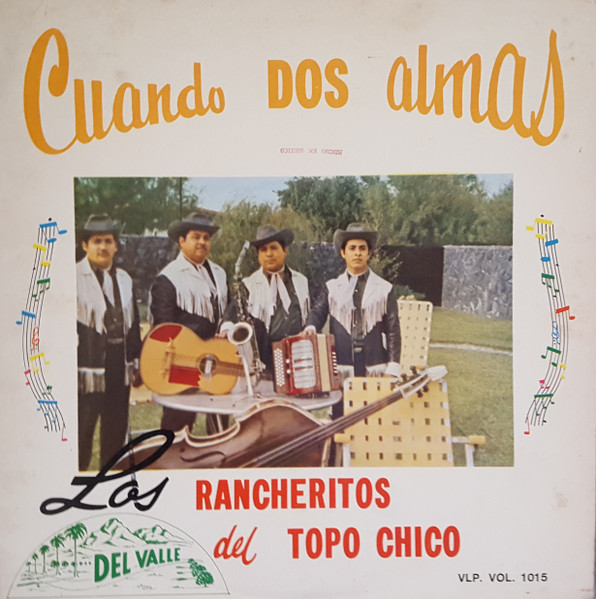
“Serenata Norteña” (1964) – Los Rancheritos del Topo Chico * LP: Cuando Dos Almas * Label: Del Valle.
I listened to Los Lobos’s How Will the Wolf Survive so much in 1984 (and beyond) that I don’t really even need to listen to it anymore. I can just play it back with accuracy right up there in my noggin. I always wondered about “Serenata Norteña,” though, a grito-peppered polka track sung in Spanish that breaks down into a waltz during the choruses. For me, it unlocked a door for a long-abiding adoration for canciones tradicionales mexicanas, and I’ve wanted to know about the song’s origins. On the label, though, it says “copyright control” where the writers ought to be. This a term that expresses more doubt than the standard “traditional” or “public domain,” as though the artists suspect it has a traceable origin but they just couldn’t figure it out.
Imagine my surprise and delight, then, when a record I found in a San Antonio flea market by Los Rancheritos del Topo Chico (yes, the same part of Monterrey in Northern Mexico where the bubbly water comes from), unrolled the very arrangement, circa 1964, that Los Lobos were to use decades later. This record came out on the Del Valle label in McAllen, Texas, and another group on that same label, called Hermanos Hernandez, happened to record a single with the same name, but it’s altogether different. No writers are credited on the Los Rancheritos record, though, so my dead end is the same one Los Lobos already knew about. Los Rancheritos’ founder and lead vocalist Catalino Leos kept on making music until he passed away in 2024.
Annoyingly, A.I. and its enablers plug in the names of various members of Los Lobos as the writers wherever one seeks.
Awesomely, polka king Frankie Yankovic included a medley of “Corrida #1” and “Serenata Norteña” on his 70 Years of Hits album in 1985.
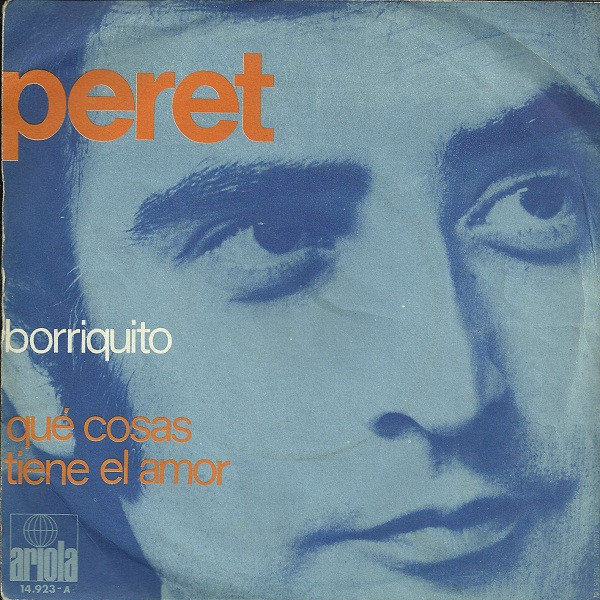
“Burriquito” (1971) – Peret * Produced by Juan Pardo * Written by Peret * 45: “Burriquito” / “Que Cosas Tiene el Amor” * Label: Ariola * Charts: Der Musikmarkt (Germany), #1 (2 weeks); Stichting Nederlandse Top 40 (Netherlands), #1 (7 weeks).
Peret (born Pedro Pubill Calaf) was the first big face, name, and voice of Catalan Rumba, the palmas y gitarra flamenco sound that became the backing track, in the late sixties and early seventies, for Spain’s booming status as a tourist destination. The widening up of Spain’s doors to outsiders by the heavy-handed Franco regime, however, didn’t ease up on the stifled cultural production for the country’s minorities. Peret, then, only released a few songs in Catalan during his heyday, with all of the rest being in Spanish.
This particular situation, in fact, sheds light on Peret’s biggest song, “Burriquito” (little donkey) which one first encounters as being brazenly meaningless (and possibly a goof on “Blame It on the Bossanova”). The implication of the title term is “dumb,” and when you watch the video of him along with a troupe of dancers doing routines in the streets of Ibiza with funny costumes and their bodies making letter shapes, you assume they’re just doing their best to keep things bizarre. “I’m a donkey like you,” he sings, enunciating vowel sounds like a mock nursery school lesson.
Peret’s own words, though, in a documentary called Yo Soy La Rumba, indicate that the whole “Burriquito” exercise had a language identity motive. He says he was “thinking about those people [in Spain] who didn’t want to seem like they were from here, who made songs in English.” This implies he’s poking fun at those singers using English to look for bigger audiences, but also adding self-deprecation regarding his own decision to sing in Spanish and not in Catalan.
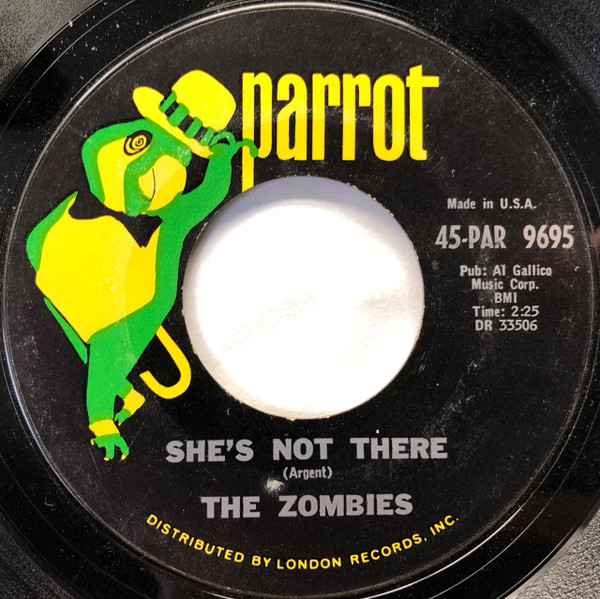
“She’s Not There” (1964) – The Zombies * Produced by Ken Jones (Marquis Enterprises) * Written by Rod Argent * 45: “She’s Not There” / “You Make Me Feel Good” * Label: Decca (UK) / Parrot (US) * Charts: Billboard (#2); UK (#12).
Released amid the grins and frolics of 1964’s British pop music imports, “She’s Not There” stood out for its foggy shroud and minor key. Hugh Grundy’s drums kick and click in secret code. Rod Argent’s organ (a Hohner Pianet) slinks about under Colin Blunstone’s voice-on-the-wind words about a series of situations—causing more than one person to cry—that no listener can really figure out. (For some fun, go read entries on songmeanings.com, some of which hypothesize about it referring to incidents that happen long after the song was released.) “Why should I care?” sings Blunstone, who’s all counterculture sunglasses in a dark and smoky room, his insouciance masking the sting.
Tenses and points of view shift out of sync, while contextual clues, like the woman in the song, never appear. This sense of mystery is crucial to the song’s allure and gives it ongoing callback utility for anyone feeling bewildered by the non-presence of a certain female. Rod Argent reportedly drew his inspiration from John Lee Hooker’s organ-juiced “No One Told Me.” The US Parrot version mislabels the B-side as “You Make Me Feel So Good.”
Notable cover versions: Ola and the Janglers, UK Subs, Santana, Neko Case and Nick Cave.
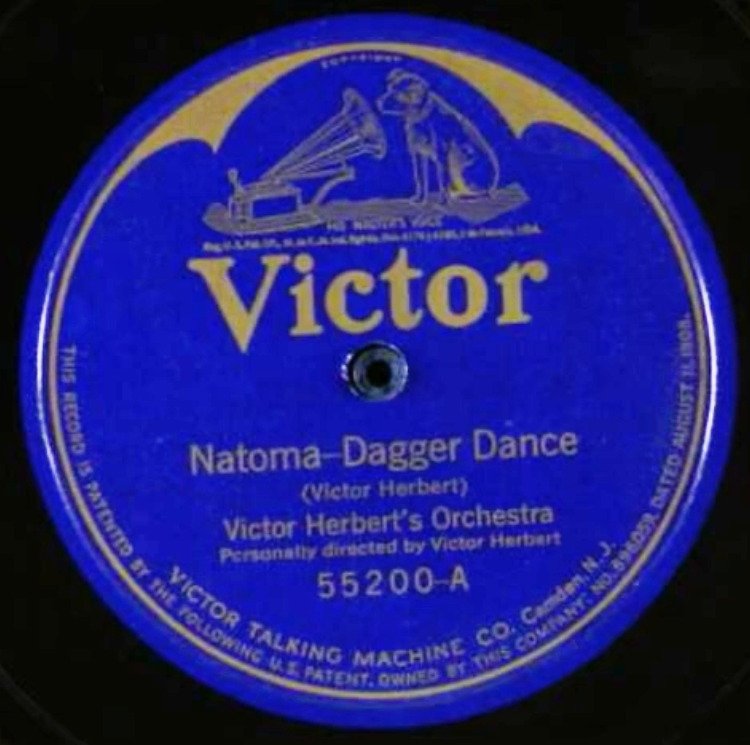
“Natoma-Dagger Dance” (1923) – Victor Herbert’s Orchestra * Label: Victor
More about that Hamm’s Beer “Land of Sky Blue Waters” theme that Los Lobos referenced in “Las Amarillas”: It uses the title, but nothing else, from a 1909 Charles Wakefield Cadmon song later recorded by the Andrews Sisters and others. Moira F. Harris, in her The Paws of Refreshment: The Story of Hamm’s Beer Advertising (2000), writes that the Minneapolis Campbell-Mithun ad agency devised it, with lyrics by Don Graewert and orchestration by Ernie Gavrin of WCCO radio.
Other influences included the lyrical cadence of Longfellow’s Song of Hiawatha, Haitian voodoo drumming, western movie soundtrack tropes, and the “dagger dance” from American light music composer Victor Herbert’s Natoma. Although operettas were Herbert’s forte, this was one of only two forays he made into grand opera, and it wasn’t a hit. With a libretto by Joseph D. Redding, ittold the story of a Chumash maiden and her daughter, both of whom get tangled in situations with non-Chumash love interests in old Santa Barbara, California.
You can hear the Hamm’s Beer melody rolling around here, later to be tightened up into an unforgettable jingle aimed at football and baseball fans from the 1950s to the 1980s. You can also hear it near the beginning of “Natoma: Selections,” in this version recorded by the Slovak Radio Symphony Orchestra for the Naxos American Classics series. No music by the Czech-American Rudolf Friml, whom several online sources credit erroneously as the composer of Natoma, appears on that album.
“Las Amarillas” (1988) – Los Lobos * Produced by Los Lobos * Label: Slash/Warner Bros.
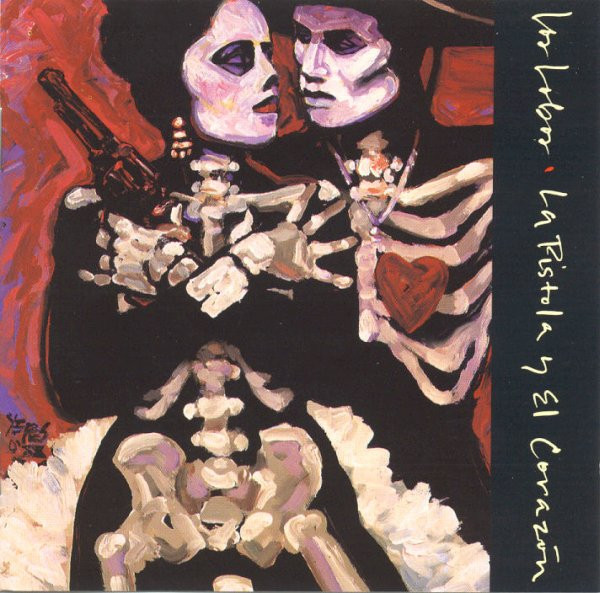
Los Lobos topped the charts in 1987 with their polished-up vintage T-bird version of “La Bamba.” Perhaps drawing inspiration from the scene in the eponymous movie where Ritchie Valens hears the song’s traditional incarnation (performed by Los Lobos as a late fifties cantina band), they went unplugged for their follow-up album La Pistola y El Corazon, a nine-song folklorico album that clocked in at only twenty-five minutes and featured striking cover art by George Yepes.
Seven of the tracks are traditional, while the other two are trad-sounding originals. The best information you can get about the album is in the February 1989 issue of Frets magazine, in which the band gives background on each of the songs and their instrumentation.
Cesar Rosas identifies “Las Amarillas” as a primitive huapango from the backwoods of Guerrero, where “you use a drum instead of a bass, two nylon-string guitars, and two violins.” In a 1988 review of the album in the Los Angeles Times, Victor Valle writes that the song “goes into a territory of passion some Mexicans may not even recognize,” with “allusions to beaks that peck and nests that squeeze,” giving Rosas’ vocal “the earthy eroticism of Campesinos ignorant of puritanical shame.”
Not mentioned anywhere is the song’s coda, where Louie Perez’s floor toms shift into a pulsing 4/4, David Hidalgo plays the Native-American signifier riff of old westerns on his violin, and band roadie Mouse de la Luz, on bells, sounds out the melody to the Hamm’s Beer “Land of Sky-Blue Waters” theme.