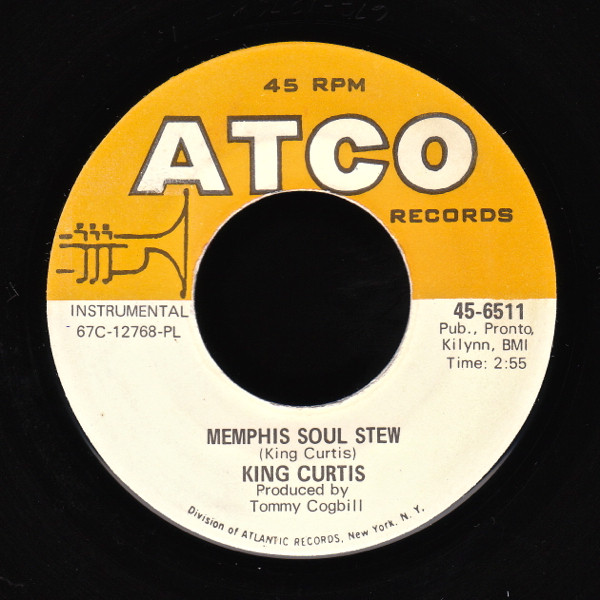
“Memphis Soul Stew” (1967) – King Curtis

“Memphis Soul Stew” (1967) – King Curtis * Produced by Tommy Cogbill * 45: “Memphis Soul Stew” / “Blue Nocturne” * Label: Atco. Billboard Charts: Hot 100 (#33), Soul (#6).

A Texan he may have been, but sax man King Curtis comes off as a top Memphis ambassador on this record. The spoken intro tells us that the soul stew on special contains “half a teacup of bass,” a “pound of fatback drums,” “four tablespoons of boiling Memphis guitars,” a “little pinch of organ,” and “half a pint of horns.” These are musical ingredients, but I don’t know if there’s any better place to experience sound-taste synesthesia. The track gets you hungry.

The great bassist Jerry Jemmott, who played on the 1971 version for King Curtis’s Live at Fillmore West, writes in his Makin’ It Happen memoir about his disappointment that he couldn’t have been the one to have played on the 1967 single, a Top 40 hit. But Tommy Cogbill was the producer, and why would a bassist of that caliber need anyone else? (Cogbill’s involvement also reminds you how much more of a multiracial affair so many of the great Southern soul records actually were.)

But here’s why “Memphis Soul Stew” always finds its way back in my head: At the inevitable times when I realize a stressful situation will work itself out, or not kill anyone if it doesn’t, I hear King Curtis’s voice saying “this is gonna taste all right,” sometimes altered as “this is gonna be alright.”  

The B-side is a notable contrast. The saxophone’s excused itself and everyone else sounds like they’ve had way too much stew.

“Little Beggar Man” (1966) – Steve Benbow and the Strawberry Hill Boys

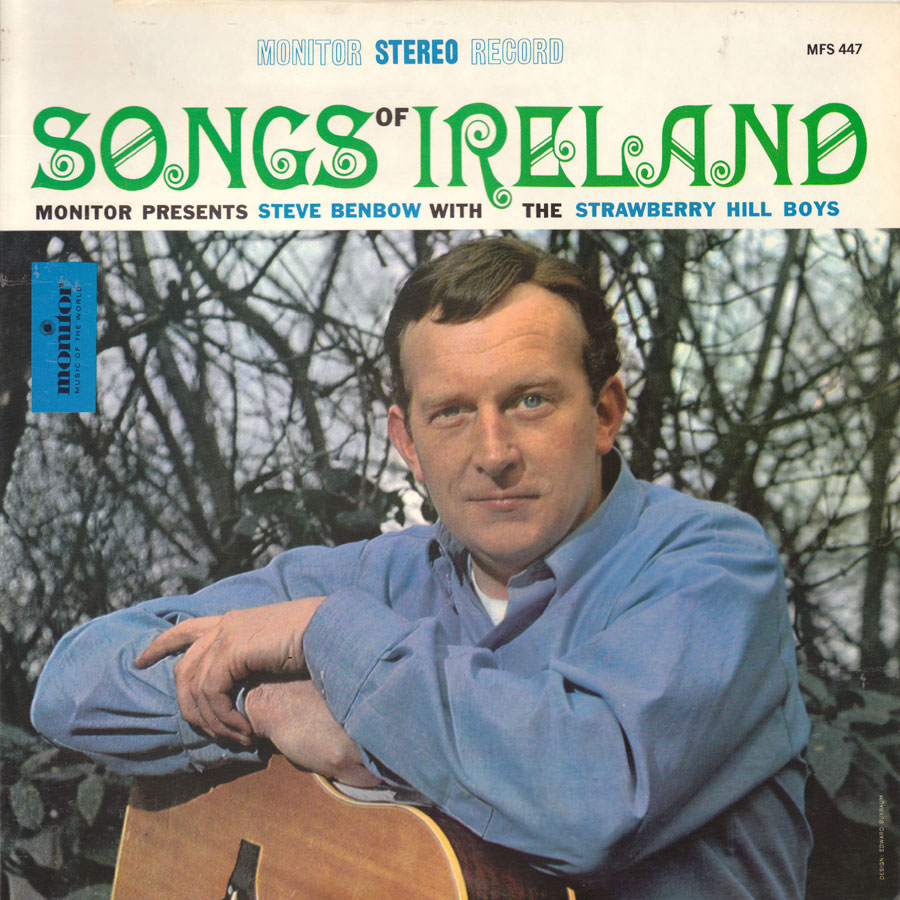
“Little Beggarman” (1965) – John Anderson * LP: Songs of Ireland * Label: Monitor

The late Londoner Steve Benbow recorded over 20 albums between 1957 and 2003, and his visibility as a fingerpicker during the early stages of the British folk revival inspired up and coming guitarists like Davy Graham. His 1965 Songs of Ireland album includes a version of “Little Beggar Man” that’s my favorite one on record. (My favorite overall performance, though, comes from the Clancy Brothers on the first episode of Pete Seeger’s Rainbow Quest TV show from 1966 – just three voices and a guitar.)

Benbow’s recording includes accompaniment by the Strawberry Hill Boys who would later shorten their name to the Strawbs and become a British folk rock institution. Their involvement, oddly enough, gives the English rendering of an Irish song an American bluegrass feel, which is the kind of band they were aiming to be back then.

In his liner notes, Benbow says the song uses the melody for a familiar Irish folk song called “Oul Lamas Fair in Ballycastle O,” which may be so, if you’re talking only about the melody line, which that song does use but over different chord changes. “Little Beggar Man” is more commonly understood as a relative of the fiddle tune “Red Haired Boy.”

I’ve puzzled a bit about the rest of Benbow’s eccentric liner notes for this song: “Nobody has much sympathy for a poor man if he be strapping and big. So if you want to steal, be a bit like Lautrec, for begging is stealing your own dignity from yourself.” I’ve got the Lautrec bit – a reference to the 4’8″ French painter – but his overall meaning, which has little to do with the lyrics, is still processing.

“Rymoka String Band (2:20)” (1985) – Rymoka String Band

“Rymoka String Band” (1985) – Rymoka String Band * Produced by Gef Lucena * Recorded by David Fanshawe * LP: Spirit of Melanesia* Label: Saydisc

The sound of Papua New Guinean string band music lolls and rolls with acoustic guitars and ukes favoring 6th chords. How to characterize the cultural ear for that sound? The effect on me is that life is “all sixes,” six of one and a half dozen of the other, so why get uptight? Listen to what I mean in this track on SayDisc’s Spirit of Melanesia compilation.

It’s credited to the Rymoka String Band, whom the late British composer and ethnomusicologist David Fanshawe captured as part of his enormous archive of worldwide field recordings. The liner notes explain that the performance happened at the 6th anniversary celebrations (July 28, 1985) for Passam National High School, where a string band competition took place, and that Trudi Egi and Vincent Raka, students from Tubusereia, organized the group.

They won the contest, and Fanshawe writes that “this number, one of my favourites, was especially recorded in the cool of the evening in the chapel.”

And now, permit me to get uptight. This particular track, sung in Tok Pisin, a mixture of Pidgin and English, surely sounds like what Fanshawe’s talking about. (The only recognizable word is “1985,” sung in English.) But on another compilation, ARC Music’s Music of the South Pacific, a different track appears, which is also titled as—and credited to—“Rymoka String Band.” This one’s lyrics are sung in English and they also sound appropriate for an anniversary.

Such untitled/anonymous treatments pop up plenty in field recording collections, as though we’re expected not to take any individual song too seriously and view them more as phenomena than compositions. So I guess I’ll just call them “Rymoka String Band (2:20)” and “Rymoka String Band (2:40).”

Passam National High School, by the way, is still operational but was shut down between 2010-2014 over a land dispute.

“Tennessee Stud” (1996) – Johnny Cash

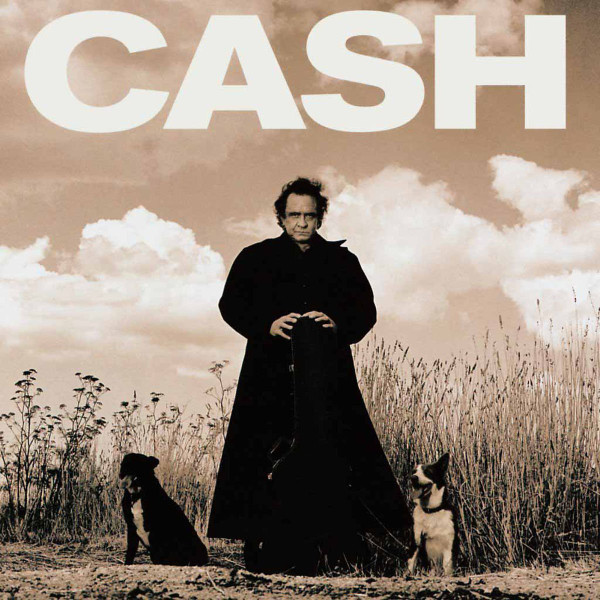
“Tennessee Stud” (1993) – Johnny Cash * Written by Jimmy Driftwood * Produced by Rick Rubin * LP: American Recordings* Label: American Recordings

Rightfully celebrated for providing the overdue bare-bones presentation Johnny Cash’s legend demanded, the Rick Rubin-produced American Recordings album also had a bone-dry sound of sonic disinfection, which risks coming off as disaffection (if you’re not Johnny Cash). It’s a trend in solo acoustic recordings of the ’90s, like Bob Dylan’s Good as I Been to You (1992) and World Gone Wrong (1993), both of which sounded as if all involved wore hazmat suits. The overwhelming backdrop silence plays counter to the very trueness the recording philosophy espoused.

Cash’s recording of “Tennessee Stud,” then, stands out because it happens at the Viper room on Sunset Strip in front of a crowd of giddy and supportive invite-only attendees. So there’s the kind of human-contact atmosphere that served his beloved At Folsom Prison album so well. The nature of the audience doesn’t matter so much. As Tony Tost writes in his 33 ⅓ treatment of the album, they “cackle and hoot like refugees from the Hee Haw cornfield,” but their responses to the song echo the responses you’re supposed to have.

First recorded in 1959 by the one-man folk song factory Jimmy Driftwood, “Tennessee Stud” became a staple in the repertoires of Doc Watson and many others. The song recounts the exploits of a rounder who slips out of dangerous situations on his “long and lean” horse who’s got nerve and “the blood.” His adventures begin with confrontations between him and his sweetheart’s kin, and end with him straightening it all out by whipping her brother and pa.

The crowd whoops it up during this last section and you realize that you’re listening to the ultimate version of the song. You’re hearing the intimidating man depicted on the American Recordings album cover, who confirms he has just arrived to whip somebody. And when you—yes, you—later reach the inevitable times in life when you’re called upon to whip the proverbial pa, you’ll draw your resolve from Johnny Cash’s 1993 version of “Tennessee Stud.”

Media uses/misuses: Jackie Brown (1997)

“Zelie” (TV version) (1969)

The Togolese singer Bella Bellow is a member of the “27 club” – the list of promising young musicians who died at that young age. Having recorded only thirteen songs, she perished in an auto accident in her home country in 1973. She made a strong impression, though, thanks to popular singles like “Rockia,” live performances, and a manager named Gérard Akueson (with whom she had broken ties before her death—possibly because she didn’t see herself as the next Miriam Makeba, as he evidently did).

The B-side of “Rockia” was called “Zelie,” a song about a child bride sung in Bellow’s native Kotokoli tongue, and she sang a version of this on the French TV show Discorama on June 1, 1969. This performance is truly angelic, capturing her essence—both visually and musically—as a future West African saint figure, backed only by two tuxedoed conga drummers and a guitarist, I assume, who is mimicking a kora. Her other performance on the show gives us a glimpse at these three players, and I wish I could somehow figure out what their names are.

Her two performances on the program can be found on the website for France’s National Audiovisual Institute (INA: Institut national de l’audiovisuel) at www.ina.fr, a rather incredible resource for other Discorama performances and much more.

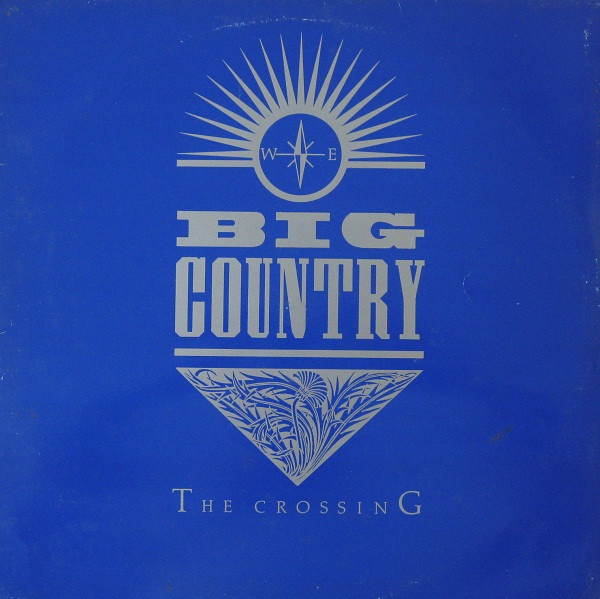
“In a Big Country” (1983) – Big Country

“In a Big Country” (1983) – Big Country * Written by Stuart Adamson, Mark Brzezicki, Tony Butler, and Bruce Watson * Produced by Steve Lillywhite * LP: The Crossing * Label: Mercury * Charts: Billboard Hot 100 (#17), UK Singles (#17) (numerologists take note)

Amid the foggy synths and posh vocals American radio listeners heard in those days, it was likely the guitar bagpipes of Scotland’s Big Country that declared with highest certainty that a British Invasion was on. So distinctive were the twin skirls of Stuart Adamson and Bruce Watson, as showcased on their radio hit “In a Big Country,” that they could have copyrighted the approach. (What is Adamson shouting throughout the song? “Shout,” apparently. But it always sounded to me like “Ciao, hot shot.”)

Theirs was an era when male pop and metal bands alike attempted to out-girl each other in appearance, but Big Country, in their plaid button-downs, offered up a comparatively blokey and earnest middle ground. Their sound was big, too—producer Steve Lillywhite’s extended version of “In a Big Country” was less a dance mix than a muscle mix, ultimately receiving the most airplay and being the one they included on their debut album. 

Big Country’s widely viewed music video, which presented the band giving chase to a young woman across pastoral, cottage-dotted landscapes, attempted to undermine any of the music’s muscularity with visual tweeness. Image example 1: The band riding three-wheelers with helmets—sensible and safe but not rock and roll. Image example 2: All four of them getting knocked over like bowling pins by one female. Image example 3: The band darting across the water in an air-pump boat. 

The outdoorsy video images would have worked fine, say, for a Hamm’s Beer “Land of Sky Blue Water” ad campaign. And listeners didn’t need to listen closely to the lyrics to surmise that a positive evocation of well-being was at work. But a close listen reveals them to be rather poetic words of encouragement having the power to ease pain and change a life.

Stuart Adamson sang these in 1983, but ended his own life after struggling with alcoholism and depression in 2001, a tragedy that gives “In a Big Country” a poignancy that one hopes will continue affecting people for the better.

As part of the song’s ongoing legacy, I offer up my own experience of seeing Big Country playing live at a small-ish venue in 2013 with Mike Peters (of The Alarm) handling lead vocals. This was a remarkably big-hearted performance, after which all band members passed the mic around to express personal thanks. (Joining guitarist Bruce Watson on the twin guitar attack was his son Jamie.)  Peters is a survivor of lymph cancer and chronic lymphocytic leukemia, and it wasn’t until I heard him deliver the “stay alive” refrain as an outright exhortation (“Stay alive!”) that I fully grasped the song’s power a full thirty years after I first heard it. [Mike Peters passed away on April 29, 2025. RIP] 

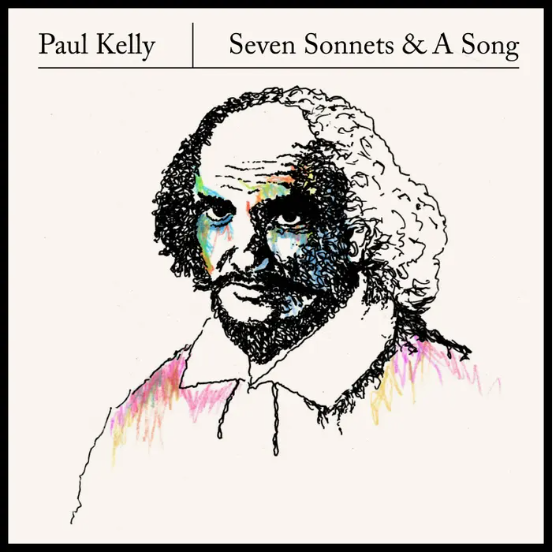
“Sonnet 18” (2016) – Paul Kelly

“Sonnet 18” (2016) – Paul Kelly * Written by William Shakespeare (words) and Paul Kelly (music) * Produced by Paul Kelly * 10″ LP: Seven Sonnets and a Song * Label: Gawd Aggie

It’s unexpected but not inconceivable for the Australian workhorse Paul Kelly to step forward with a Shakespeare collection (with a bonus track by Sir Philip Sidney). In the 2012 documentary Stories About Me, Kelly points out, after all, that anything that he (or any other songwriter) is apt to express has already been touched upon in the folios. Still, his intrinsic plainspokenness and the Bard’s floridity don’t suggest an immediate merger.

The memorable one is his treatment of Number 18, arguably Shakespeare’s most famous sonnet (“Shall I Compare Thee…”), and it’s also the only one with Kelly as sole producer. By putting it in a minor key, he brings sorrowful shades out of the words that aren’t immediately apparent. There’s an eerie 1973 film called The Pyx, which opens with Karen Black singing verses from the Song of Solomon. If you’ve ever heard that, Kelly’s “Sonnet 18” will summon it back. 

“Big Sky” (1968) – The Kinks

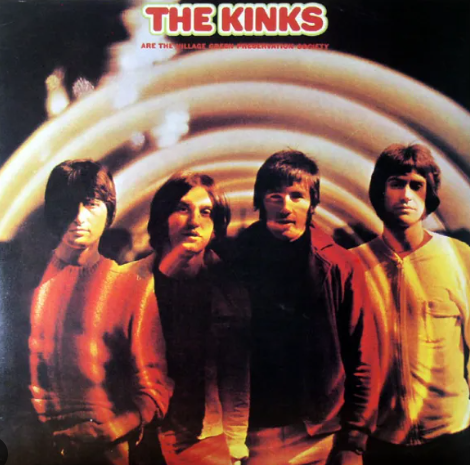
“Big Sky” (1968) – The Kinks * Written and Produced by Ray Davies * LP: The Kinks Are the Village Green Preservation Society * Label: Pye

Head Kink Ray Davies crafted an exercise in nostalgia as understated as it was grand with the Village Green Preservation Society album, focusing on the real and imagined cultural touchstones of an English upbringing. A certain archness, though, bends his delivery in every song. While it was clear in “Dedicated Follower of Fashion” (1966), for example, that he was poking fun by taking on an aristocrat’s accent near its fadeout, the subject matter in VGPS feels heartfelt if only for its very outpouring. So sportive is Davies’s voice, that you wonder if he’s feeling self-conscious about the project. (His face on the album cover, far right, makes you wonder doubly so.)

“Big Sky,” halfway through, is the biggie, where Davies rolls out God Himself as one of his album’s endangered curios. “Big Sky feels sad when he sees the children scream and cry,” he sings. “But the Big Sky’s too big to let it get him down.” He sounds like an imperious, inaccessible monarch who refers to himself in the third person. Davies once expressed regret over his delivery, and one wonders if he’d have rather sounded more sympathetic, angry, or less affected. 

The band does the rest of the heavy lifting, giving the track all of the pent-up emotion, release, puzzlement, and memorialization the subject calls for. Being so big, the song can be taken a number of ways, a believable consensus being that it rouses the listener’s spiritual awareness. This brings to mind Tolstoy’s Andrei Bolkonsky, who lies inert on the War and Peace battlefield and discovers that “everything is empty, everything is a deception, except this infinite sky.” It’s an observation that sounds at first like mockery or disappointment, but in fact gives Bolkonsky new life, and for this he thanks God, a.k.a. Big Sky.

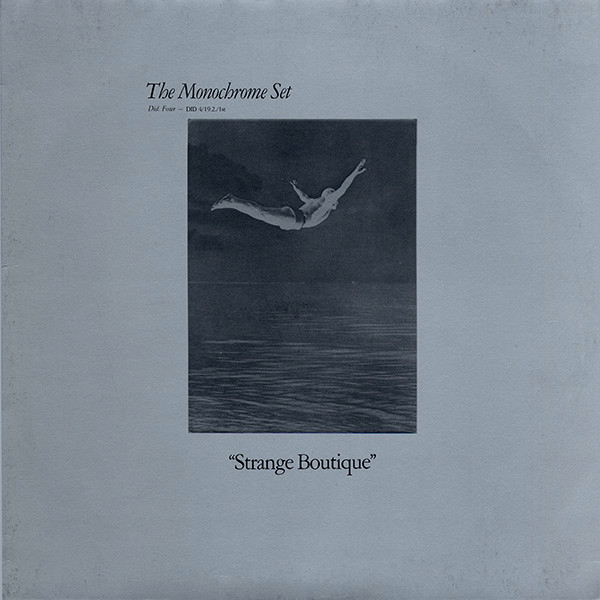
“Love Goes Down the Drain” (1980) – The Monochrome Set

“Love Goes Down the Drain” (1980) – The Monochrome Set * Written by Bid * Produced by the Monochrome Set * LP: Strange Boutique * Label: Dindisc

The notion of college rock sprouted out in a jiffy from punk as a better-read, more culturally observant version of the new rawness. London’s Monochrome Set were a good example, with their color wheel of ideas filtering through their eponymous conception of limited tone. It served them well: Their first few singles (“He’s Frank,” “Eine Symphonie des Grauens,” and “The Monochrome Set”) are clear attention-grabbers amid the era’s ocean of independent UK vinyl. Group leader Bid (Ganesh Seshadri) sings his weird words with droll raga curves while guitarist Lester Square maintains strict, sharp angles to modular and moody effect. 

After 1980, the sharpness dulls, although their first album, Strange Boutique, holds on to portions of it, especially during the three-song stretch of “Love Goes Down the Drain,” “Ici Les Enfants,” and “The Etcetera Stroll.” The LP version of “Love Goes Down the Drain,” which should have been a single, is post-punk college rock 101 – an articulate, culturally literate, good-humored statement of self-loathing. The John Peel version that appeared on the B-side of their 1983 “Jet Set Junta” is more sluggish than this one. 

“You’ve Changed” (1958) – Billie Holiday

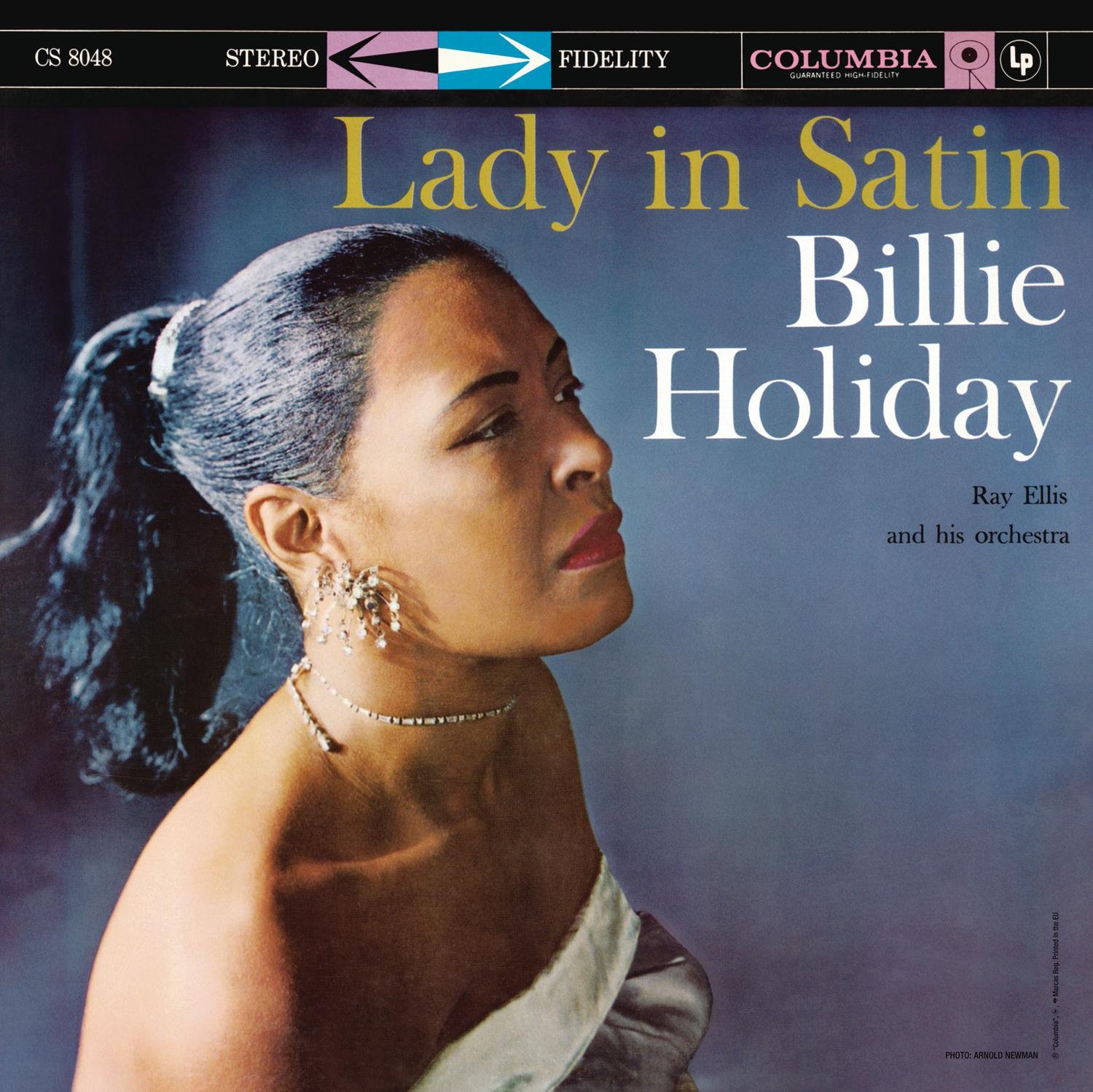
“You’ve Changed” (1958) – Billie Holiday * Written by Bill Carey and Carl T. Fischer * Produced by Irving Townsend * Arranged by Ray Ellis * LP : Lady in Satin * Label: Columbia

For a worthwhile overview of the stardust-sprinkled wonder that is Billie Holiday’s Lady in Satin album, read Will Frielander’s entry in his book The Great Jazz and Pop Vocal Albums (2017). This gives a refresher on the lifetime of personal pain she brought to the sessions, and also her unlikely pairing with Ray Ellis, whose own artistic banner as a studio sugar man waved considerably lower than Holiday’s.

One track on the album emerges with special glory halfway through and stops listeners in their tracks. This is “You’ve Changed,” and although others had previously dampened it with their tears, Holiday transforms it, with her peerless control and inflections, into something that seethes and devastates.

And why does this lament about a love interest who has become woefully incompatible manage to jibe so well with its angel choirs and galactic backdrop? Because it has a secret message of hope, a subliminal flip side of meaning that taps into one of humanity’s fondest anticipations that people can, indeed, change.