“Take Me Back to Tulsa” (1960) – Bob Wills/Tommy Duncan and the Texas Playboys

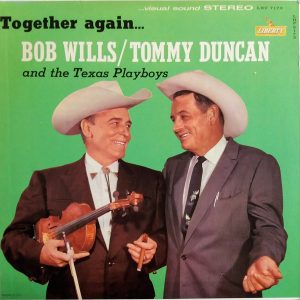
“Take Me Back to Tulsa” (1960) – Bob Wills/Tommy Duncan and the Texas Playboys * Written by Bob Wills and Tommy Duncan * Produced by Joe Allison * LP: Together Again * Label: Liberty
 
Tommy Duncan was the lead vocalist on just about all of the Bob Wills and the Texas Playboys recordings between 1932 and 1948. A less eager stage presence than the lively Wills, Duncan nonetheless filled a crucial role in the classic Bob Wills sound that still epitomizes the “jazz for rural folks” Western Swing genre. Duncan left the band due to Wills’s drinking, reportedly, but joined up again in 1960 for a few more years of shows and studio dates. Together Again is a respectable reunion album, collecting a lot of the classics but sounding more hopped-up for the band’s fourth decade. Oklahoma native Glenn “Blub” Rhees gives the tune a post-bebop tenor sax upgrade at 1:04. The line “the darkie raises cotton, the white man gets the money,” from the 1940 original, has been changed to “the little man raises cotton, the big man makes the money.”
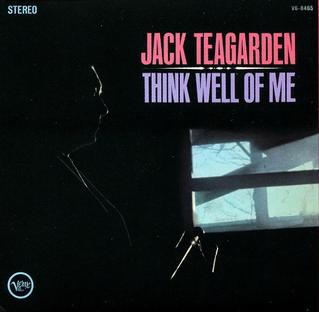
 

“Don’t Smoke in Bed” (1962) – Jack Teagarden

“Don’t Smoke in Bed” (1962) – Jack Teagarden * Written by Willard Robison * Produced by Creed Taylor * Arranged by Bob Brookmeyer * LP: Think Well of Me * Label: Verve

Willard Robison was among the noir-est of classic songwriters but with an American Gothic twist, thanks to his rural imagery. Jack Teagarden, the singular trombonist and vocalist from very rural Vernon, Texas, released a collection of Robison songs called Think Well of Me late in his career, and it comes off as something that had to happen. Bringing his own country-to-city boy background to the material, his weary voice sounds like what Robison may have had in mind during the writing process for each song. (The opener, strangely, is “Where Are You,” the only one in the twelve-cut lineup not written by Robison.) “Don’t Smoke in Bed” is a song that had been done previously by Peggy Lee in the late forties (with strings and an echoing/fading goodbye phrase near the end) and Nina Simone in the late fifties (with lonely piano and voice). They’re effective versions, but Teagarden’s is the odd standout in voicing the perspective (male) of the one who has been left, rather than the perspective (female) of the one leaving. Bob Brookmeyer’s string arrangements fill the air with foreboding harps and, whenever the title phrase gets uttered, violins rise upward like flames. You feel resigned when listening that not only will there be smoking in bed, but a match will also be struck and dropped on the sheets outright. (Bob Dylan almost certainly found inspiration in this entire album when he got working on his moody Americana-tinged standards collection Shadows in the Night.)

“Baja” (1963) – The Astronauts

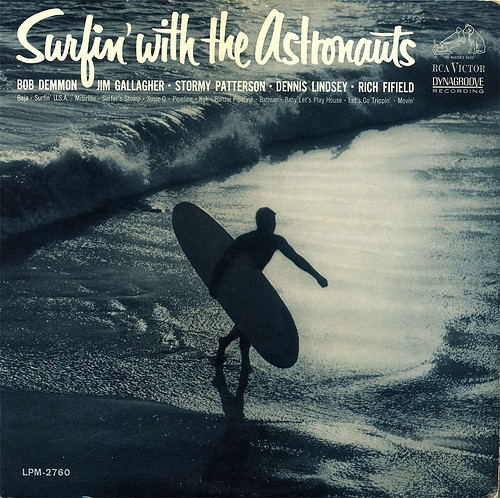
“Baja” (1963) – The Astronauts * Written by Lee Hazlewood * 45: “Baja” / “Kuk” * LP: Surfin’ with the Astronauts * Label: RCA Victor * Charts: Billboard Hot 100 #94

“Baja” was the only charting single for the Astronauts, who conjured up surf music from Boulder, Colorado. The track’s exquisite moodiness suggested that the farther away you were from an actual scene, the better your chances might be to imbue it with mythical qualities. Lee Hazlewood, who produced, wrote for, and helped craft the legendary guitar sound of Duane Eddy, had written “Baja” for a shelved album with the L.A. studio aces he referred to as his “Woodchucks.” Guitarist Al Casey then released an OK version of “Baja” in ’63, produced by Hazlewood, which angled for a “Lonely Bull” feel minus the prominent “olé” shouts that pepper one of the original Woodchuck demos. For the Astronauts’ reading, it’s clear they also used the Hazlewood demos as a source (as opposed to the Casey record), borrowing the approach of giving the upper register guitar line a lower register answer. Where surf music from the era, including Hazlewood’s, can sound overly tick-tocky, the Astronauts’ version is light on its feet, as though dashing through the kind of twilight ocean spray their Surfin’ with the Astronauts album cover promises. The album features two additional tracks (“Movin'” and “Batman”) they’d taken from the Hazlewood tapes which, incidentally, were finally dusted off and issued in 2018 as Cruisin’ for Surf Bunnies and billed to “Lee Hazlewood’s Woodchucks.” (Side B of the Astronauts’ “Baja” single features the only song on the album actually written by the band.)

“Var det du?” (1964) – Anna-Lena


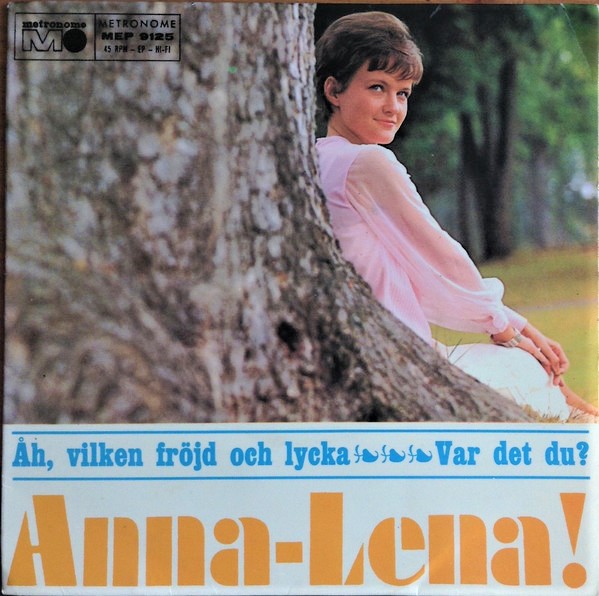
“Var det du?” (1964) – Anna-Lena * Trad. arr. Bruno Glenmark * Lyrics by Cornelis Vreeswijk * Produced by Anders Burman * Sweden EP: Åh, Vilken Fröjd Och Lycka * Label: Metronome

The late Swedish schlager singer Anna-Lena Löfgren had an especially fruitful decade in the 1960s both at home and in West Germany (although she did manage, off and on, to chart in Sweden all the way up to 1995). Due to a lifelong struggle with polio, Löfgren often made her television appearances sitting down, a visual image that matched the clear but gentle assurance in her voice, a refreshing sound from the standpoint of our present climate of vocal affectation. Among her most sublime recordings was “Var det du” (was it you), which appeared on the B-side of her 1964 version of “Go Tell It on the Mountain.” Although the melody for “Var det du” comes from a folk waltz called “Var det du eller var det jag” (was it you or was it me) from the southern province of Småland, her recording of it used an updated arrangement by Bruno Glenmark with alternate lyrics by Cornelis Vreeswijk (the Dutchman soon to launch a prolific career as a Swedish troubadour). Worthwhile hit versions of the song soon appeared in Finland (Anki Lindqvist) and Norway (Kirsti Sparboe), but Anna-Lena’s remains the quintessential, full-color version. Perhaps John Sebastian came across this arrangement before crafting his “Coconut Grove.”

“I’m Your Hoochie Coochie Man (live)” (1960) – Muddy Waters

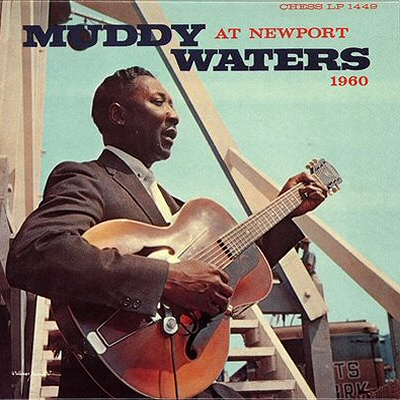
“Got My Mojo Working” (1960) – Muddy Waters * Written by McKinley Morganfield * LP: Muddy Waters At Newport 1960 * Label: Chess

Muddy Waters’s canonized At Newport 1960 album can’t shake a lingering strangeness. The cover depicts the blues giant, who otherwise played at Smitty’s Corner at smoky midnight in Chicago’s south side, serenading an audience against an afternoon sky. The quiet crowd responses confirm what you imagine—that the audience is a polite, buttoned-down sort. On side 2, when Waters first sings “I got my mojo working, but it just won’t work on you,” he may have been wondering if he was experiencing one of the realest scenarios for those words. The mojo eventually does get working, though, as the crowd livens up. They had other reasons for their reserved behavior, it turns out. As the liner notes explain: some “beer-inflamed youngsters” had disrupted Ray Charles’s show the day before, causing a riot that involved the National Guard, and forced the cancellation of the rest of the festival except for Waters’s Sunday afternoon slot. The link below takes you to actual footage of the song, complete with Waters dancing some steps at the end. (“Got My Mojo Working” is credited on the album to McKinley Morganfield, aka Muddy Waters, but the copyright actually belongs to Preston “Red” Foster, a matter that had later been settled out of court.)

“I’m a Little Mixed Up” (1961) – Betty James


“I’m a Little Mixed Up” (1961) – Betty James
 * Written by Betty James and Clarence Johnson * 45: “I’m a Little Mixed Up” / “Help Me to Find My Love” * Produced by Clarence Johnson and Joe Evans * Label: Cee Jay/Chess

The story goes that Cee Jay label owners Clarence Johnson and Joe Evans heard Betty James in a Baltimore night club and got her in the studio post haste. At the club they’d probably heard something similar to “I’m a Little Mixed Up,” with its crackling guitar hook, courtesy of a man we only know as “Betty James’s husband.” The resulting single became a regional hit and got picked up by Chess Records to become a part of its abundant legacy. The rest is murky history—James would only record one more single in 1966, also with Chess. (She released a single previous to “I’m a Little Mixed Up” with another label in 1960 under her real name, Nadine Renaye). James is apparently still alive, and if so, that should help you look past your “just leave it alone” response to Diana Krall’s 2012 cover and feel glad that money’s being made for her as the co-writer. A Louisville singer named Cosmo kicked up the guitar line to radioactive levels in his own 1961 cover version with a band called the Carnations.

“No More Auction Block” (1964) – The Goldebriars

“No More Auction Block” (1964) – The Goldebriars * Traditional arrangement by the Goldebriars * LP: The Goldebriars  * Produced by Bob Morgan * Label: Epic
“No More Auction Block,” also known as “Many Years Gone,” is a slavery song that’s been traced back to the 1830s as a possible musical rephrasing of the Roman Catholic hymn “O Sanctissima.” The early sixties folk revivalists knew the song, with Bob Dylan even reshaping the melody into his own “Blowin’ in the Wind.” (You can hear him do a 1962 live version of “No More Auction Block” on the first volume of his Bootleg series.) In 1964, a version of the song appeared on the debut album by the Goldebriars, a short-lived quartet who were led by Curt Boettcher before he’d gain lasting sunshine-pop cult status through his work with The Millennium and Sagittarius. Critics of folk revivalists complain about the sparkling sheen they imposed on traditional song, but here’s an example where such polish, with voices that meshed uncannily, equaled beauty.

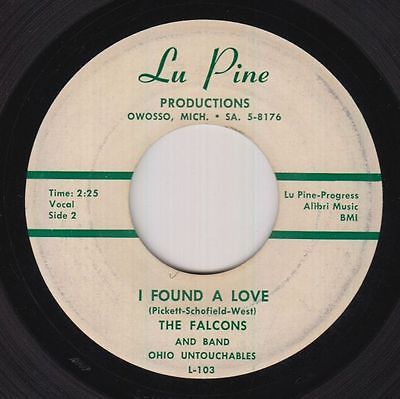
“I Found a Love” (1962) – The Falcons


“I Found a Love” (1962) – The Falcons
 * Written by Wilson Pickett, Willie Schofield, and Robert West * 45: “Swim” / “Lu Pine” * Label: Lu Pine

Guitarist Steve Cropper has been quoted as having taken inspiration for “In the Midnight Hour” from one of Pickett’s gospel tracks, in which he sings, near the end, “I want to see Jesus in the midnight hour!” It’s almost certain he was thinking of this track, though, which sounds gospel and features Pickett saying at 2:25, “and sometimes I call in the midnight hour!” The only record Pickett had appeared on before the Falcons (who also included Eddie Floyd and Mack Rice) was called “Sign of the Judgement” (1957), in which he sang second lead with the Violinaires in Detroit, featuring nothing Cropper could have even misheard that way. (Tony Fletcher, in his In the Midnight Hour: The Life and Soul of Wilson Pickett, dispels other rumors that Pickett had recorded with a group called The Spiritual Five.)

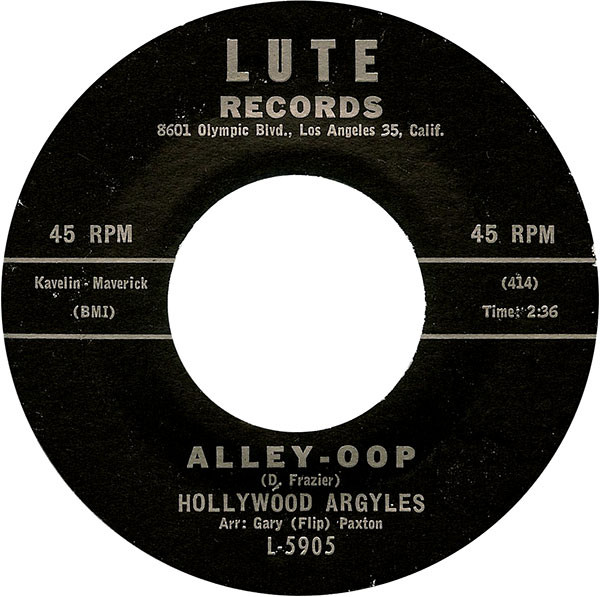
“Alley Oop” (1961) – The Hollywood Argyles


“Alley-Oop” (1961) – The Hollywood Argyles
 * Written by Dallas Frazier * 45: “Alley Oop” / “Sho’ Know a Lot About Love” * Arranged by Gary (Flip) Paxton * Label: Lute

Inspired by the neanderthal comic strip that first appeared in newspapers in 1932, “Alley-Oop” trudged all the way to Billboard‘s #1 slot with the sort of inspired dementia that’s crucial to pop music’s very vitality. The record came to life thanks to the team of Gary Paxton, who is credited on the label as arranger, and LA pop scenester/dark lord Kim Fowley, whom Paxton has credited as co-producer (although he doesn’t appear on the label). Written by future Nashville Songwriter Hall of Famer Dallas Frazier, the record especially benefited from Paxton’s bored hepcat vocal, which increased in brilliance as the song faded (“Heil dinosaw-wuh”). Although an alternate story that a Rochester poet named Norm Davis actually did the vocal in Las Vegas has gotten legs, other Paxton tracks, such as one called “Spookie Movies,” contain a voice that matches the Hollywood Argyles record, while a comparison with Davis’s speaking voice doesn’t hold up. 

“Shut Down” (1963) – The Beach Boys

“Shut Down” (1963) – The Beach Boys *  Written by Brian Wilson and Roger Christian * 45: “Surfin’ USA” / “Shut Down” * LP: Surfin’ USA * Produced by Nick Venet * Label: Capitol
 
Side B of the Beach Boys’ #3 hit “Surfin’ USA” (and reaching #23 on its own merits) sported one of their quintessential hot rod tracks, fully equipped with terminology by gearhead DJ Roger Christian. It’s sung from the point of view of the driver of a ’63 Chevy Sting Ray, with its new, high-performance fuel-injected engine, facing off against a ’62 Dodge Dart that rumbles with a Max Wedge engine (called a “413” for its cubic-inch measurement). The implication at the end is that the Chevy “shuts down” the Dodge. Brian Wilson’s chorus hooks and harmonies tweak the 12-bar blues in a musical approximation of technical ingenuity.