“Give It to Me Now” (1973) – Bay City Rollers * Written and produced by Bill Martin and Phil Coulter * UK LP: Rollin’ (Bell) The Bay City Rollers’ first few albums stocked up on songs that paid tribute to the romantic concerns of early sixties teen idols. Now and then, though, their historical and geographical coordinates (i.e., glam-era Great Britain) would manifest loudly on BCR wax. “Give It to Me Now,” for example, is a sultry re-do of a glitter torpedo that Kenny had ridden up the the UK charts the same year.
“Give It to Me Now” (1973) – Kenny * Written and produced by Bill Martin and Phil Coulter * UK 45: “Give It to Me Now” / “Rollin'” (RAK) The songwriting and production team of Phil Coulter and Bill Martin pumped out a whole bevy of songs for the Bay City Rollers. Many of these sounded like early ’60s fodder for American teen idols, e.g., “Summerlove Sensation,” “Remember (Sha La La La La),” “Shang a Lang,” and the biggie, “Saturday Night.” Coulter and Martin’s “Give It to Me Now,” with its “shim-sham-sham-a-ram” chorus, showed up in a steamy, slowed-down version on the Rollers’ 1974 debut LP Rollin’. Irishman Tom Kenny (“Kenny”), who had a face like David Essex and a voice like Suzi Quatro, recorded it first, though, as a 1973 A-side. The B-side, coincidentally, contained a song called “Rollin’,” which the Bay City Rollers never recorded. After “Give It to Me Now,” Kenny moved on with his life, but a new group formerly known as Chuff, with Rick Driscoll on lead vocals, stepped in as the new “Kenny” and recorded a handful of additional charting hits. One of these was a UK #3 called “The Bump,” which the Rollers also recorded as a B-side for their 1974 hit “All of Me Loves All of You.”
“Adimiz miskindir bizim” (1973) – Mazhar and Fuat * Written by Yunus Emre and Mazhar Alanson * LP: Türküz Türkü Çağırırız! * Label: Yonca This alluring Turkish folk-rock song’s Sufi-tinged title translates to “they call us mystics,” with the first verse approximating the following: “We’re called mystics, our enemy is called malice. We hold no grudges because all creation is one.” Mazhar Alanson and Fuat Güner would eventually add a third member, Özkan Uğur, which turned them into the more commercially successful MFÖ. Although their stage presence and instrumentation became wholly Eurovision-friendly (they represented Turkey in 1985 and 1988), their taste for mystic subject matter never fully abated.
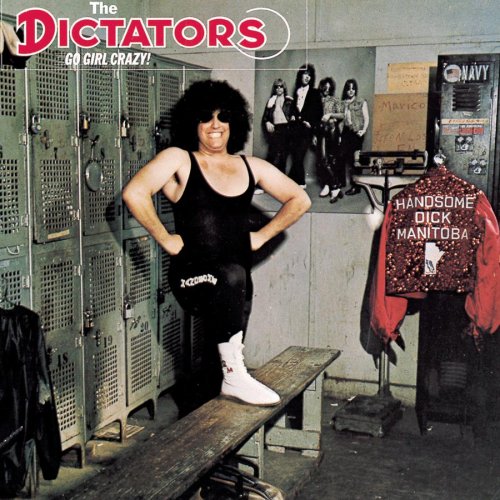
“(I Live for) Cars and Girls” (1975) – The Dictators * Written by Andy Shernoff * LP: Go Girl Crazy! * Produced by Murray Krugman and Sandy Pearlman * Label: Epic You approach Handsome Dick Manitoba, “Adny” Shernoff, and their gang of NYC White Castle goons in the spirit of satire. You hear them mangle the words for “I Got You Babe,” have a crack at the Rivieras’ “California Sun,” and extol their particular ilk as a “Master Race.” Then you get to the last song, “(I Live for) Cars and Girls,” and you sense that their whole disjointed/displaced Beach Boy shtick is no joke. The sounds they’re making actually do come from some deep inner source of yearning and self-identity.
“Gül (Flower)” (2006) – Zainidin Imanaliev * Written by Atai Ogonbaev * Produced by Joel Gordon and Theodore Levin * CD: Tengir-Too: Mountain Music of Kyrgyzstan * Label: Smithsonian Folkways
Zainidin Imanaliev is the man on the cover of this compilation. He plays the komuz, a pear-shaped instrument with a long neck that you see players holding upside down (as he does in the photo) or cradling guitar-style. The song tells of hollyhocks and nightingales who “cling to the flowers” like dew and “exchange glances.” It’s written by Atai Ogonbaev, the region’s best-known bard, who lived from 1904 to 1949. Songs such as this, according to the notes, express a general optimism wafting through early thirties Kyrgyzstan, notwithstanding Soviet occupation. (“Our spirits rise and we open up [like fine flowers] in this new era,” goes the final verse.) It’s mountain music, with sunny strums and falsetto phrase-endings, with intriguing possibilities for an Appalachian interpreter. (Tengir-Too is the name of a Kyrgyz folk ensemble who receives top billing on this album.)
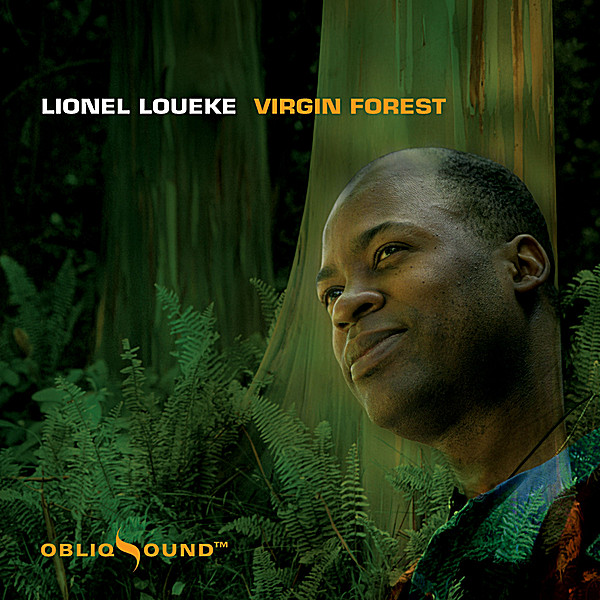
“Rossignol” (2007) – Lionel Loueke * Written by Lionel Loueke * LP: Virgin Forest * Produced by Robert Sadin * Label: Obliq Sound On his 2007 Virgin Forest album, guitarist Lionel Luoeke mixes his West African roots and his jazz chops into an especially fine purée. As you can hear on this track, the sound is entrancing and organic, featuring chanted vocals that could be sung in Fon or French—the prevalent languages in his native Benin. If Loueke were simply singing from a lexicon of his own invention, though, he would get your attention. (The female voice on “Rossingol” and others on the album belong to Gretchen Parlato.) Loueke is currently based in New York City.
“Art’s Plume (Sawt Elfan)” (1990) – Khalifa Ould Eide and Dimi MintAbba* Written by Seymali Ould Hamad Vall and Ahmedou Ould Abdel Qader * Produced by Nick Gold and John Hadden * CD: Moorish Music from Mauritania * Label: World Circuit
The late Moorish singer Dimi Mint Abba’s clarion vocals relayed key cultural info in songs that stretched out like the sand-dune landscapes of her native Mauritania. Her 1990 album on the World Circuit label, a collaboration with Khalifa Ould Eide on the West African lute, gave her a boost in overseas recognition. This song features especially dextrous instrumentation and lyrics to live by: “Art’s plume is a balsam, a weapon and guide enlightening the spirit of men.”
“Above the Clouds” (1992) – Paul Weller * Written by Paul Weller * LP: Paul Weller * Produced by Brendan Lynch, Paul Weller, and Chris Bangs * Label: Go! Discs/London This third single from Paul Weller’s first solo album goes down effortlessly with its fluffy major 7th chords, suggesting itself as suitable backdrop for the act of boarding an airplane. But close listening reveals Weller in an honest state of self doubt in this new decade, all skittery with its Clyde Stubblefield samples. Was he licking wounds after his Style Council era, in which he came across so confidently with anti-rockist postures and “Capuccino Kid” manifestos that brought out the worst in his critics? By ’93 such rumination would stabilize as retrospection (emphasis on retro) and England would love him again.
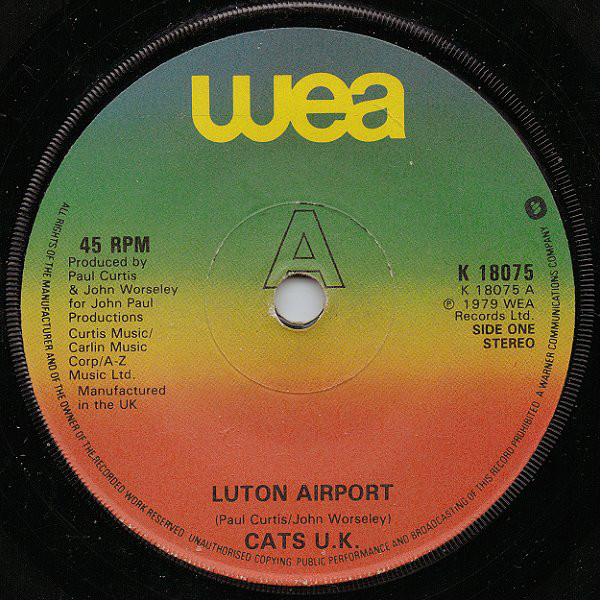
“Luton Airport” (1979) – Cats UK * Written and produced by Paul Curtis and John Worseley * 45: “Luton Airport” / “Sail Away” * Label: WEA * UK singles chart: #22 This easy-to-forget British fad hit capitalized on a 1977 Pygmalion-esque TV commercial for Campari liqueurs, in which a gentleman dressed in white (played by Jeremy Clyde), tries to woo a beautiful young cockney lady (played by Lorraine Chase). “Were you truly wafted here from paradise?” he asks, to which she responds, “Nah, Luton Airport,” referring to the busy North London hub for low-cost domestic and European airlines. The record, credited to an assembled group of female vocalists called Cats UK, took advantage of the late ’70s catchphrase. But here’s what else it took advantage of—the early 1979 Squeeze #2 hit “Cool for Cats,” whose musical framework and lyrical cadences it mimics and whose vocalist (Chris Difford) had sung with a thick cockney accent. That also explains the name of the group and possibly even their willing usage of the “UK” appendage, seeing that Squeeze had billed themselves as UK Squeeze in the US for their debut LP. The popularity of “Cool for Cats” probably influenced this song’s inception more than the Campari ad itself, and although the connection had to have been obvious to listeners at the time, it seems to have faded from the present-day narrative.
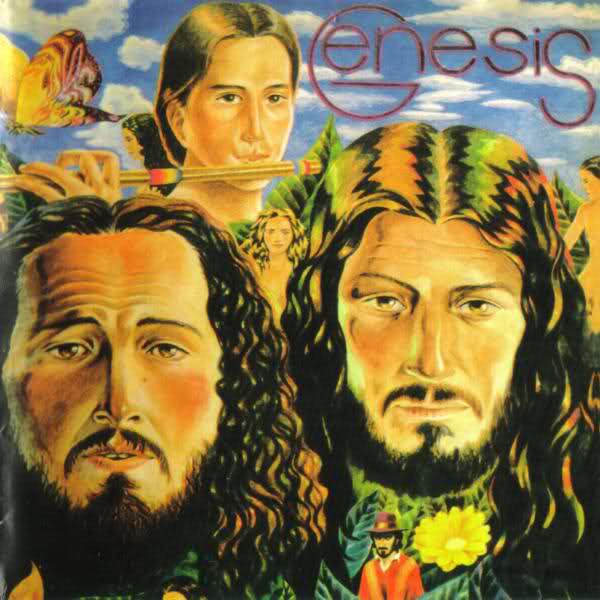
Génesis – “Señora del Silencio” (1974) * Written by e.e. cummings and Humberto Monroy * LP: Génesis * Label: Guerssen The Colombian band Génesis included Humberto Monroy, who’d previously played with a rock band called the Speakers. This haunting Andean head trip appeared on their self-titled second album and is a Spanish iteration of e.e. cummings’s poem “The Lady of Silence.” A few more albums, reunions, and solo recordings by Monroy would all materialize in the following years, but this album stands tall as the legendary one.







 Génesis – “Señora del Silencio” (1974)