“Add Some Music to Your Day” (1970) – The Beach Boys


“Add Some Music to Your Day” (1970) – The Beach Boys
* Written by Brian Wilson, Joe Knott, and Mike Love * 45: “Add Some Music to Your Day” / “Susie Cincinnati” * LP: Sunflower * Produced by the Beach Boys * Label: Brother/Reprise

A non-Top 40 charting hit in 1970 (#64 on Billboard) with, for the Beach Boys, uncharacteristic acoustic guitar breeziness. The song’s harmonies served the Beach Boys especially well during their 50-year reunion shows. The road does get a little bumpy, though, when Mike Love goes “there’s blues, folk and kun-treee and rock like a rolling stone,” and again when Bruce Johnston goes “Your doctor knows it keeps you calm.” One imagines Brian Wilson being able to sing lines like those with charming naivete, but in the mouths of Love and Johnston they sound poorly chosen. At 2:45 you can hear the same eerie high-register string parts the Walker Brothers used on their “The Sun Ain’t Gonna Shine Anymore.”

“Adam et Eve dans le Paradis” (1960) – Frank Schildt

“Adam et Eve dans le Paradis” (1960) – Frank Schildt * Trad. Arr. * LP: Songs of Love, Play and Protest * Label: Folkways

Frank Schildt was a Dutch folksinger with a stentorian vocal delivery. All seven of the languages he uses on his only album, Songs of Love, Play and Protest, come at you full throttle. After moving to the US in the late fifties and working the folk scenes in New York and Chicago during the folk revival years, his activities go undocumented. One of the album’s clear highlights comes from the island of Martinique where, as he explains in the notes, the French missionaries found its inhabitants abiding in the nude. Charitable clothing donations were immediately sent for, leading to an eventual protest at mission HQ, in which the islanders, all sans vêtements, sang “Adam and Eve in paradise.” The lyrics, as Schildt translates them in his liner notes, go as follows: “Adam and Eve in paradise wore no clothes, so why should we wear them? Tonight we are going to dance with no shirts and pants.” Schildt delivers them here with the gusto of a dirty-minded schoolboy.

“Musandine” (c. 1978) – Donald Kachamba’s Band

“Musandine” (c. 1978) – Donald Kachamba’s Kwela Band * LP: Simanje-Manje and Kwela from Malawi * Label: Popular African Music

The Kachamba Brothers—Donald (pennywhistle) and Daniel (guitar)—are a useful starting point for exploring the music of Malawi, which tends to maintain an irrepressibly cheerful sound. The Kachamba family benefited from the attentions of Austrian ethnomusicologist Gerhard Kubik, whose writings and films eventually made it possible for them to tour worldwide. The genre the Kachambas helped concoct is known as kwela, or “pennywhistle jive.” “Musadine” is a track that appeared on a 1999 German CD reissue of their 1978 Simanje-Manje and Kwela from Malawi album, first released on the Kenyan A.I.T. label.

“Our Love (Don’t Throw It All Away)” (1977) – Bee Gees

“Our Love (Don’t Throw It All Away)” (1977) – Bee Gees * Written by Barry Gibb and Blue Weaver * Produced by Barry Gibb, Albhy Galuten, and Karl Richardson *  LP: Bee Gees Greatest (1979)  * Label: RSO

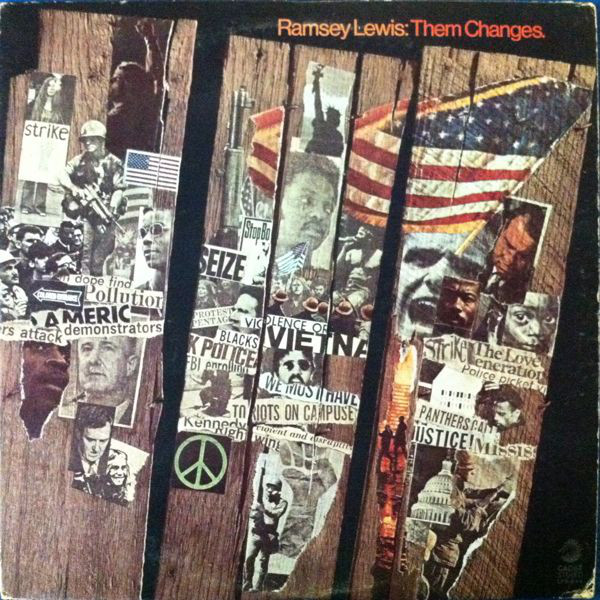
For the 1979 Bee Gees Greatest compilation, the Brothers Gibb included their own previously unreleased 1977 recording of “Our Love (Don’t Throw It All Away),” which younger brother Andy had taken to Billboard‘s #2 slot in late 1978. Their own version has an easier sound and arrangement, truer to the chorus’s bossanova breeziness that deserves more presence. For the Andy version, writer/producer Barry tacks on an unnecessary bridge that calls for more vocalizing that strays further from that precious chorus, while the outro’s closing yacht ride gets spoiled by too many falsetto seagulls. So the Bee Gee one is the best version, and the era’s fusion masters (imagine Joe Sample or Bob James or Ramsey Lewis using the chorus as more of a central hook) missed an opportunity with it. But Andy’s version does anticipate the ’80s, the era of big bloated radio ballads that counted overstructuring as a virtue.

“Alberta” (1977) – Opo

“Alberta” (1977) – Opo * Traditional arrangement by Opo * LP: Opo 2 * Produced by Job Zomer * Label: Stoof

Dutch version of a traditional song that Leadbelly had recorded as early as 1935 and which Bob Dylan credits to himself on his Self Portrait album. Opo transforms it into an expression of desperate desire. The singer is Lenneke De Vries, who, like many folkies from her era, sounds refreshing and clear in the context of the croaky and flip hipster present. By the final verse, when she sneaks into the brass bed from Dylan’s “Lay Lady Lay,” and the mandolin strums like a palpitating heart, you’ve stopped what you’re doing and gaze off, listening with longing of your own.

“Acceleration” (1982) – Bill Nelson

“Acceleration” (1982) – Bill Nelson * Written and produced by Bill Nelson * 45: “Acceleration” / “Hard Facts from the Fiction Department” (Cocteau) * UK LP (MiniAlbum): Chimera (Mercury)

British composer Bill Nelson’s expansive catalog, including his ’70s work with Be Bop Deluxe, now seems to overshadow his new wave credentials, his moment in the early ’80s when freshly-conceived American alternative rock stations like Los Angeles’s KROQ played him with regularity. The radio industry never categorized these stations as “new wave,” although it may as well have, and Nelson techno-pop tracks like “Flaming Desire,” “A Different Kind of Loving,” “Empire of the Senses,” and “Acceleration”—all of which appeared on his US Vistamix compilation—shimmered with new music authority and, even though they never charted in the US or UK, helped calibrate these outlets’ overall sound. After this, Nelson would follow the zigzag course of the musical experimentalist, but listening back to “Acceleration,” in particular, brings to mind the forward-motion giddiness of the new wave pop radio era. (New wavers like Nelson wore their Motown-mania on their sleeves. Listen, let sit, then see how “Acceleration” reminds you of the Temptations’ “The Way You Do the Things You Do.”)

“Canoeiro” (1959) – Dorival Caymmi

“Canoeiro” (1959) – Dorival Caymmi * Written by Dorival Caymmi * LP: E Seu Violão * Label: Odeon

After the Brazilian singer-songwriter, actor and painter Dorival Caymmi died at 94 in 2008, the New York Times‘ Douglas Martin wrote of him as the man who “helped lay the foundations of bossa nova, [who] wrote Carmen Miranda’s first hit and gave legendary voice to the romance of the beaches, fishing villages and bathing beauties of his native Bahia.” He also refers to a quote from his colleage Ben Ratfliff, who called him second only to Antonio Carlos Jobim in “establishing a songbook” of “Brazilian identity.” Caymmi’s songs charm you with their humble simplicity. His “Canoeiro” (canoeist), for example, is a three-minute voice-and-guitar piece expressing an ocean of gratitude for a solitary fisherman’s craft.

“Naomi No Yume” (1970) – Hedva and David

“Naomi No Yume” (1970) – Hedva and David * Written by David Krivoshe, Tirza Atar, and Kazuko Katagiri * Japan 45: “Naomi No Yume” / “Ani Holem Al Naomi” * Label: RCA Victor

In 1970 Israeli duo Hedva Amrani and David Rosenthal entered their single “Ani Cholem Al Naomi” (“I Dream of Naomi”) in Tokyo’s Yamaha Song Festival and won first prize. They entered with a Japanese version, though, which subsequently sold close to a million copies. If you let this sticky song run through your mind long enough, it might morph into the Association’s “Along Comes Mary” or the Zombies’ “She’s Not There.”

“La Marche de Iroquois” (2015) – Le Vent du Nord

“La Marche de Iroquois” (2015) – La Vent du Nord * Written by Nicolas Boulerice * LP: Têtu * Label: Borealis Records

Le Vent du Nord (the north wind), is a Quebecois group who’s been releasing albums since 2003. On their 2015 Têtu album, they do a standout “turlutte” that’s traditional-sounding in that it features percussive “mouth music,” but it reimagines the genre in a minor-key regional Native American context. The track’s called “La Marche de Iroquoius” (the march of the Iroquois), and it hints at the richness of possibility in an old musical form.

“Dear Prudence” (1970) – The 5 Stairsteps and Cubie

“Dear Prudence” (1970) – The 5 Stairsteps and Cubie * Written by John Lennon and Paul McCartney * 45: “O-o-h Child” / “Dear Prudence” * LP: Stairsteps * Produced by Stan Vincent * Label: Buddah

This rendition of the whimisical Beatles song appears as the B-side to the Chicago family group’s now classic “O-o-h Child.” With their spiraling chord patterns and lyrics evoking childhood, both sides of the 45 can still reach into hearts and minds with rare potency. “Dear Prudence,” which reached #66 in Billboard while the A-side reached #8, also hearkens back to its era’s “soul rock” genre experiments. The single credits the group as “The 5 Stairsteps & Cubie,” even though their album, released later in 1970, presented them as “Stairsteps.”